
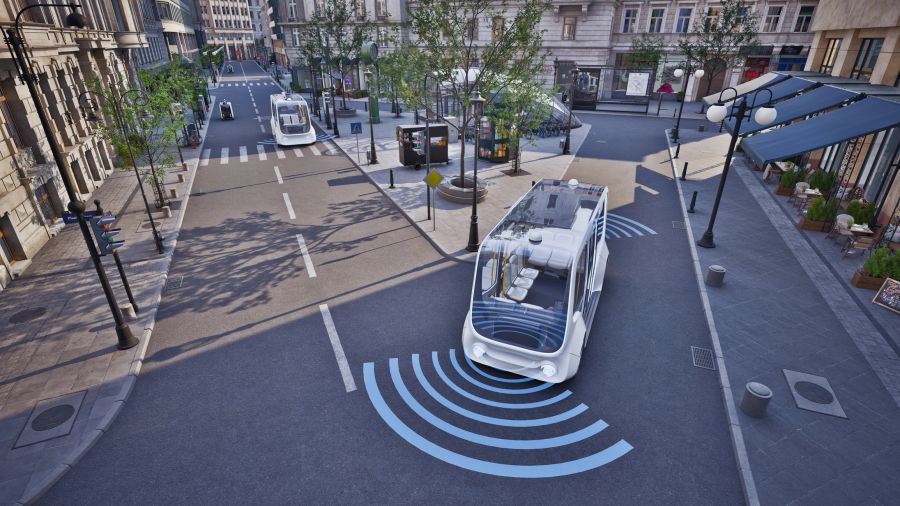
Driverless Cabs Are Coming to Australia: What the Trials, the Technology, and the Road Rules Tell Us
Autonomous vehicle trials are running across multiple Australian states, regulators are actively updating the road rules, and the technology is maturing fast. Here is a clear-eyed look at where driverless cabs stand in Australia right now — and why the outlook is genuinely encouraging.
The idea of hailing a cab with no driver behind the wheel has moved from science fiction to active policy discussion in Australia faster than most people expected. Autonomous vehicle trials are running in multiple states, the national regulatory framework is being developed to accommodate vehicles that can operate without a human in control, and the economic case for driverless transport is attracting serious attention from both government and private investors.
This is a story about infrastructure being built, rules being written, and technology being tested on Australian roads — but it is important to be precise about where Australia actually stands. As of 2026, the National Transport Commission (NTC) states that automated vehicles are not yet available commercially or for general use on public roads in Australia. Commercial robotaxis have not arrived. Australia is at the trial and regulatory-preparation stage, with transport ministers having set a pathway for conditional deployment in selected locations from 2027, subject to states and territories making the necessary legislative and capability changes.
What Is Actually Being Tested in Australia
Autonomous vehicle trials in Australia have been running in various forms since the mid-2010s, but the scope and ambition of those trials has grown considerably in recent years.
In South Australia, the state government has been one of the most active supporters of autonomous vehicle development in the country. The Tonsley Innovation District in Adelaide has hosted trials of low-speed autonomous shuttles, and the state's regulatory environment has been deliberately designed to be permissive for testing purposes. The South Australian Government's Future Mobility program has provided a structured pathway for companies to apply for trial permits, and the state has hosted trials involving vehicles from multiple international manufacturers.
In New South Wales, Transport for NSW has been involved in autonomous vehicle trials as part of its broader Future Transport Strategy. The agency has published guidance for organisations seeking to conduct trials on NSW roads, and several trials of autonomous shuttle vehicles have taken place in controlled environments including university campuses and business precincts.
The Australian Capital Territory has also been an active trial location. The ACT Government partnered with EasyMile, a French autonomous vehicle company, to run a trial of its EZ10 autonomous shuttle at the University of Canberra's Bruce campus. It is worth noting that ACT legislation governing that trial explicitly defined a "chaperone" — a person who could operate the vehicle manually and stop it while in autonomous mode. This is a reminder that "driverless" can be a misleading description of some historical demonstrations, which involved safety operators rather than fully unattended operation. EasyMile's vehicles are designed for last-mile connectivity — moving passengers between transport hubs and destinations over short distances — and the trial provided useful data on how passengers respond to autonomous transport in a real-world setting.
In Queensland, the Department of Transport and Main Roads has been developing its own autonomous vehicle framework, and trials have taken place in both urban and regional settings. The Queensland Government has identified autonomous vehicles as a potential solution to transport access challenges in regional and remote communities — an application that is particularly relevant given the distances involved in serving rural Queensland.
The Regulatory Picture: Work in Progress
One of the most significant developments in Australian autonomous vehicle policy has been the work done at the national level to update the road rules framework — though it is important to understand that this work is ongoing, not complete.
The National Transport Commission (NTC) is the body responsible for developing nationally consistent transport regulation in Australia. Since 2016, the NTC has been systematically working through the legal and regulatory questions raised by autonomous vehicles, publishing a series of policy papers and reform proposals that have progressively clarified the framework.
A key milestone has been the NTC's work on the Automated Vehicle Safety Law, which addresses the fundamental question of who is legally responsible when a vehicle is operating autonomously. Under the traditional road rules framework, a human driver is always responsible for the vehicle's behaviour. Autonomous vehicles require a different model — one that places responsibility on the entity that deploys the automated driving system, rather than on a person sitting in the vehicle. The Commonwealth is currently developing this national Automated Vehicle Safety Law. The in-service safety framework was approved by ministers in 2022, but it is still being translated into legislation.
The NTC's recommended framework establishes the concept of an Automated Driving System Entity (ADSE) — the company or organisation that deploys an autonomous vehicle system and takes on legal responsibility for its safe operation. This is a significant reform because it removes one of the key legal barriers to commercial deployment: the uncertainty about who is liable when something goes wrong.
On road rules, Australia is developing amendments to the model Australian Road Rules and complementary state and territory legislation to accommodate highly automated vehicles. The current Australian Road Rules were developed primarily with SAE Levels 0–2 in mind, and states and territories each have their own legislation. This is not a completed national reform — it is a reform process underway across multiple jurisdictions.
The NTC's trial guidelines make clear that highly or fully automated vehicles cannot legally operate on Australian public roads without a relevant permit or exemption. In November 2025, transport ministers agreed to allow conditional deployment from 2027 in selected locations, subject to states and territories making the necessary legislative and capability changes. That is the most precise description of where the regulatory pathway currently stands.
The Technology: Where It Actually Stands
Autonomous vehicle technology is typically described using a scale developed by SAE International, running from Level 0 (no automation) to Level 5 (full automation with no human required under any conditions). Most vehicles on Australian roads today are at Level 1 or Level 2 — they have features like adaptive cruise control or lane-keeping assistance, but a human driver remains responsible at all times.
Australia's national autonomous vehicle program covers Levels 3–5, but it would be an overstatement to say that Australian passenger trials generally constitute Level 4 operation under all circumstances. The trial framework requires applicants to specify the SAE automation level and operational design domain for their particular application. Some trials have involved safety operators or chaperones, as the ACT EasyMile example illustrates. The automation level achieved in any given trial depends on the specific vehicle, route, and conditions involved.
This distinction matters because it shapes what driverless cabs in Australia will initially look like. The first commercial deployments, if and when they occur, are likely to be geofenced — operating within defined areas such as city centres, airport precincts, or planned communities — rather than offering point-to-point service across an entire metropolitan area. This is not a limitation unique to Australia; it reflects where the technology is globally.
The sensor technology that enables autonomous vehicles — primarily LiDAR (Light Detection and Ranging), radar, and cameras — has improved dramatically in both capability and cost over the past decade. LiDAR units that cost tens of thousands of dollars in 2015 are now available for a fraction of that price, and the software systems that process sensor data and make driving decisions have benefited from enormous investment by technology companies globally.
Australia's road environment presents some specific challenges for autonomous vehicle systems. The country has a significant proportion of unsealed roads, particularly in regional areas. Road markings and signage in some areas are less consistent than in the dense urban environments where most autonomous vehicle development has been focused. And Australian wildlife — kangaroos in particular — presents detection and response challenges that are less common in the Northern Hemisphere markets where most of the technology has been developed.
These are solvable problems, and Australian researchers are working on them. CSIRO, Australia's national science agency, has research programs relevant to autonomous systems. And several Australian universities, including the University of Sydney, the University of Melbourne, and Queensland University of Technology, have active autonomous vehicle research groups.
The Economic Case: Potential Benefits and Honest Caveats
The appeal of driverless cabs is often framed in terms of consumer convenience — no waiting for a driver, potentially lower fares, the ability to use travel time productively. These are plausible benefits, but they are not yet demonstrated outcomes of Australian deployments.
The more significant potential opportunity is in transport access for people who currently have limited mobility options — though it is worth noting that the Productivity Commission has pointed out that automation could have different effects depending on how vehicles are used. Autonomous vehicles could increase mobility for people who cannot drive, but could also increase overall vehicle travel or divert passengers from public transport. The net effects will depend on policy choices as much as technology.
Australia has an ageing population. The Australian Bureau of Statistics projects that by 2066, between 21 and 23 per cent of the population will be aged 65 and over, compared with around 16 per cent today. Many older Australians give up driving as they age, and in areas without strong public transport, this can mean significant loss of independence and social connection. Autonomous vehicles may have the potential to provide transport independence to people for whom conventional driving is not possible — but this remains a future hypothesis rather than an established outcome.
People with disabilities face similar challenges. The disability community has been one of the most consistent advocates for autonomous vehicle development, precisely because the technology has the potential to provide transport independence to people for whom conventional driving is not possible. Autonomous vehicles could eventually provide a more flexible and cost-effective alternative to current transport support arrangements — but this is a long-term possibility, not a near-term certainty.
In regional and remote Australia, the transport access problem is acute. Many communities are served by infrequent public transport or none at all. Autonomous vehicles operating on defined routes could potentially provide a level of transport service that is economically unviable with human drivers, particularly for low-demand routes.
The Productivity Commission has examined transport access as a component of broader economic participation, and the connection between transport access and labour market participation, healthcare access, and social inclusion is well-established in the research literature. Autonomous vehicles are not a complete solution to transport disadvantage, but they may be a meaningful part of the toolkit — if deployment proceeds as hoped.
What Comes Next
Australia has made substantial progress in trials and regulatory preparation. Transport ministers have set a pathway toward conditional deployment beginning in 2027 in selected locations. Whether, when, and at what scale commercial robotaxi services will operate in Australia depends on a number of factors that remain uncertain: technology development timelines, the pace of state and territory legislative reform, public trust built through demonstrated safety, and commercial decisions by operators.
On the regulatory side, the NTC's work on the Automated Vehicle Safety Law is moving towards implementation. States and territories are progressively working to update their road rules and licensing frameworks. The federal government's National Electric Vehicle Strategy, published in 2023, acknowledged the connection between vehicle electrification and automation — most autonomous vehicle platforms being developed globally are electric — and signalled ongoing policy attention to the broader transformation of the transport sector.
On the commercial side, several companies are actively developing plans for Australian deployment. The specifics of commercial timelines are difficult to verify with precision, and announcements in this sector have historically been optimistic about timing. What can be said with confidence is that the combination of maturing technology, a developing regulatory framework, and data from trials is creating the conditions that could support commercial deployment.
The most likely near-term scenario, if the 2027 ministerial target is met, is that driverless services would begin in defined, controlled environments — specific precincts, campuses, or urban corridors — before potentially expanding to broader areas as operational experience accumulates and regulatory confidence grows. This is consistent with how the technology has been deployed in other markets, including the United States, where Waymo has been operating commercial robotaxi services in Phoenix and San Francisco, and China, where Baidu's Apollo Go service has been expanding in multiple cities.
Australia is not at the frontier of autonomous vehicle deployment globally, but its regulatory and research foundations are being built systematically. The question of whether, when, and at what scale driverless cabs will operate on Australian roads remains open — but the groundwork being laid today will determine the answer.
The Broader Picture
Autonomous vehicles are one component of a larger transformation in how Australians move around. Electric vehicles are becoming mainstream. Ride-sharing has changed urban transport patterns. Remote work has altered commuting behaviour. The integration of these trends — electric, autonomous, shared transport — has the potential to reduce the cost of mobility, improve access for underserved populations, and reduce the environmental footprint of the transport sector, though the extent of these benefits will depend on how the technology is deployed and regulated.
Australia's transport emissions are a significant component of its overall emissions profile. The Department of Climate Change, Energy, the Environment and Water has identified transport as one of the key sectors requiring decarbonisation. Autonomous electric vehicles, particularly when operating as shared services rather than privately owned cars, could contribute to that goal — though this remains a potential future contribution rather than a demonstrated current outcome.
The road to driverless cabs in Australia is not without significant uncertainty. Technology development timelines are unpredictable. Regulatory implementation across multiple jurisdictions takes time. Public trust needs to be earned through demonstrated safety. These are real challenges that deserve honest acknowledgement.
What is clear is that Australia has made genuine progress: years of trials, increasingly sophisticated regulatory preparation, and a ministerial commitment to a pathway for conditional deployment from 2027. That is a meaningful foundation — and an honest account of where things stand.
Stay informed
Get AI news every Friday
The AI Digest delivers the week's most important AI stories — free, in plain English.
Subscribe free →Related Articles
More AI in Australia →
Australia's AI Skills Gap: Why We're Training for Jobs That Already Exist Instead of the Ones Coming Next
Australia's education system is producing AI-literate graduates — but the skills being taught are already a step behind what employers actually need. Here is what the labour market data is signalling, and what a forward-looking national skills strategy would look like.

Why Australia Must Expand Its Energy Grid to Stay in the AI Boom
Australia risks being left behind in the global AI race unless it dramatically expands its electricity grid. Here is why energy infrastructure is the foundation of the AI economy.

How AI Is Giving Australian Farmers an Early Warning on Drought
Australian farmers are gaining access to earlier, more actionable drought warnings through AI tools built on CSIRO research and Bureau of Meteorology seasonal forecasting data — changing how they manage stock, water, and forward contracts before dry conditions lock in.