
The Australian Suburbs Powering the Nation's AI Future
From Sydney's Tech Central to Melbourne's Fishermans Bend and Brisbane's Fortitude Valley, a growing network of innovation precincts across Australia is building the infrastructure, talent, and investment base for an AI-powered economy.
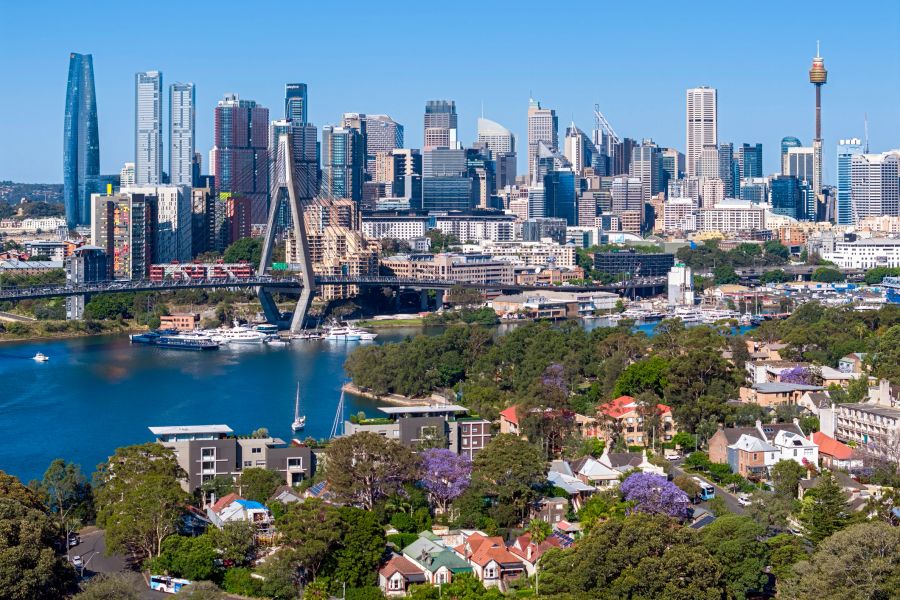
Australia's AI ambitions are not being built in a single city or a single building. They are taking shape across a web of innovation precincts, research campuses, and technology corridors stretching from inner Sydney to suburban Melbourne, from Brisbane's creative quarter to Adelaide's Lot Fourteen. Each location is carving out its own identity and focus area, and together they are laying the geographic groundwork for an AI-powered national economy.
Sydney: Tech Central and the Inner-City Innovation Belt
The densest concentration of technology activity in Australia has taken root across six inner-Sydney neighbourhoods — Surry Hills, Haymarket, Ultimo, Eveleigh, Chippendale, and Camperdown — in a corridor the NSW Government calls Tech Central.
The precinct has attracted a remarkable density of technology activity. Canva, Block, SafetyCulture, and Rokt all operate here, and Atlassian's purpose-built headquarters in the Haymarket area is expected to open in 2027. The NSW Government has designated the corridor as a priority growth zone, and the scale of economic activity it supports — measured in employment, research output, and company formation — makes it the most concentrated technology district in the country.
What sets Tech Central apart is the unusually tight weave of research and commercial life. The University of Sydney and UTS are among four universities operating in or near the district, and the area hosts upwards of 150 research institutes and specialist centres. Sydney's largest public teaching hospital sits within the precinct, alongside Cicada Innovations — Australia's foremost deep tech incubator — and the Australian Centre for Robotics, a facility that ranks among the world's largest of its kind.
Artificial intelligence sits alongside quantum computing, cybersecurity, fintech, and health and life sciences as a priority growth sector for the precinct. The roughly 160,000 students studying in the area each year feed a reliable pipeline of technically skilled talent into the businesses operating nearby.
Sydney's recognition as one of the world's top 30 most innovative cities — a standing the NSW Government points to with pride — owes much to the momentum building in this inner-city corridor.
Melbourne: Fishermans Bend and the Parkville Knowledge Cluster
Melbourne's technology and AI activity is distributed across several distinct zones, with Fishermans Bend drawing increasing attention as a long-term play.
Stretching across parts of Port Melbourne and South Melbourne just west of the CBD, Fishermans Bend is the focus of an ambitious urban renewal effort that includes a dedicated innovation quarter. The Victorian Government has earmarked the area for advanced manufacturing, engineering, and technology activity, and the University of Melbourne has moved to establish an anchor presence there to tie research and industry together.
Further north, the Parkville and Carlton corridor — built around the University of Melbourne's main campus — has long attracted research-intensive organisations. The Bio21 Institute and Melbourne Connect, a purpose-built collaboration hub that welcomed its first tenants in 2021, draw together academic researchers, early-stage companies, and established technology firms under one roof. IBM's Australian research team operates out of Melbourne Connect, and the precinct has become a magnet for AI-focused businesses.
Melbourne's technology strengths lean toward AI applications in healthcare and life sciences — a natural fit given the density of medical research organisations in Parkville — as well as fintech and enterprise software.
Brisbane: Fortitude Valley and the Northern Innovation Corridor
Brisbane's technology scene has gravitated toward the inner-northern suburbs over the past decade, with Fortitude Valley and the neighbouring Bowen Hills area emerging as the focal points.
Fortitude Valley built its reputation on entertainment and the creative industries, but a substantial technology community has taken root alongside those older industries. River City Labs, one of Queensland's most enduring startup hubs, has called the Valley home for years and has helped launch hundreds of early-stage technology ventures.
The corridor running north through Bowen Hills toward Herston — where QUT's Kelvin Grove campus and the Royal Brisbane and Women's Hospital are located — has become a productive zone for health technology and AI research. QUT has invested significantly in AI capability across computer vision, natural language processing, and healthcare applications, and the proximity of a major hospital creates real-world testing ground for that work.
Looking further ahead, the Queensland Government's preparations for the 2032 Brisbane Olympic and Paralympic Games are expected to draw fresh technology investment into the region, with smart city infrastructure and AI-driven logistics forming part of the planning conversation.
Adelaide: Lot Fourteen
On the site of the former Royal Adelaide Hospital in the city's north-east, South Australia has built one of the country's most intentional attempts to seed an AI and space technology ecosystem from scratch.
Lot Fourteen now houses the national headquarters of the Australian Space Agency, the SmartSat Cooperative Research Centre, and a growing cluster of defence technology, cybersecurity, and AI businesses. The Australian Institute for Machine Learning (AIML), a University of Adelaide research centre operating out of the precinct, has built a strong reputation in computer vision, machine learning, and AI applications across agriculture, health, and defence.
The South Australian Government has worked to attract both federal funding and private sector investment to the site, positioning it as a national rather than purely local asset. The precinct's emphasis on space, defence, and AI plays to South Australia's established strengths in the defence industry while opening pathways into a broader technology economy.
Perth: Bentley, Kensington, and the Resources-Tech Nexus
Western Australia's AI and technology activity clusters around Curtin University's Bentley campus and the nearby suburb of Kensington, where some of the country's most powerful computing infrastructure is housed.
Curtin has built a strong research profile in AI and data science, with a particular focus on areas that matter to Western Australia's economy — geospatial analysis, mining automation, and resources technology. Collaborative research programs with major mining companies have translated into practical AI tools for autonomous equipment, predictive maintenance systems, and exploration data analysis.
The Pawsey Supercomputing Research Centre in Kensington underpins much of this work, providing the raw computational power that AI research and development demands. The facility is among the most capable of its kind in Australia and serves researchers and industry partners across the country.
Canberra: Research Depth and the Government Technology Market
Canberra occupies a distinctive position in Australia's AI landscape. As the national capital, it hosts an unusually dense collection of research institutions, federal agencies, and defence and intelligence organisations — a combination that shapes both the research agenda and the commercial opportunity.
The Australian National University has built meaningful AI and machine learning research capability at its Acton campus. CSIRO's Data61, the country's largest dedicated data science and AI research organisation, maintains a significant Canberra presence and works closely with government departments on applying AI to public sector problems.
The sheer concentration of federal agencies in the capital creates a substantial and specialised market for AI products and services — spanning public administration, regulatory technology, defence, and intelligence. A number of AI companies have set up Canberra operations specifically to be close to that customer base.
Shared Foundations
For all their differences in scale, focus, and maturity, Australia's emerging AI precincts are built on common ground.
Every one of them draws strength from a nearby university or research institution — the source of both the ideas that seed new ventures and the graduates who staff them. The deliberate co-location of researchers and entrepreneurs, often in the same building or on the same street, reflects a well-established principle: that physical proximity speeds up the transfer of knowledge and the formation of productive relationships.
Every precinct has also benefited from government investment at the state or federal level, or both. Building an innovation ecosystem is a long game that requires public commitment alongside private capital, and Australia's various national and state AI strategies have directed meaningful funding toward these locations.
And every precinct is woven into a wider global network — exchanging talent, research, and investment with counterparts in the United States, Europe, and Asia. Australia's AI precincts are not self-contained; they are local nodes in an international system.
Looking Forward
These precincts are at different points on the journey. Tech Central in Sydney has the most developed ecosystem, with established companies, deep research infrastructure, and a mature support network. Lot Fourteen in Adelaide is younger but moving quickly. Melbourne, Brisbane, Perth, and Canberra are each finding their footing and building on their particular strengths.
What they share is momentum — and a growing recognition that Australia has the talent, the institutions, and the policy commitment to compete seriously in the global AI economy. The suburbs and precincts described here are where that potential is being converted into reality, one collaboration, one company, and one breakthrough at a time.
Stay informed
Get AI news every Friday
The AI Digest delivers the week's most important AI stories — free, in plain English.
Subscribe free →Related Articles
More AI in Australia →
Amazon Web Services Is Building Australia's AI Future From the Ground Up
AWS has committed billions to Australian AI infrastructure. The ripple effects are reaching startups, researchers, and enterprises. Here's what it means.
Nvidia Is Expanding Its AI Infrastructure Footprint in Australia
Nvidia is bringing next-generation GPU infrastructure to Australia — big implications for AI startups, researchers, and enterprises needing local compute.

Australian AI Startups Are Attracting Record Investment
Australian AI startups are attracting record investment in 2026. Healthcare, agritech, and legal AI lead the charge. Here's where the money is flowing.