
How AI Is Giving Australian Farmers an Early Warning on Drought
Australian farmers are gaining access to earlier, more actionable drought warnings through AI tools built on CSIRO research and Bureau of Meteorology seasonal forecasting data — changing how they manage stock, water, and forward contracts before dry conditions lock in.
Australia has the most variable rainfall of any inhabited continent on Earth. That variability isn't just a geographic curiosity — it's a financial reality that shapes decisions on every farm in the country, from the wheat belt of Western Australia to the cattle stations of Queensland's Channel Country.
For generations, farmers have relied on experience, local knowledge, and Bureau of Meteorology seasonal outlooks to read what's coming. Now, a new layer of AI-assisted analysis is being added to that toolkit — one that draws on satellite data, soil moisture readings, and decades of climate records to give farmers a more granular, earlier picture of drought risk than was previously possible.
The Problem AI Is Helping to Solve
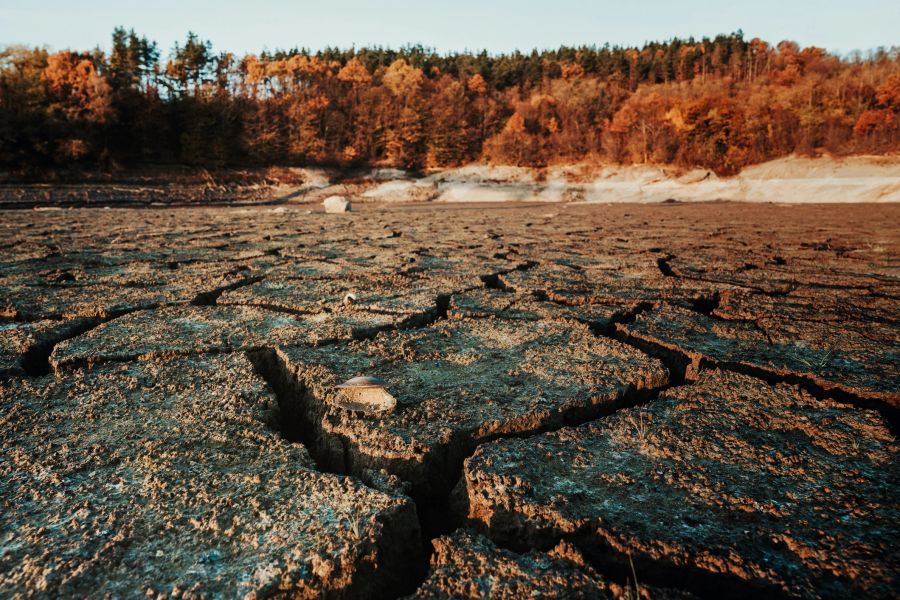
Drought is not a single event. It builds gradually — through below-average rainfall, declining soil moisture, and reduced pasture growth — often over months before it becomes undeniable. By the time a drought is formally declared, many of the most costly decisions (holding too much stock, delaying destocking, missing forward-selling windows) have already been made.
The Australian Bureau of Meteorology has published seasonal climate outlooks for decades, providing probability-based rainfall and temperature forecasts at a national scale. These outlooks are publicly available and widely used. What AI tools are beginning to add is a finer-grained, property-level layer on top of that foundation — translating broad probabilistic forecasts into more specific, actionable signals for individual farms.
What CSIRO Has Built
CSIRO, Australia's national science agency, has been developing and refining climate and agricultural modelling tools for many years. Its Agricultural Production Systems sIMulator (APSIM) — developed collaboratively with the Queensland Department of Agriculture and Fisheries — is one of the most widely used crop and pasture simulation platforms in the world. APSIM uses historical climate data, soil data, and management inputs to model how crops and pastures are likely to perform under different conditions.
More recently, CSIRO's work on seasonal climate forecasting has incorporated machine learning techniques to improve the skill of predictions, particularly for rainfall in Australia's highly variable climate zones. CSIRO has published research on using AI and statistical learning methods to improve seasonal outlooks, with the goal of giving farmers and water managers more reliable forward-looking information.
CSIRO's Data61 division — Australia's largest data science and AI research group — has also worked on applying machine learning to agricultural decision-making, including tools that integrate satellite imagery, soil sensor data, and climate model outputs to support farm management decisions.
How Satellite Data Is Changing the Picture
One of the most significant shifts in recent years has been the availability of high-resolution satellite data that can be used to monitor soil moisture, pasture condition, and vegetation health at a paddock level.
The Australian Bureau of Meteorology publishes a national soil moisture monitoring product derived from satellite observations. This data, combined with rainfall records and climate model outputs, gives a much clearer picture of how much water is actually in the ground — not just how much rain has fallen.
Several agricultural technology companies operating in Australia have built platforms that pull together these data streams — satellite soil moisture, BOM seasonal outlooks, historical rainfall records, and pasture growth models — and apply machine learning to generate property-level risk assessments. The goal is to translate complex, multi-source data into a clear signal: how likely is it that this property will experience feed or water shortfalls in the next six to twelve weeks, and what decisions should be considered now?
The Decisions That Change
The value of earlier drought warning is not abstract. It maps directly onto specific farm management decisions that have significant financial consequences.
Stocking rate decisions are among the most important. Destocking early — before feed becomes critically scarce — typically results in better sale prices and lower stock losses than emergency destocking during a drought. A six-to-eight-week earlier signal can be the difference between an orderly reduction in stock numbers and a forced sale at the bottom of the market.
Forward grain contracting is another area where earlier information has direct value. Grain growers who have a clearer picture of likely yield outcomes earlier in the season can make more informed decisions about how much grain to forward-sell and at what price. Selling too much forward in a drought year — or too little in a good year — both carry significant financial risk.
Water management on properties with dams, bores, or irrigation allocations also benefits from earlier drought signals. Knowing that a dry period is likely allows farmers to audit water storage, repair infrastructure, and plan water-carting logistics before they become urgent.
Insurance and financial planning decisions — including whether to draw on drought assistance programs — are also better made with earlier information. The Australian Government's Farm Household Allowance and the Future Drought Fund both provide support mechanisms, but accessing them effectively requires forward planning.
The Bureau of Meteorology's Role
It is worth being clear about what the Bureau of Meteorology already provides, because AI tools in this space are building on — not replacing — a substantial existing foundation.
The BOM's seasonal climate outlooks provide three-month probability forecasts for rainfall and temperature across Australia, updated monthly. These outlooks are based on statistical relationships between climate drivers — including the El Niño–Southern Oscillation (ENSO), the Indian Ocean Dipole (IOD), and the Southern Annular Mode (SAM) — and Australian rainfall patterns. They are publicly available at no cost at bom.gov.au.
The BOM also publishes the Drought Statement, a regular assessment of drought conditions across Australia, and the Pasture Growth Outlook, which combines climate forecasts with pasture growth modelling to give farmers a forward-looking picture of feed availability.
What AI tools are adding to this foundation is primarily a translation and integration layer — taking the BOM's probabilistic forecasts and combining them with property-level data (soil type, current soil moisture, pasture condition, historical performance) to generate more specific, actionable outputs for individual farms.
The Future Drought Fund
The Australian Government's Future Drought Fund, established in 2019, has invested in a range of programs designed to improve drought preparedness and resilience across the agricultural sector. This includes funding for decision-support tools, farm business training, and research into drought-resistant farming practices.
Several of the agricultural technology platforms developing AI-assisted drought decision tools have received support through government programs, including through the Future Drought Fund's Drought Resilience Adoption and Innovation Hubs, which are hosted by universities and research organisations across Australia's farming regions.
These hubs are designed to connect farmers with research and technology, including digital tools for climate risk management. The University of Southern Queensland, Charles Sturt University, and the University of New England are among the institutions hosting hubs that have worked on climate decision-support tools for farmers.
What Farmers Are Actually Using
The practical reality on Australian farms today is that adoption of AI-assisted climate tools is growing but uneven. Larger broadacre operations — particularly in the grains and beef sectors — have been earlier adopters, partly because the scale of their operations makes the financial value of better decision-making more significant, and partly because they are more likely to have the connectivity and digital infrastructure that these tools require.
Smaller mixed farms and family operations are increasingly being reached through agricultural consultants and agronomists who use these platforms on behalf of their clients, translating the outputs into practical recommendations.
The National Farmers' Federation has consistently highlighted digital literacy and connectivity as priorities for the agricultural sector, noting that reliable internet access remains a barrier for many rural properties. The Australian Government's investment in rural connectivity — including through the Regional Connectivity Program — is gradually addressing this, though coverage gaps remain in remote areas.
A Genuinely Australian Problem, Getting Australian Solutions
What makes this story particularly significant is that it represents Australian science and technology being applied to a distinctly Australian challenge. The variability of Australia's climate is not well-served by tools designed for the more predictable rainfall patterns of Europe or North America. CSIRO's decades of investment in understanding Australia's climate systems — including the drivers of drought in a country where El Niño, the Indian Ocean Dipole, and the Southern Annular Mode all play significant roles — gives Australian-developed tools a genuine advantage in this space.
The combination of world-class climate science from CSIRO and the Bureau of Meteorology, growing availability of satellite and sensor data, and the practical urgency of drought risk in Australian agriculture has created the conditions for genuinely useful AI applications — tools that are grounded in real science, addressing a real problem, and delivering real value to the people who need it most.
For Australian farmers, the prospect of knowing earlier, planning better, and losing less to drought is not a distant technological promise. It is a practical capability that is becoming more accessible with each passing season.
Stay informed
Get AI news every Friday
The AI Digest delivers the week's most important AI stories — free, in plain English.
Subscribe free →Related Articles
More AI in Australia →
CSIRO's AI Research Is Putting Australia on the Global Science Map
CSIRO is applying AI to bushfire prediction, reef monitoring, and precision agriculture — and the world is paying attention. Inside Australia's top AI research.
How AI Is Transforming Australian Farming
AI drones, smart irrigation, and livestock sensors are transforming Australian farms — boosting yields, cutting costs, and helping farmers use less water.

The Australian Suburbs Powering the Nation's AI Future
From Sydney's Tech Central to Melbourne's Fishermans Bend and Brisbane's Fortitude Valley, a growing network of innovation precincts across Australia is building the infrastructure, talent, and investment base for an AI-powered economy.