
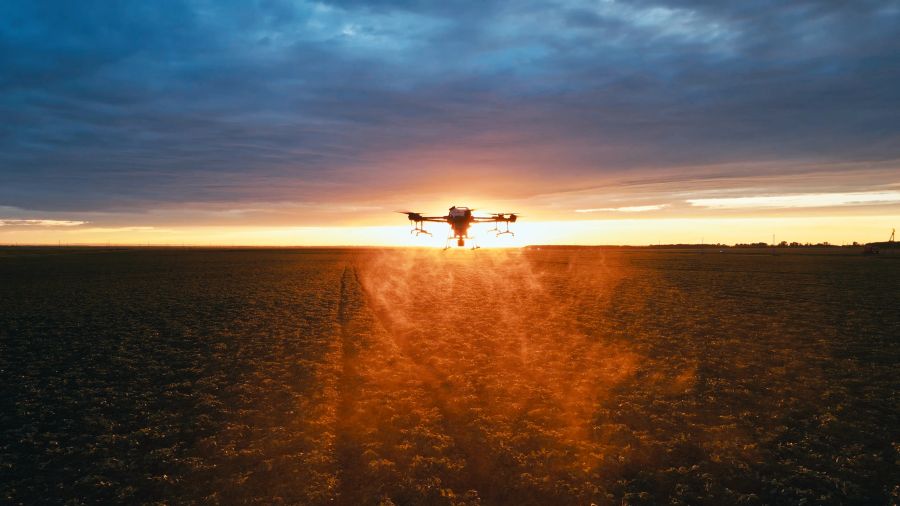
How AI Is Transforming Australian Farming
AI drones, smart irrigation, and livestock sensors are transforming Australian farms — boosting yields, cutting costs, and helping farmers use less water.
Australia's agricultural sector feeds the nation and exports to the world. Now, artificial intelligence is giving farmers new tools to meet the challenges of vast distances, unpredictable rainfall, and persistent pest pressures — and the results are already showing up in yields, costs, and environmental outcomes.
Drones and Computer Vision
Modern agricultural drones equipped with multispectral cameras and AI image analysis can assess crop health, identify pest infestations, and map soil variability across entire properties. They can detect stress in crops before it is visible to the human eye — giving farmers time to intervene before a problem becomes a loss.
Precision application guided by AI analysis can reduce fertiliser and chemical use while maintaining or improving yields. This is both a cost saving and a meaningful reduction in environmental footprint — less runoff into waterways, less pressure on soil health, and a more defensible sustainability story for export markets that are increasingly scrutinising the environmental credentials of Australian produce.
Water: Australia's Most Precious Resource
AI-powered irrigation management systems integrate data from soil moisture sensors, weather forecasts, satellite imagery, and historical usage patterns to calculate how much water each part of a property needs. Irrigators using AI-guided systems have reported meaningful water savings with no reduction in yield or quality — a significant outcome in a country where water is a finite and contested resource.
The Murray-Darling Basin, which produces a significant share of Australia's irrigated agricultural output, is an environment where every megalitre of water saved has real value — both economically and ecologically. AI irrigation management is one of the more practical tools available to help the basin's farmers do more with less.
Livestock Monitoring
Wearable sensors on cattle, sheep, and dairy cows generate continuous data on animal health, behaviour, and productivity. AI systems analyse this data to detect problems early — a dairy cow fitted with an AI-connected sensor can alert a farmer to early signs of illness before the animal shows obvious symptoms, enabling faster treatment and reducing losses.
For extensive beef operations across northern Australia, where a single property might run thousands of head of cattle across hundreds of thousands of hectares, AI-assisted monitoring provides a level of visibility that was previously impossible without a much larger workforce.
Pest and Disease Prediction
Machine learning models trained on historical outbreak data, climate variables, and surveillance information can predict where and when pest and disease outbreaks are likely to occur. AI-powered pest identification apps let farmers photograph an unfamiliar insect and receive an identification and management recommendation quickly — without waiting for a specialist.
The economic value of early pest detection is substantial. A locust outbreak detected and treated early costs a fraction of one that has been allowed to establish. AI tools that give farmers earlier warning are translating directly into reduced losses across the sector.
A More Sustainable Future
More precise use of inputs means less chemical runoff into waterways. More efficient irrigation means more water left in rivers and aquifers. Australia's agricultural sector has committed to reaching net zero emissions by 2050, and AI is increasingly seen as a key enabler of that goal — helping farmers reduce their footprint while maintaining the productivity that makes Australian agriculture globally competitive.
Australia has always been a nation of agricultural innovators — from the stump-jump plough to precision GPS guidance. AI is the latest chapter in that story, and the sector is embracing it with characteristic pragmatism.
Climate Adaptation
Climate change is one of the most significant challenges facing Australian agriculture, and AI is increasingly being used as a tool for adaptation. Machine learning models that analyse decades of climate and yield data can help farmers understand how changing rainfall patterns, temperature shifts, and extreme weather events are likely to affect their operations — and what adjustments to planting schedules, crop varieties, and water management strategies are most likely to maintain productivity under changing conditions.
For farmers in regions facing increasing drought frequency, AI tools that optimise water use and identify drought-tolerant crop varieties are not just productivity tools — they are resilience tools that help farming businesses survive and adapt as the climate changes.
The Data Ownership Question
As AI tools collect more data from Australian farms — soil sensors, drone imagery, livestock monitors, weather stations — questions about who owns that data and how it can be used are becoming increasingly important. Australian farmers are rightly cautious about sharing detailed operational data with technology companies, and the industry is working to develop data governance frameworks that protect farmers' interests while enabling the data sharing that makes AI tools more effective.
The National Farmers' Federation has been active in advocating for farmer data rights, and several technology providers operating in the Australian agricultural market have adopted data governance standards that give farmers clear ownership and control over their operational data. This is a positive development that will support broader AI adoption across the sector.
Stay informed
Get AI news every Friday
The AI Digest delivers the week's most important AI stories — free, in plain English.
Subscribe free →Related Articles
More Environment →
CSIRO's AI Research Is Putting Australia on the Global Science Map
CSIRO is applying AI to bushfire prediction, reef monitoring, and precision agriculture — and the world is paying attention. Inside Australia's top AI research.
AI Cameras on the Monaro Highway Are Warning Drivers About Wildlife in Real Time
AI cameras on the Monaro Highway detect kangaroos and wombats in real time, triggering smart signs to warn drivers before a collision. Here's how it works.
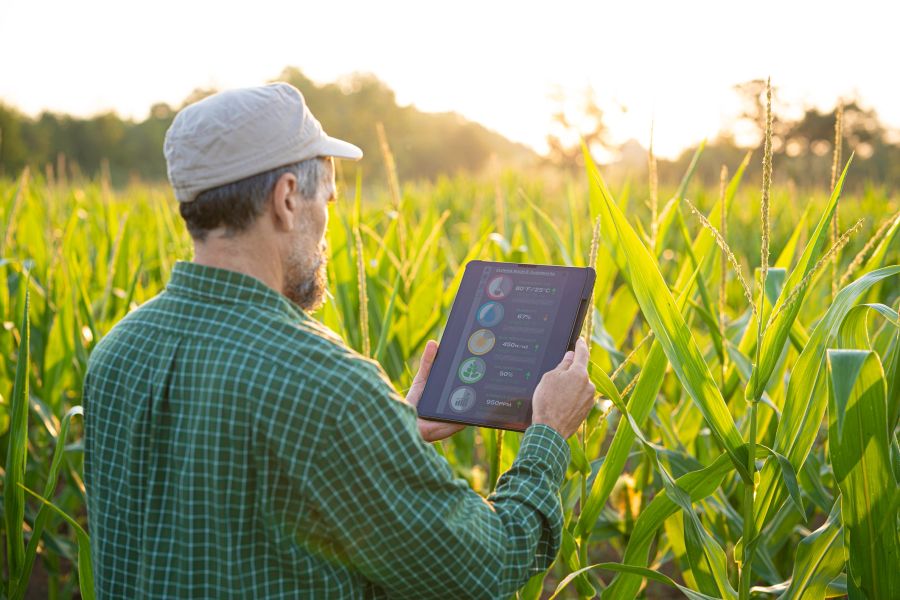
AI for Precision Farming in Australia: A Practical Guide (2026)
How Australian cropping farmers can use AI-powered precision farming tools to reduce input costs, improve yields, and manage paddock variability more effectively in 2026.