
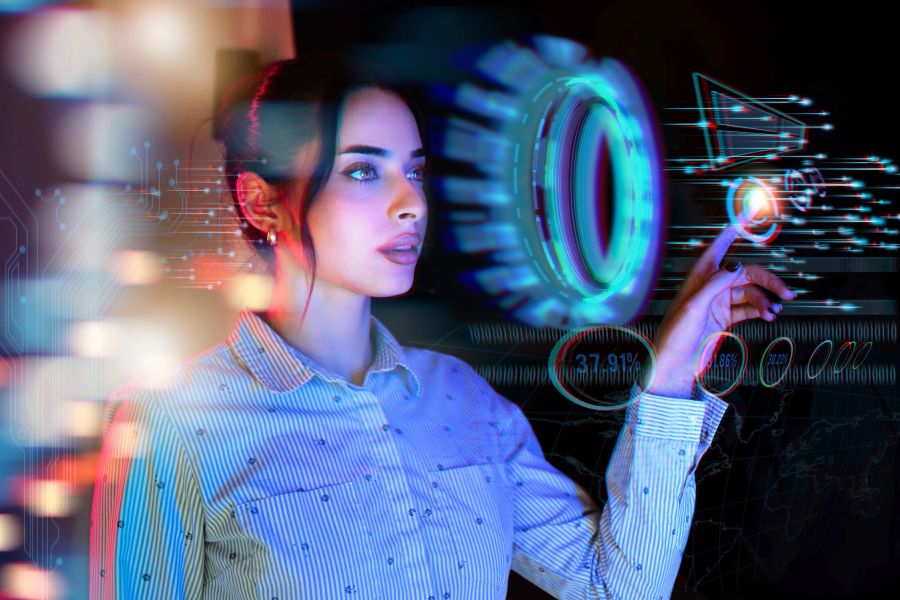
Could Robots Like Tesla Optimus Be Useful for Australians?
Humanoid robots are no longer science fiction. With AI and computer-vision expertise already developed for cars and factories, here is what robots like Tesla Optimus could realistically offer Australians — and why the path to safe, everyday use is more grounded than the headlines suggest.
Robots Are Closer Than You Think
For most Australians, the idea of a robot in the home or workplace still feels like something from a film. But the technology underpinning humanoid robots has been quietly maturing for years — and much of it is already working in products Australians use every day.
Tesla's Optimus is one of the most talked-about humanoid robots currently in development. Designed as a general-purpose machine built to handle tasks that are repetitive, physically demanding, or potentially hazardous, it represents a genuine shift in what robots are being asked to do. Rather than being built for a single factory task, Optimus is designed to move through the world the way a person does — walking, lifting, carrying, and adapting to its surroundings.
What makes it particularly relevant to Australians is not just the hardware. It is the AI system underneath it.
Tesla's AI Expertise Is Already on Australian Roads
Tesla's Optimus draws on the company's broader AI, computer-vision, neural-network, and onboard-computing expertise developed through its vehicle autonomy program — while also requiring dedicated robotics-specific software and models to handle the distinct challenges of balance, navigation, grasping, and physical interaction with the world.
That vehicle-derived expertise is not trivial. Tesla's vision-based AI is already being used in supervised driver-assistance systems in Australia, giving the company extensive real-world experience in perception and decision-making. The AI has been trained to perceive environments, identify objects, and anticipate movement across an enormous volume of real-world driving in many countries and conditions.
Optimus uses cameras and onboard processing to understand its surroundings — a camera-first approach consistent with Tesla's vehicle philosophy — but the robot faces fundamentally different challenges: maintaining balance on two legs, navigating stairs and uneven surfaces, grasping objects of varying shapes and weights, and interacting safely with people in close proximity. Tesla's own robotics presentations have discussed these as distinct engineering problems requiring dedicated foundation models, training data, and software.
The shared expertise in AI and computer vision is a genuine advantage. But Optimus is not simply a vehicle AI transplanted into a robot body — it is a new system that builds on that foundation while solving a different set of problems.
What Robots Like Optimus Could Actually Do for Australians
Tesla has described Optimus as being designed for tasks that are "dangerous, repetitive, and boring." That description maps directly onto some of the most pressing challenges facing Australian workers and households.
In the Workplace
Australia has a strong manufacturing, agriculture, and logistics sector — all industries where physically demanding, repetitive tasks are common. Robots capable of lifting, sorting, assembling, or moving materials in structured environments could reduce the physical toll on workers and lower the rate of workplace injuries in sectors where musculoskeletal strain is a persistent and costly problem.
In healthcare and aged care, the potential is particularly significant. Australia's ageing population places growing pressure on care workers, many of whom perform physically demanding tasks repeatedly throughout a shift. A robot capable of assisting with lifting, transporting equipment, or handling routine physical tasks could meaningfully reduce the burden on human carers — freeing them to focus on the parts of care that require human judgement, empathy, and genuine human connection.
In the Home
Tesla's stated vision for Optimus includes everyday household tasks — carrying groceries, tidying spaces, assisting people with limited mobility. For older Australians or those living with disability, a capable home assistant robot could support greater independence and reduce reliance on in-home support services.
The robot's hand design has progressed significantly through successive development phases, reaching a level of dexterity that allows it to handle objects with a degree of care that earlier robotic systems simply could not manage. That kind of fine motor capability is what separates a useful home assistant from a clumsy machine.
In Hazardous Environments
Australia's mining, construction, and emergency services sectors regularly place workers in environments where the risk of serious injury is elevated. Robots designed to operate in confined spaces, handle hazardous materials, or assist in search and rescue scenarios could reduce human exposure to those risks — without removing human oversight from the process.
Is the Technology Safe?
Safety is the most important question — and it is one the robotics industry takes seriously.
Humanoid robots at the scale and capability being developed by Tesla and others are not yet in widespread public deployment. The approach being taken is a staged one: starting in structured, supervised settings — such as controlled manufacturing environments — before expanding to more complex and unpredictable ones. That is the right way to build confidence in any new technology, and it is the same approach that has been applied to autonomous vehicles.
AI systems in robotics are designed to improve over time through data collection, evaluation, retraining, and software updates. Just as Tesla's vehicle software has been updated iteratively to handle new scenarios and edge cases, the AI running Optimus is intended to improve as the program matures — though improvement requires deliberate engineering effort, not simply more exposure to environments. Real-world deployment can also reveal new failure modes, which is precisely why staged rollouts in controlled settings are the standard approach.
For early deployment phases, human supervision is expected to remain part of the process. Tesla's stated long-term goal is an autonomous humanoid robot, but the practical path there involves starting in structured, supervised settings where human oversight is readily available and the robot's capabilities can be matched to well-defined tasks. This is consistent with how Tesla's vehicle AI operates today: it assists and augments human capability, with the driver remaining responsible for the vehicle at all times.
Engineering experts have noted that achieving truly fluid, human-like movement in a bipedal robot requires ongoing advances in actuator technology — the mechanical systems that drive the robot's limbs. Tesla's Optimus uses precision linear actuators designed to handle the physical demands of walking and lifting. Continued progress in this area will make future versions more capable, more reliable, and safer to operate alongside people.
The Progression That Makes Robots Better Over Time
One of the most important things to understand about AI-powered robots is that they improve through use. The same principle that has made Tesla's vehicle AI progressively more capable applies directly to Optimus.
Each task the robot performs, each environment it navigates, and each challenge it encounters contributes to a growing body of training data. Over time, that data makes the AI more capable of handling novel situations, more reliable in familiar ones, and better at recognising when a situation exceeds its current capabilities and human intervention is needed.
The development of Optimus has followed a clear upward trajectory. Early prototypes demonstrated basic movement. Successive versions added improved coordination, more capable hands, and the ability to handle delicate objects without breaking them. More recent demonstrations have shown the robot interacting with people in public settings — handing things over, responding to its environment, navigating crowds.
Each generation has been meaningfully more capable than the last. The pace of improvement has been notable as the AI systems mature and the hardware becomes more refined, though the timeline for widespread real-world deployment remains uncertain and will depend on continued progress in both software and hardware.
Australia Is Well Placed to Benefit
Australia has a strong track record of adopting technology that improves productivity and safety in demanding industries. The country has embraced automation in mining, precision agriculture, and logistics — sectors where the practical benefits of technology are clear and the appetite for innovation is high.
The regulatory environment in Australia also supports a thoughtful approach to new technology. Safe Work Australia and state-based workplace safety regulators have established frameworks for assessing new equipment and processes, which means the introduction of robots into Australian workplaces would be subject to the same rigorous safety assessment applied to any new machinery.
Australia's CSIRO has been conducting research into robotics and autonomous systems for years, including work on robots designed for agriculture, search and rescue, and industrial applications. That domestic research capability means Australia is not simply a passive recipient of overseas technology — it is an active participant in understanding how robots can be deployed safely and effectively in Australian conditions.
What the Near Future Looks Like
The near-term focus for humanoid robots will be on industrial and commercial applications — environments where the robot's capabilities can be matched to well-defined tasks, where human oversight is readily available, and where the benefits in terms of safety and productivity are most immediately apparent.
For Australians, the practical implications are likely to be felt first in industries facing labour shortages or high rates of workplace injury — aged care, manufacturing, agriculture, and construction among them. As the technology matures and confidence in its reliability grows, the range of applications will expand into more varied and personal settings.
The robots are coming. And the AI that will guide them is already here, working quietly in the vehicles on our roads.
Sources
- Tesla, Inc. — Optimus robot program (tesla.com)
- Wikipedia — Optimus (robot) (en.wikipedia.org)
- Tesla Autopilot — Full Self-Driving technology overview (tesla.com)
- Firgelli Automations — The Mechanical Reality of Humanoid Robotics (firgelli.com)
- CSIRO — Robotics and autonomous systems research (csiro.au)
- Safe Work Australia — Work health and safety (safeworkaustralia.gov.au)
Stay informed
Get AI news every Friday
The AI Digest delivers the week's most important AI stories — free, in plain English.
Subscribe free →Related Articles
More Technology →
Nvidia Is Expanding Its AI Infrastructure Footprint in Australia
Nvidia is bringing next-generation GPU infrastructure to Australia — big implications for AI startups, researchers, and enterprises needing local compute.

Amazon Web Services Is Building Australia's AI Future From the Ground Up
AWS has committed billions to Australian AI infrastructure. The ripple effects are reaching startups, researchers, and enterprises. Here's what it means.
Robots on the Factory Floor: How AI Is Changing Australian Manufacturing Jobs
Cobots and AI quality inspection are on Australian factory floors. Some jobs are changing, others are being created. Here's what the evidence actually shows.