
Robots on the Factory Floor: How AI Is Changing Australian Manufacturing Jobs
Cobots and AI quality inspection are on Australian factory floors. Some jobs are changing, others are being created. Here's what the evidence actually shows.
Australian manufacturing has been through several waves of automation, and each one has prompted the same fear: that machines will take jobs faster than new ones can be created. The current wave of AI-powered robotics is different in important ways — and the evidence from factory floors is more nuanced than the headlines suggest.
What Is Actually Happening on the Factory Floor
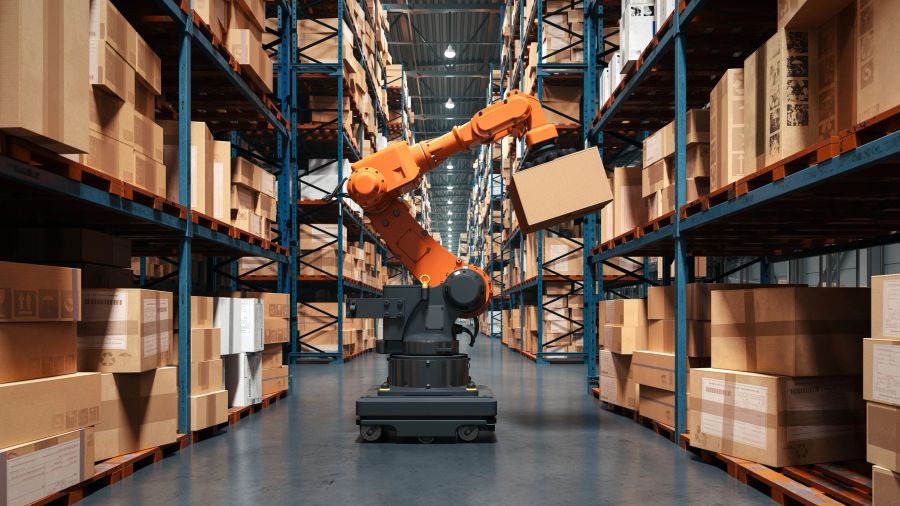
Collaborative robots — cobots — are increasingly working alongside human operators on assembly lines. These AI-guided systems handle precision tasks: torque measurement, component alignment, and quality inspection at speeds and tolerances that are difficult to match consistently by hand. Human workers in these environments tend to shift toward roles that require judgement, problem-solving, and contextual awareness.
AI vision systems are also being deployed in food processing and packaging, inspecting products at high speed and flagging defects for human review. In many cases, facilities are using these tools to expand production capacity rather than reduce headcount — making each worker more productive rather than replacing them outright.
The pattern is consistent across sectors: AI and robotics are handling the most repetitive, physically demanding, or precision-critical tasks, while human workers focus on the aspects of manufacturing that require adaptability, problem-solving, and direct customer interaction.
The Skills Gap Is Real
The challenge is not that AI is eliminating jobs wholesale — it is that the jobs being created require different skills than the ones being automated. Technicians who can maintain, calibrate, and troubleshoot AI and robotics systems are in genuine shortage across the sector.
TAFE networks and universities are responding with new courses in AI systems maintenance, robotics programming, and human-machine collaboration. Enrolments in these programs have grown significantly as industry demand has become clear. The challenge is ensuring that workers displaced from routine roles have genuine pathways into these new technical positions — not just theoretical access to training.
Predictive Maintenance
One of the highest-value applications of AI in Australian manufacturing is predictive maintenance. AI systems that monitor equipment performance in real time can identify the early signs of mechanical failure — a bearing running slightly hot, a vibration pattern that deviates from baseline — and alert maintenance teams before a breakdown occurs.
Unplanned downtime is one of the most expensive problems in manufacturing. A production line that stops unexpectedly costs not just the repair bill but the lost output, the disrupted supply chain, and the overtime required to catch up. AI-driven predictive maintenance is delivering measurable reductions in unplanned downtime across Australian facilities that have adopted it.
Government Support
The federal government's Advanced Manufacturing Fund supports Australian manufacturers adopting AI and robotics. A key condition of funding is that projects include workforce transition plans — an acknowledgement that the productivity gains from AI need to be shared broadly, not just captured by capital.
State governments have also been active, with Victoria, New South Wales, and Queensland all running programmes to support manufacturers in adopting advanced technologies. The combination of federal and state support is creating a meaningful incentive structure for manufacturers to invest in AI capabilities.
The Outlook
Australia's manufacturing sector is not going to look the same in five years. The factories navigating this transition thoughtfully — investing in both technology and people — are emerging more competitive and more resilient than those that are either resisting automation or automating without regard for their workforce. The opportunity is real, and the Australian manufacturing sector is increasingly taking it seriously.
Supply Chain Resilience
The disruptions of recent years have focused attention on supply chain resilience, and AI is playing a growing role in helping Australian manufacturers build more robust supply chains. AI systems that monitor supplier performance, track inventory levels, and model the impact of potential disruptions give manufacturers earlier warning of problems and more time to respond.
For manufacturers that source components internationally, AI-assisted supply chain monitoring can identify risks — a supplier facing financial difficulty, a port experiencing congestion, a weather event affecting a key production region — before they translate into production stoppages. The ability to anticipate and respond to supply chain disruptions is increasingly a competitive differentiator in global manufacturing markets.
Export Competitiveness
Australian manufacturers competing in global markets face cost pressures from lower-wage economies. AI-driven productivity improvements are one of the most practical tools available to close that gap — not by cutting wages, but by making each hour of skilled Australian labour more productive. Manufacturers that have invested in AI and automation are reporting improved export competitiveness, with the quality and consistency advantages of AI-assisted production resonating with international buyers who prioritise reliability over price alone.
Stay informed
Get AI news every Friday
The AI Digest delivers the week's most important AI stories — free, in plain English.
Subscribe free →Related Articles
More Business →
AI Is Changing Australian Jobs — But Not in the Way Most People Fear
AI is reshaping Australian jobs — but it's more nuanced than mass unemployment. New roles are emerging and regional Australia faces the biggest shift.

The New Jobs AI Is Creating in Australia: Roles That Didn't Exist Five Years Ago
AI isn't just changing existing jobs — it's generating entirely new career fields in Australia. From prompt engineers to AI ethicists, here's what's emerging.

Why AI Is One of the Best Things to Happen to Australian Professionals and Businesses
From solo practitioners to large enterprises, AI is delivering real, measurable benefits to Australian professionals and companies. Here is what the evidence shows — and why it matters for the decade ahead.