
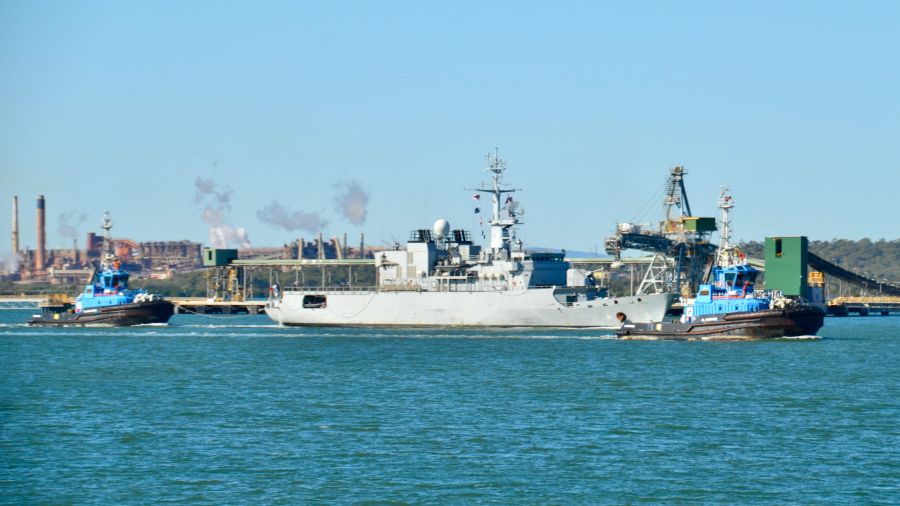
How Australia's Defence Forces Are Using AI to Protect the Nation
The Australian Defence Force is deploying AI-powered drones, cyber tools, and autonomous systems to strengthen national security. Here's what's being built.
Australia's defence establishment has quietly become one of the more thoughtful adopters of artificial intelligence in the Indo-Pacific region. The Australian Defence Force (ADF) is not racing to automate warfare — it is using AI as a force multiplier that enhances human decision-making, improves situational awareness, and reduces risk to personnel in complex environments.
Autonomous Surveillance and Reconnaissance
One of the most practical applications of AI in Australian defence is in surveillance and reconnaissance. Uncrewed aerial systems equipped with AI vision processing can monitor vast stretches of Australia's coastline and maritime approaches — a task that would require an impractical number of human operators to perform manually.
The MQ-4C Triton, operated by the Royal Australian Air Force, uses AI-assisted sensor fusion to process data from multiple sources simultaneously, giving commanders a clearer and more current picture of activity in Australia's area of interest. These systems do not make decisions autonomously — they surface information that human operators then act on.
Australia's maritime domain is one of the largest in the world. Monitoring it effectively requires persistent surveillance over vast distances — a challenge that AI-assisted uncrewed systems are uniquely well-suited to address.
AI in Cyber Defence
The Australian Signals Directorate (ASD) has been integrating AI tools into its cyber defence operations for several years. AI systems are particularly well-suited to the challenge of detecting anomalous network behaviour at scale — identifying patterns that might indicate a breach or intrusion attempt far faster than human analysts working alone.
Australia's Essential Eight cybersecurity framework, which guides both government and critical infrastructure operators, is increasingly being implemented with AI-assisted monitoring tools that can flag deviations from baseline behaviour in near real time.
The AUKUS Technology Dimension
The AUKUS partnership between Australia, the United Kingdom, and the United States has an explicit AI and autonomous systems component under its Pillar II advanced capabilities program. This includes collaboration on AI-enabled undersea warfare systems, electronic warfare, and quantum technologies.
For Australia, AUKUS represents an opportunity to develop sovereign AI capabilities in the defence domain — building local expertise and industrial capacity rather than relying entirely on imported systems. Defence industry partners including Australian technology companies are involved in developing and testing these capabilities domestically, creating jobs and expertise that will benefit the broader Australian technology sector.
Logistics and Supply Chain
AI is also being applied to the less visible but critically important domain of defence logistics. AI systems that optimise maintenance schedules, predict parts requirements, and manage supply chains can significantly improve the operational availability of complex military equipment — ensuring that aircraft, ships, and vehicles are ready when they are needed.
For a defence force that must maintain readiness across a vast geographic area with limited personnel, the efficiency gains from AI-assisted logistics are operationally significant.
Human Control Remains Central
Australia has been clear in its position on autonomous weapons: human control over the use of force is a non-negotiable principle. The ADF's approach to AI in defence is explicitly designed around augmenting human judgement, not replacing it. Every AI-assisted system in operational use has defined human oversight requirements built into its operating procedures.
This approach aligns with Australia's support for international discussions on lethal autonomous weapons systems at the United Nations, where Australia has consistently advocated for meaningful human control as a baseline standard.
Building Sovereign Capability
Beyond the immediate operational applications, Australia is investing in the long-term foundations of defence AI capability. The Defence Science and Technology Group (DSTG) conducts research into AI safety, explainability, and robustness — ensuring that AI systems used in high-stakes defence contexts behave predictably and can be understood by the humans who rely on them.
The result is a defence AI program that is measured, responsible, and genuinely focused on protecting Australians — not on replacing the human judgement that remains at the heart of Australia's approach to national security.
The Workforce Dimension
The integration of AI into defence operations requires a workforce that can work effectively alongside AI systems — understanding their capabilities, recognising their limitations, and maintaining the human judgement that remains central to military decision-making. The ADF is investing in training programs that develop these skills across the force, from technical specialists who maintain and operate AI systems to commanders who use AI-assisted analysis to inform their decisions.
The Defence Science and Technology Group (DSTG) works closely with the ADF to develop training frameworks for AI-enabled operations, drawing on research into human-machine teaming and the cognitive dimensions of working with AI systems. This investment in the human side of AI adoption is as important as the technology investment itself.
Why This Matters for Australians
Australia is at an important inflection point with artificial intelligence. Businesses, professionals, and individuals who understand how to use AI tools effectively are already seeing measurable advantages — in productivity, quality of output, and competitive positioning.
The tools available today are more capable and more accessible than at any previous point. Many are free or low-cost, and most require no technical background to use effectively. The barrier to entry has never been lower.
Getting Started
The most practical approach is to identify one specific task that takes significant time each week and test an AI tool on that task. Start with a free option like ChatGPT or Google Gemini, use it for two to three weeks, and evaluate the results honestly.
Most people who try this approach find that AI handles the task faster than expected, and that the time saved can be redirected to higher-value work. The key is to start with a real use case rather than experimenting in the abstract.
What to Watch For
As AI tools become more capable, the most important skill is not technical — it is judgement. Knowing when to use AI, when to verify its output, and when to rely on your own expertise is what separates effective AI users from those who get poor results.
Stay informed about developments in your industry, keep up with any regulatory guidance relevant to your profession or business, and approach AI as a tool that augments your capabilities rather than replaces your judgement.
The Bottom Line
AI is not a future technology for Australians — it is a present one. The question is not whether to engage with it, but how to do so effectively and responsibly. The resources and tools are available now. The advantage goes to those who start.
Stay informed
Get AI news every Friday
The AI Digest delivers the week's most important AI stories — free, in plain English.
Subscribe free →Related Articles
More Defence →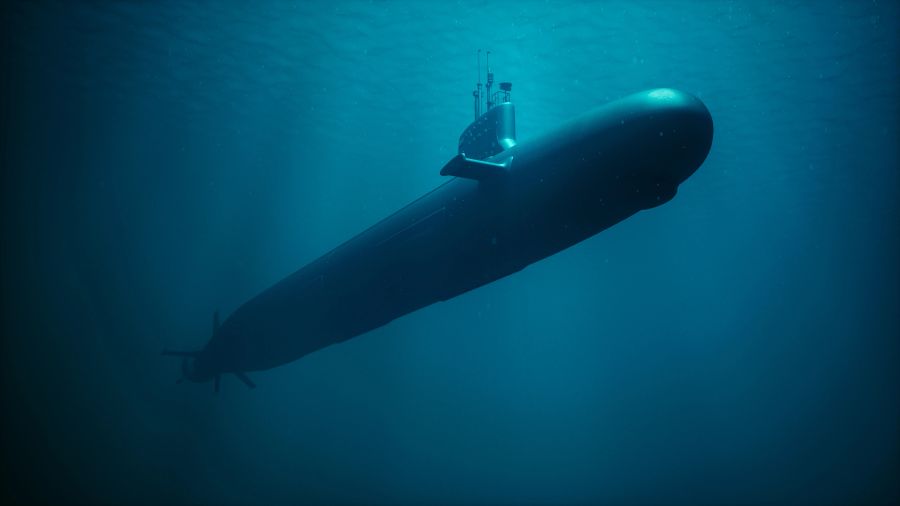
AUKUS and AI: How Australia Is Building Next-Generation Defence Technology
Under AUKUS, Australia is co-developing AI and autonomous defence systems with the US and UK. Here's what it means for Australian industry and security.

Inside Australia's AI-Powered Cyber Defence Shield
The Australian Signals Directorate is using AI to detect and neutralise cyber threats faster than ever — protecting government systems and businesses.
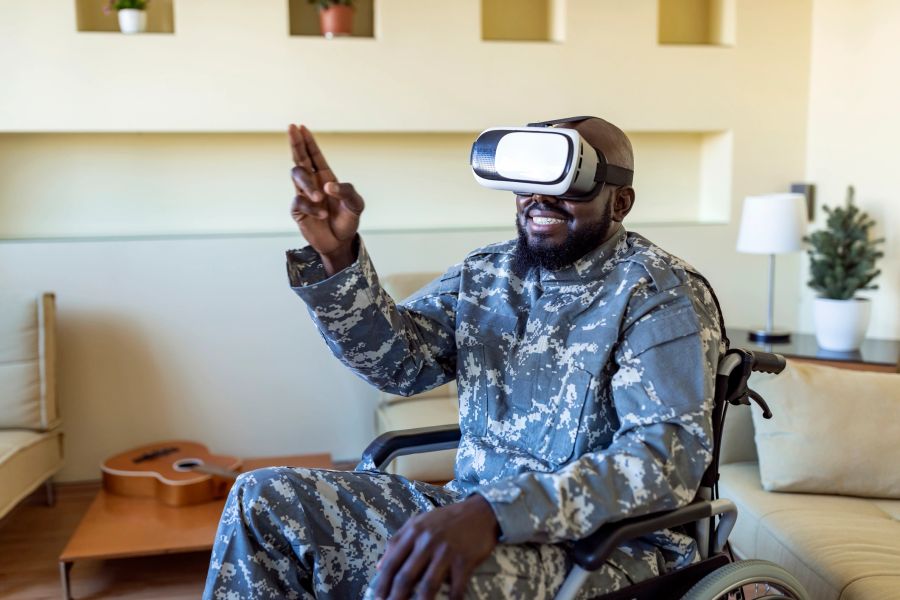
Using AI for Defence Training and Simulation in Australia (2026)
How AI is being used to improve training and simulation in the Australian Defence Force — from AI-powered synthetic environments and adaptive training systems to performance assessment and the development of realistic training scenarios.