
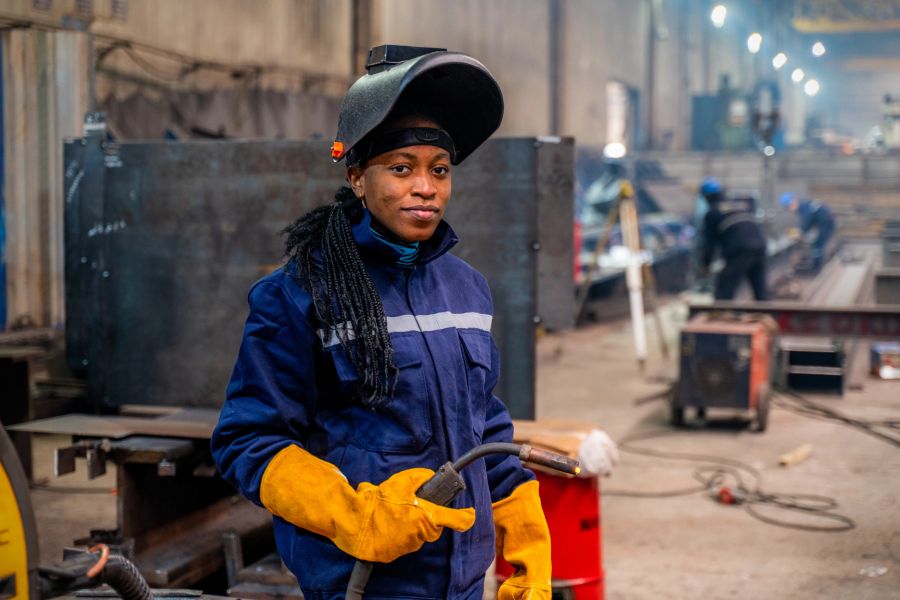
AI for Welder Compliance and Certification in Australia (2026)
How Australian welders are using AI tools to manage WPS documentation, WTIA certification records, welding fume compliance, and structural steel compliance under AS/NZS 1554.
Welding compliance and certification in Australia is governed by a detailed framework of Australian Standards, workplace health and safety legislation, and industry-specific requirements. For welders working on structural steel, pressure vessels, pipelines, and other regulated applications, maintaining the right certifications and meeting compliance requirements is essential for winning work and avoiding liability.
Key Australian Standards for Welders
Several Australian Standards are directly relevant to welding compliance. AS/NZS 2980 covers the qualification of welding procedures for the welding of steel, specifying how welding procedures must be developed, tested, and documented for structural steel applications. AS 3992 covers pressure equipment welding and brazing qualification, applying to welders working on pressure vessels and pressure piping. AS 4041 covers pressure piping, including welding requirements for piping systems. AS 1665 covers welding of aluminium structures.
AI tools can help by summarising the requirements of these standards in plain language, generating compliance checklists for specific applications, and helping you understand what documentation is required for each type of work. Always verify AI-generated standards summaries against the authoritative source — Standards Australia publishes the current versions at standards.org.au.
Welder Qualification and Certification
Welders working on regulated applications must hold appropriate qualifications. The Welding Technology Institute of Australia (WTIA) administers welder qualification testing in Australia, and many employers and project owners require WTIA-certified welders for structural and pressure equipment work.
AI tools can help by summarising qualification requirements, generating study frameworks for certification assessments, and drafting CPD records for qualification renewal. Always verify certification requirements directly with the WTIA and the relevant project owner or employer.
Safe Work Method Statements for Welding
Welding is classified as hot work and is subject to specific WHS requirements in Australia. A SWMS is required for high-risk welding work, including work at heights, work in confined spaces, and work near flammable materials.
AI tools can generate draft SWMS documents for common welding tasks. Key elements include: description of the work, identified hazards (fumes, UV radiation, fire, electrical, hot surfaces), control measures, PPE requirements, and emergency procedures. Always review and adapt AI-generated SWMS documents for the specific job conditions — a generic SWMS is not compliant.
Welding Procedure Specifications (WPS)
A Welding Procedure Specification documents the welding parameters and conditions required to produce a weld that meets the applicable standard. For regulated applications, a WPS must be developed and qualified before welding begins.
AI tools can help by generating WPS templates, summarising the qualification requirements for specific applications, and drafting the documentation required for WPS qualification testing. All WPS documents for regulated applications must be reviewed and qualified by a competent welding engineer before use.
Insurance and Contracts
Welders working on commercial and industrial projects need appropriate insurance — public liability, contract works, and professional indemnity for welders who provide engineering advice. AI tools can help by drafting contract terms, generating insurance requirement checklists, and creating subcontractor agreement templates that protect your business.
Staying Current
The compliance landscape for welding in Australia is not static. Standards are revised, WHS legislation changes, and industry requirements evolve. Subscribing to updates from Standards Australia and Safe Work Australia, and engaging with the WTIA, is the most reliable way to stay current.
Working with Inspection Bodies
Welding inspection is an important part of the compliance process for regulated welding work. Third-party inspection bodies — including those accredited by the Joint Accreditation System of Australia and New Zealand (JAS-ANZ) — provide independent verification that welding meets the applicable standards.
AI tools can help you prepare for inspections by generating inspection checklists, drafting questions for pre-inspection meetings, and creating documentation that demonstrates compliance. Good communication with inspection bodies — clear, professional, and well-documented — reduces the risk of failed inspections and costly rework.
Record Keeping and Traceability
Regulated welding work requires detailed record keeping — material test certificates, welder qualification records, WPS documents, inspection records, and non-destructive testing results. AI tools can help by generating record keeping frameworks, creating document control templates, and drafting procedures for maintaining traceability throughout the fabrication process.
Good record keeping protects you if a dispute arises and demonstrates professionalism to clients and inspection bodies.
Sources: Standards Australia (standards.org.au); Welding Technology Institute of Australia (wtia.com.au); Safe Work Australia (safeworkaustralia.gov.au); National Construction Code (ncc.gov.au).
Getting Started with AI as a Welder in Australia
The best way to begin is to identify one repetitive task that consumes significant time each week. For most welders, that is either documentation, client communication, or research. Start with a free tool like ChatGPT or Google Gemini, and test it on a low-stakes task before rolling it out across your practice or business.
Once you are comfortable with the basics, consider tools purpose-built for your profession. Simpro, ServiceM8, and Tradify are used by Australian welding and fabrication businesses for job management and compliance documentation. These platforms are designed with welder workflows in mind and often integrate with the software you already use.
Practical Tips for Welders Using AI
Start with prompts, not platforms. Before subscribing to any paid tool, spend time learning how to write effective prompts. A well-crafted prompt in a free tool will outperform a poorly used paid platform every time.
Keep Safe Work Australia and the relevant welding standards body compliance front of mind. AI tools do not automatically know your professional obligations. Always review AI-generated content against your regulatory requirements before using it with clients or submitting it to any authority.
Use AI for drafts, not finals. The most effective welders use AI to produce a first draft quickly, then apply their professional judgement to refine it. This approach saves time without sacrificing quality or accuracy.
Document your AI use. As AI becomes more common in professional settings, keeping a record of how and when you use it protects you if questions arise later. This is especially important in regulated professions.
Preparing a Welding Procedure Specification: A Practical Example
Consider a welder who needs to draft a welding procedure specification document for a structural steel fabrication project. Traditionally this might take an hour or more. With AI, the same task can be completed in fifteen to twenty minutes by using a structured prompt that includes the relevant context, the desired output format, and any specific requirements.
The result still needs professional review — but the time saving is significant. Across a working week, this kind of efficiency gain adds up to several hours that can be redirected to higher-value work or client-facing time.
The Bottom Line for Australian Welders
Australian welders who have adopted AI tools consistently report three main benefits: faster turnaround on routine tasks, improved consistency in documentation and communications, and more time available for the work that actually requires their expertise.
The key is to approach AI as a capable assistant rather than a replacement for professional judgement. Used this way, it becomes one of the most valuable tools available to any welder operating in Australia today.
Stay informed
Get AI news every Friday
The AI Digest delivers the week's most important AI stories — free, in plain English.
Subscribe free →Related Articles
More Construction & Trades →
AI for Electrician Compliance Documentation in Australia (2026)
How Australian electricians are using AI tools to manage certificates of electrical safety, defect notices, test records, and compliance documentation across different state requirements.
AI for Plumber Gas Fitting and Compliance in Australia (2026)
How Australian gas fitters are using AI tools to manage compliance certificates, SWMS, hot water system documentation, and client communication across different state requirements.
AI for Painter Lead Paint and Compliance in Australia (2026)
How Australian painters are using AI tools to manage lead paint identification, risk assessment documentation, client notifications, and WHS compliance for lead paint work.