
AI for Soil Health Analysis for Agronomists in Australia (2026)
How Australian agronomists are using AI tools to analyse soil test data, identify nutrient deficiencies, develop precision fertiliser recommendations, and improve soil health advice.
AI in Soil Health Analysis for Australian Agronomists
Soil health is the foundation of sustainable and productive agriculture. Australian agronomists advise clients on soil testing, nutrient management, and soil health improvement across a wide range of farming systems. AI tools are being applied to make soil data analysis more efficient and to generate more precise recommendations.
Soil Test Interpretation
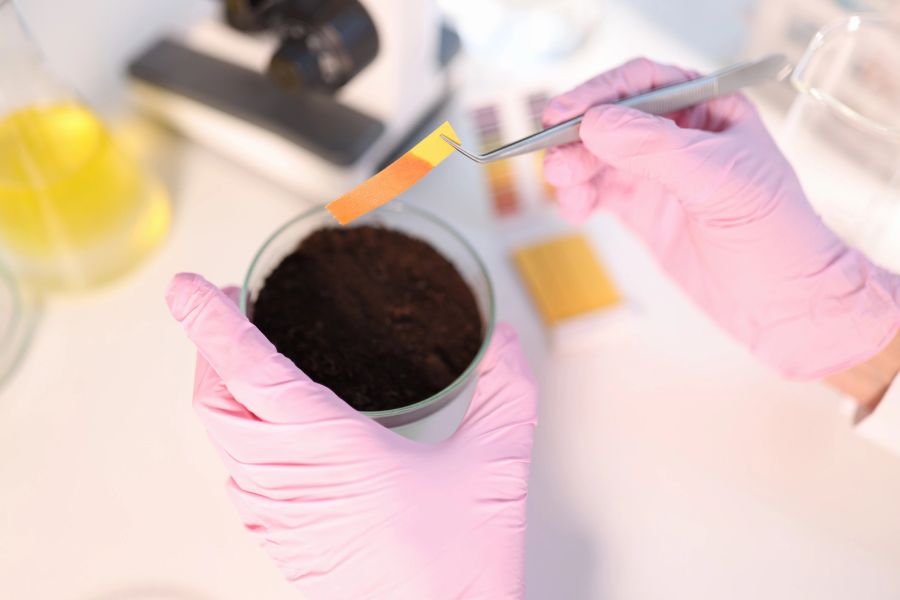
Soil testing provides a snapshot of nutrient availability, pH, organic carbon, and other soil properties at a point in time. Interpreting soil test results requires understanding the relationship between soil test values and crop response — which varies by crop type, soil type, rainfall zone, and management history.
AI tools can assist with interpreting soil test data by comparing results against established critical values and generating preliminary fertiliser recommendations. However, soil fertility management in Australian cropping systems is complex, and AI-generated recommendations should be reviewed against current Australian soil fertility guidelines.
The GRDC's soil fertility resources, including the Better Fertiliser Decisions for Cropping (BFDC) database, provide Australian-specific data on soil test calibrations and fertiliser response. State agricultural departments also publish soil fertility guidelines relevant to their specific regions and cropping systems.
Precision Soil Mapping
Precision soil mapping uses high-resolution spatial data to characterise soil variability within paddocks. AI algorithms can analyse data from multiple sources — electromagnetic induction surveys, gamma radiometric surveys, yield maps, and soil test data — to generate detailed soil property maps that support variable rate management.
Companies including Soil Optix and Veris Technologies provide precision soil mapping services used by Australian agronomists. These services generate maps of soil properties such as organic carbon, pH, clay content, and cation exchange capacity at resolutions that reveal within-paddock variability.
Precision soil mapping is most cost-effective on larger paddocks where the cost of the mapping service can be spread across a larger area, and where the variability identified is sufficient to justify variable rate management. Agronomists should evaluate the cost-benefit of precision mapping for each client's situation.
Soil Carbon Measurement and Management
Soil carbon has become increasingly important in Australian agriculture, both as an indicator of soil health and as a potential source of carbon credits under the Australian Carbon Credit Unit (ACCU) scheme. AI tools are being used to improve the efficiency and accuracy of soil carbon measurement and to model the impact of management changes on soil carbon stocks.
The Clean Energy Regulator administers the ACCU scheme in Australia. Agronomists advising clients on soil carbon projects need to understand the methodology requirements and measurement protocols specified by the regulator. AI tools can assist with data analysis and reporting, but the regulatory requirements must be met precisely.
CSIRO's National Soil Carbon Research Program has developed tools and resources for soil carbon measurement in Australian conditions. The GRDC has also funded research on soil carbon management in broadacre cropping systems.
Fertiliser Recommendation Systems
AI-assisted fertiliser recommendation systems can analyse soil test data, crop yield targets, and economic factors to generate optimised fertiliser recommendations. These systems are most effective when they are calibrated to Australian conditions and incorporate local soil fertility research.
Fertiliser industry bodies including Fertilizer Australia provide resources on responsible fertiliser use and nutrient management planning. Agronomists should ensure that their fertiliser recommendations comply with relevant environmental regulations, particularly in sensitive catchments where nutrient runoff is a concern.
Soil Biology and Microbiome Analysis
Soil biology — the community of microorganisms, fungi, and other organisms that drive nutrient cycling and soil health — is increasingly recognised as an important component of soil health assessment. DNA-based soil microbiome analysis tools are becoming more accessible and affordable.
Companies including BiomeBank and international providers offer soil microbiome analysis services. AI tools can assist with interpreting the complex datasets generated by microbiome analysis. However, the practical application of soil microbiome data to agronomic decision-making is still an active area of research, and agronomists should be cautious about making strong management recommendations based solely on microbiome data.
Stay informed
Get AI news every Friday
The AI Digest delivers the week's most important AI stories — free, in plain English.
Subscribe free →Related Articles
More Agriculture →
AI for Agronomists in Australia: The Complete Guide (2026)
A practical guide for Australian agronomists on using AI to improve crop scouting, soil health analysis, client reporting, precision recommendations, and agronomic practice management.

AI for Dairy Herd Health Monitoring in Australia (2026)
How Australian dairy farmers are using AI-powered sensor systems and data analytics to monitor herd health, detect illness earlier, and improve reproductive performance.
AI for Vineyard Management in Australia (2026)
How Australian vineyard owners are using AI-powered remote sensing, soil monitoring, and data analytics to manage vine health, optimise inputs, and improve fruit quality.