
AI for Vineyard Management in Australia (2026)
How Australian vineyard owners are using AI-powered remote sensing, soil monitoring, and data analytics to manage vine health, optimise inputs, and improve fruit quality.
AI-Assisted Vineyard Management in Australia
Vineyard management involves a complex set of decisions across the growing season — from pruning and canopy management through to irrigation, nutrition, pest and disease control, and harvest timing. AI tools are increasingly being used to support these decisions with better data and more systematic analysis.
Remote Sensing and Spatial Variability
Australian vineyards vary significantly in soil type, topography, and vine vigour across relatively small areas. Understanding this spatial variability is fundamental to precision viticulture — managing different parts of the vineyard differently based on their specific characteristics and needs.
Satellite-based NDVI mapping provides a cost-effective way to assess vine vigour variation across the vineyard. AI algorithms can analyse NDVI data over multiple seasons to identify zones of consistent high and low vigour, which can then be investigated to understand the underlying causes — soil variability, irrigation distribution, disease pressure, or rootstock performance.
Drone-based multispectral imaging provides higher resolution data than satellite imagery and can be collected at specific times during the season — for example, at veraison to assess fruit ripening uniformity. Several Australian companies offer drone imaging services for vineyards, and some vineyard owners operate their own drones for regular monitoring.
Wine Australia has funded research on precision viticulture in Australian conditions, including studies on the relationship between vine vigour zones and fruit quality. This research provides a useful evidence base for vineyard owners evaluating remote sensing tools.
Soil Health and Nutrition Management
Soil health is the foundation of vine performance. AI tools can assist with analysing soil test data, identifying nutrient deficiencies, and developing fertiliser programs. However, soil nutrition management in vineyards is complex and variety-specific — AI-generated recommendations should be reviewed by a qualified viticulture consultant or agronomist.
Soil moisture monitoring systems using capacitance sensors or tensiometers provide real-time data on soil water status at multiple depths. AI algorithms can analyse this data in combination with weather forecasts to generate irrigation scheduling recommendations that maintain vine water status within target ranges while minimising water use.
The relationship between vine water status and fruit quality is well-documented in Australian viticulture research. Mild water deficit during specific growth stages can improve fruit concentration and wine quality in some varieties and regions. AI-assisted irrigation management can help vineyard owners apply this knowledge more precisely than calendar-based or rule-of-thumb approaches.
Canopy Management
Canopy architecture affects fruit quality, disease risk, and spray coverage. Dense canopies create humid microclimates that favour powdery mildew and botrytis, and reduce the effectiveness of fungicide applications. AI tools can assist with assessing canopy density and identifying blocks where canopy management intervention is needed.
The VitiCanopy app, developed by the University of Adelaide, uses smartphone images to estimate canopy architecture parameters including leaf area index and canopy porosity. These measurements can be used to assess the effectiveness of shoot thinning and leaf removal operations and to calibrate spray programs.
Harvest Timing and Fruit Quality
Harvest timing decisions balance fruit maturity, weather risk, and winery scheduling. AI tools can assist with tracking fruit maturity parameters — Brix, pH, titratable acidity, and colour development — and modelling the relationship between these parameters and target wine style.
Automated berry sampling and analysis tools are being developed that can provide more frequent and objective fruit maturity data than manual sampling. The Australian Centre for Field Robotics and several university research groups are working on automated harvest and fruit quality assessment systems.
Current commercial tools for harvest timing support include weather-based models that predict the risk of rain events during harvest and the potential impact on fruit quality. These tools are most useful when combined with regular manual fruit sampling and winemaker input on target maturity parameters.
Record-Keeping and Compliance
Australian vineyard owners are required to maintain records of chemical use, irrigation, and other management activities. AI-assisted farm management platforms can automate some record-keeping tasks and generate compliance reports. Vinehealth Australia's platform provides biosecurity record-keeping tools that are mandatory for vineyard owners in phylloxera risk zones in some states.
Stay informed
Get AI news every Friday
The AI Digest delivers the week's most important AI stories — free, in plain English.
Subscribe free →Related Articles
More Agriculture →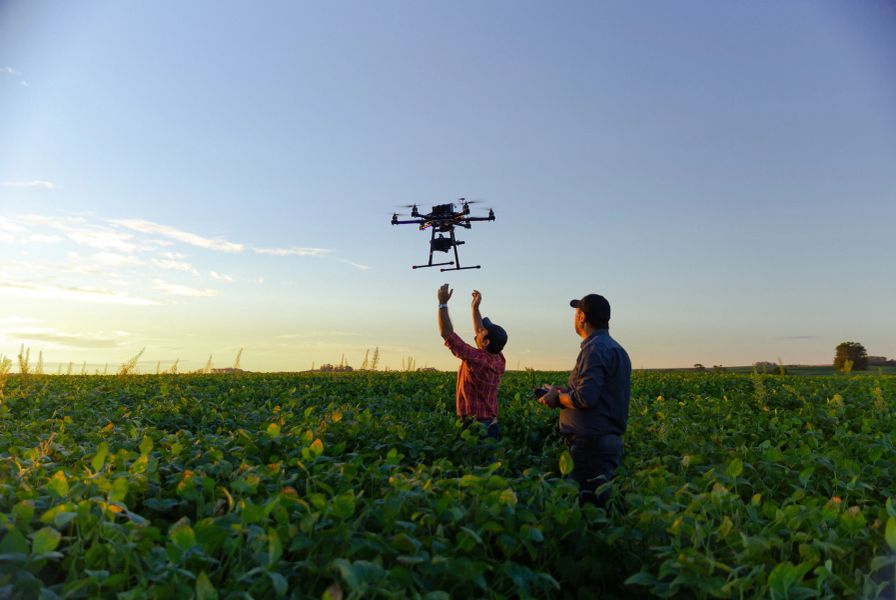
Best AI Tools for Vineyard Owners in Australia (2026)
The best AI tools for Australian vineyard owners in 2026 — vine health monitoring, irrigation scheduling, disease risk modelling, yield estimation, and winery management platforms.

ChatGPT Prompts for Vineyard Owners in Australia (2026)
Ready-to-use ChatGPT prompts for Australian vineyard owners — vine health queries, wine marketing content, export documentation, grant applications, and business planning.
AI for Vineyard Owners in Australia: The Complete Guide (2026)
A practical guide for Australian vineyard owners on using AI to improve vine health monitoring, yield prediction, irrigation management, pest and disease control, and wine business operations.