
How AI Is Helping Australian Maintenance Engineers with Safety Compliance
Maintenance work in Australian manufacturing involves some of the highest safety risks in any industry. AI tools are reducing the documentation burden of safety compliance while improving the quality of safety management.
Maintenance work in Australian manufacturing involves some of the highest safety risks in any industry. Maintenance engineers work with high-voltage electrical systems, pressurised equipment, confined spaces, working at heights, and hazardous materials — often in combination. Safe Work Australia data consistently shows maintenance activities as a significant contributor to serious workplace injuries and fatalities in manufacturing.
The safety compliance obligations that flow from these risks are substantial. AI tools are making a genuine difference to the documentation burden of compliance, and in some applications they are directly improving safety outcomes.
The Safety Compliance Landscape for Maintenance Engineers
Australian maintenance engineers operate under a complex web of safety obligations:
Work Health and Safety Act 2011 (and state equivalents) — the primary duty of care framework that applies to all workplace activities.
AS/NZS 4024 — Safety of Machinery — the Australian/New Zealand standard for machinery safety, including isolation procedures (lockout/tagout).
AS 2865 — Confined Spaces — the standard for safe work in confined spaces, which is frequently relevant to maintenance activities in manufacturing.
AS/NZS 1891 — Industrial Fall-Arrest Systems — relevant to maintenance work at heights.
Electrical safety regulations — state-based electrical safety legislation applies to maintenance work on electrical systems.
Pressure vessel and boiler regulations — state-based regulations apply to maintenance of pressure vessels and boilers.
Maintaining compliance with these obligations requires significant documentation — isolation procedures, risk assessments, permits to work, training records, and inspection records.
Where AI Is Making a Difference
Isolation Procedure Documentation
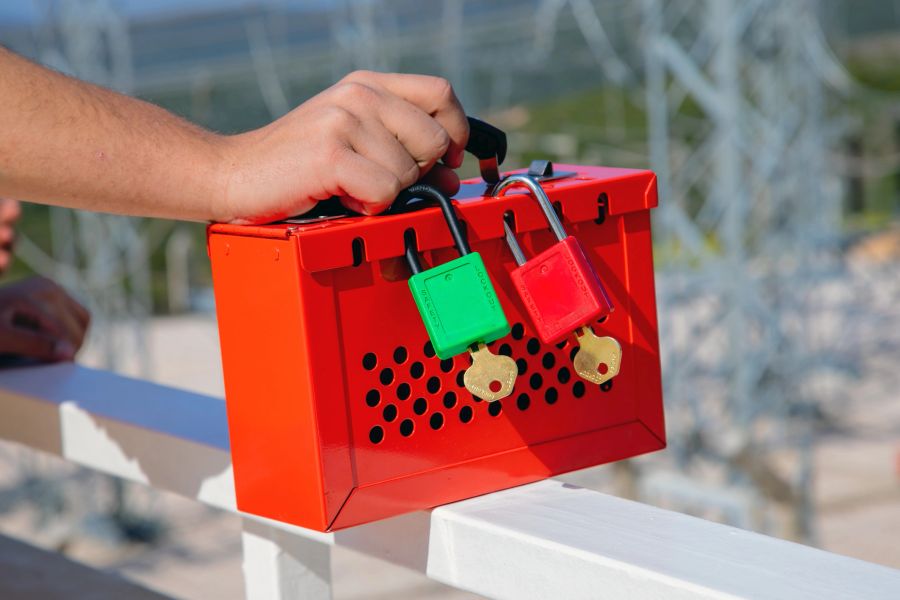
Isolation procedures (lockout/tagout) are a critical safety control for maintenance work on machinery. Every piece of equipment that requires maintenance should have a documented isolation procedure that identifies all energy sources and specifies the steps to safely isolate and de-isolate the equipment.
Developing and maintaining these procedures is time-consuming. AI writing tools can assist by drafting isolation procedures from a description of the equipment and its energy sources, which can then be reviewed and verified by a qualified engineer.
Critical requirement: Isolation procedures must be verified against the actual equipment before use. An AI-generated procedure that contains errors about isolation points or energy sources is dangerous. The AI produces a draft; the engineer verifies it against the physical equipment.
Risk Assessment Documentation
Risk assessments for maintenance tasks — particularly high-risk activities like confined space entry, working at heights, and hot work — require structured documentation that identifies hazards, assesses risks, and specifies control measures.
AI tools can assist with drafting these risk assessments from a description of the task and work environment. The AI-generated draft provides a structured starting point that can be reviewed and refined by the engineer, typically faster than drafting from scratch.
Permit to Work Systems
Permit to work (PTW) systems are a critical safety control for high-risk maintenance activities. AI tools can assist with:
- Permit drafting — generating permit documentation from a description of the work
- Hazard checklist generation — producing task-specific hazard checklists for permit review
- Permit register management — tracking open permits and ensuring they are closed out appropriately
Incident Investigation and Reporting
When maintenance-related incidents occur, AI writing tools can assist with drafting investigation reports from investigation notes. This accelerates the reporting process while maintaining documentation quality.
Important: Incident investigation reports for serious incidents may be subject to regulatory scrutiny. All AI-generated content must be reviewed carefully for accuracy before submission.
Training Material Development
AI tools can assist with developing safety training materials for maintenance teams — toolbox talk scripts, procedure training materials, and competency assessment tools. This is particularly useful for facilities that need to update training materials when procedures change.
Computer Vision for Maintenance Safety
More advanced AI applications in maintenance safety include computer vision systems that monitor maintenance work areas for safety compliance — PPE compliance, isolation verification, and exclusion zone management.
These systems are being deployed in larger Australian manufacturing facilities as part of broader safety management investments. They are not yet accessible to most small and mid-sized manufacturers, but the cost is declining.
The Limits of AI in Safety Management
AI tools cannot substitute for:
- Engineering judgement — the assessment of whether a specific maintenance task is safe to proceed requires engineering expertise that AI tools do not have
- Physical verification — isolation procedures must be verified against the actual equipment; AI cannot do this
- Safety culture — the attitudes and behaviours that determine whether safety procedures are actually followed
- Competency — maintenance engineers must be competent to perform the work they are doing; AI tools cannot substitute for training and experience
The most effective use of AI in maintenance safety compliance is to reduce the administrative burden so that engineers have more time for the substantive work of hazard identification, procedure verification, and safety culture development.
Stay informed
Get AI news every Friday
The AI Digest delivers the week's most important AI stories — free, in plain English.
Subscribe free →Related Articles
More Professions →
How AI Is Helping Australian Factory Managers with OHS Compliance
OHS compliance in Australian manufacturing involves significant documentation, inspection, and reporting obligations. AI tools are reducing the administrative burden while improving safety outcomes — here is how.
AI-Driven Predictive Maintenance in Australian Manufacturing: What Works
Predictive maintenance using AI is reducing unplanned downtime in Australian manufacturing facilities. Here is an honest assessment of where the technology delivers, what it requires, and how to get started.
Robots on the Factory Floor: How AI Is Changing Australian Manufacturing Jobs
Cobots and AI quality inspection are on Australian factory floors. Some jobs are changing, others are being created. Here's what the evidence actually shows.