
AI for Horticultural Market Access in Australia (2026)
How Australian horticulturists are using AI tools to improve market intelligence, meet retailer and export requirements, manage supply chain logistics, and access new markets.
AI and Market Access in Australian Horticulture
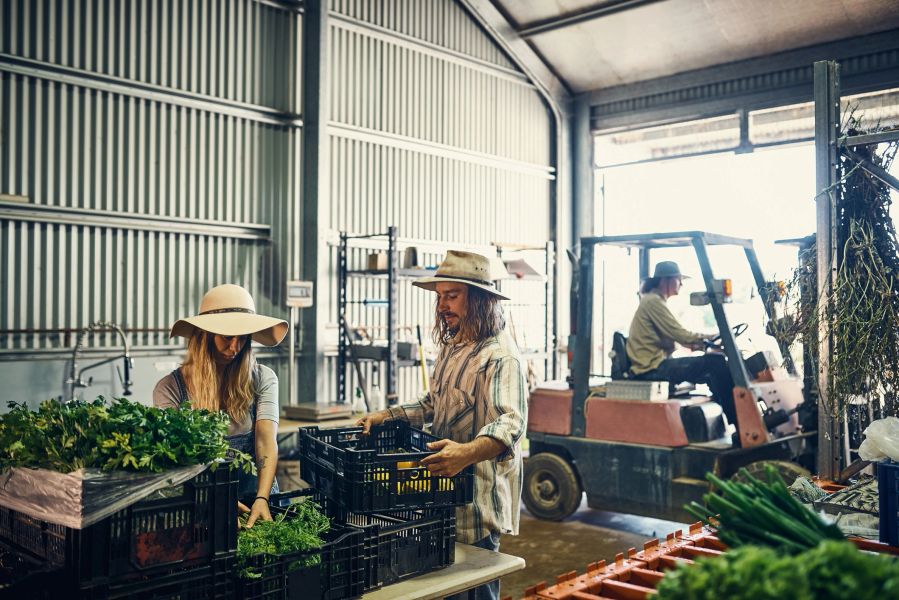
Getting produce to market — at the right time, in the right condition, and meeting the quality and compliance requirements of buyers — is as important as growing it. AI tools are helping Australian horticulturists improve their market intelligence, manage supply chain logistics, and meet the increasingly complex requirements of domestic and export markets.
Market Intelligence and Demand Forecasting
Understanding market conditions — current prices, supply volumes, and demand trends — is important for production planning and marketing decisions. AI tools can assist with analysing market data and identifying trends, but the underlying data must come from reliable sources.
Horticulture Innovation Australia (HIA) publishes market intelligence reports for Australian horticultural industries. The Sydney Markets and Melbourne Market Authority publish daily price and volume data for fresh produce. State agricultural departments provide market information relevant to their specific industries and regions.
AI tools can assist with analysing this data to identify seasonal price patterns, supply gaps, and market opportunities. However, fresh produce markets are highly variable and influenced by weather, competing supply, and consumer preferences — AI forecasts should be treated as indicative rather than definitive.
Retailer and Food Service Compliance
Supplying major Australian retailers — Woolworths, Coles, and Aldi — requires compliance with their specific quality standards, food safety requirements, and supply chain protocols. AI tools can assist with managing compliance documentation, tracking quality metrics, and preparing for audits.
Food safety certification programs such as SQF (Safe Quality Food) and GlobalG.A.P. require detailed record-keeping and documentation. Farm management platforms that automate record-keeping and generate compliance reports can reduce the administrative burden of maintaining these certifications.
Retailer specifications for fresh produce — covering size, colour, defect tolerances, and packaging requirements — are detailed and specific. AI-assisted grading systems can help growers sort produce to meet these specifications more consistently than manual grading.
Export Market Development
Australia exports fresh and processed horticultural products to markets across Asia, the Middle East, and beyond. Export market access requires compliance with importing country phytosanitary requirements, which vary by product and destination.
The Department of Agriculture, Fisheries and Forestry administers Australia's export certification system for fresh produce. AI tools can assist with preparing export documentation and tracking compliance with importing country requirements, but the accuracy of the information must be verified against current regulatory requirements.
Horticulture Innovation Australia and Austrade provide export market development support for Australian horticultural businesses. Their market intelligence resources and in-market connections can help growers identify and develop export opportunities.
Direct-to-Consumer and Online Sales
Direct-to-consumer sales — through farm gate, farmers markets, community supported agriculture (CSA) schemes, and online stores — are growing channels for Australian horticulturists. AI tools can assist with managing online sales, personalising customer communications, and optimising marketing.
E-commerce platforms such as Shopify and WooCommerce provide online store functionality that can be used by horticultural businesses for direct-to-consumer sales. AI features within these platforms can assist with product recommendations, abandoned cart recovery, and customer segmentation.
Social media platforms — particularly Instagram and Facebook — are important marketing channels for direct-to-consumer horticultural businesses. AI tools can assist with generating content ideas, drafting posts, and planning content calendars.
Supply Chain Logistics
Managing the logistics of getting fresh produce from the farm to the buyer — including harvest scheduling, transport, cold chain management, and delivery — is complex and time-sensitive. AI tools can assist with optimising harvest scheduling, coordinating transport, and tracking produce through the supply chain.
Cold chain management is critical for maintaining fresh produce quality. AI-assisted temperature monitoring systems can track produce temperature throughout the supply chain and alert operators to temperature excursions that could affect quality or food safety.
Stay informed
Get AI news every Friday
The AI Digest delivers the week's most important AI stories — free, in plain English.
Subscribe free →Related Articles
More Agriculture →
AI for Horticultural Pest and Disease Management in Australia (2026)
How Australian horticulturists are using AI tools for pest and disease identification, disease risk modelling, and integrated pest management to protect crops and reduce chemical use.
AI for Horticultural Irrigation Management in Australia (2026)
How Australian horticulturists are using AI-assisted irrigation scheduling, soil moisture monitoring, and precision water management to improve crop quality and reduce water use.
AI Mistakes Horticulturists Should Avoid in Australia (2026)
The most common AI mistakes Australian horticulturists make — misidentifying pests and diseases, over-relying on automated systems, neglecting food safety compliance, and choosing tools not suited to their operation.