
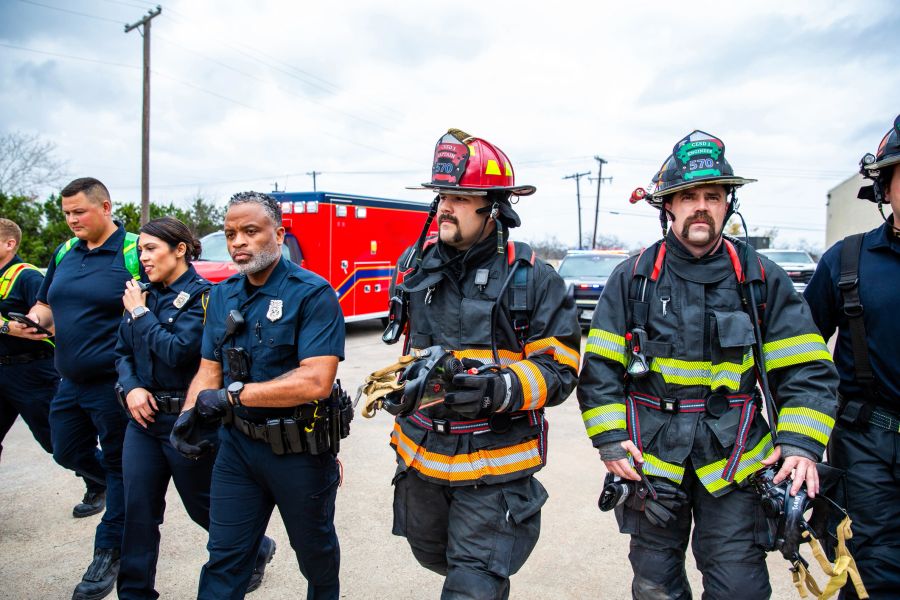
Using AI for Emergency Services Training in Australia (2026)
How Australian emergency services organisations are using AI to improve training — from AI-powered simulation environments and scenario generation to performance assessment, e-learning, and personalised training pathways.
Training is fundamental to emergency services. The skills required — incident command, technical rescue, patient care, hazardous materials response — are complex, high-stakes, and perishable. They require regular practice in realistic conditions.
AI tools are beginning to change how emergency services training is designed, delivered, and assessed. The changes are gradual and uneven across different organisations and jurisdictions, but the direction is clear: AI will play an increasing role in emergency services training.
AI-Powered Simulation Training
Simulation training allows emergency services personnel to practise responding to complex incidents in a realistic but safe environment. AI is improving simulation training in several ways:
More Realistic Scenarios
AI tools can generate more realistic and varied training scenarios than traditional methods. Rather than using the same pre-scripted scenarios repeatedly, AI can generate scenarios that adapt to trainee decisions — creating a more dynamic and challenging training environment.
For example, in a fire simulation, the AI can model how the fire behaves in response to suppression actions, creating a more realistic training experience than a static scenario.
Adaptive Difficulty
AI-powered simulation systems can adjust the difficulty of training scenarios based on trainee performance. If a trainee is performing well, the system can introduce additional complications. If they are struggling, it can simplify the scenario to allow them to build confidence.
Multi-Agency Exercises
AI tools can support multi-agency training exercises by simulating the actions of agencies that are not physically present. This allows organisations to practise multi-agency coordination without requiring all agencies to be physically present.
Virtual Reality and AI
Virtual reality (VR) combined with AI is being used in some emergency services training contexts:
- Fire training: VR environments allow firefighters to practise entering burning buildings, navigating smoke-filled spaces, and making tactical decisions in a safe environment.
- Hazmat training: VR allows hazardous materials responders to practise donning and doffing protective equipment and responding to chemical incidents.
- Incident command: VR environments allow incident commanders to practise managing complex incidents with multiple resources and evolving conditions.
Several Australian emergency services organisations have invested in VR training systems. The technology is still relatively expensive, but costs are decreasing.
AI-Assisted Performance Assessment
Assessing trainee performance in simulation exercises has traditionally relied on human observers. AI tools can supplement human assessment by:
- Tracking trainee actions and decisions throughout an exercise
- Identifying deviations from standard operating procedures
- Providing detailed feedback on specific aspects of performance
- Generating performance reports that trainers can use for debriefing
This does not replace human assessment — experienced trainers bring contextual knowledge and judgement that AI cannot replicate. But AI can provide more detailed and consistent data to support the assessment process.
E-Learning and Knowledge Management
AI tools are improving the delivery of online training for emergency services:
Personalised Learning Pathways
AI-powered learning management systems can analyse trainee performance and recommend personalised learning pathways — directing trainees to content that addresses their specific knowledge gaps.
Intelligent Tutoring Systems
AI-powered tutoring systems can answer trainee questions, provide explanations, and guide trainees through complex material. These systems are particularly useful for self-paced online learning.
Knowledge Base Management
Emergency services organisations maintain large libraries of procedures, guidelines, and technical information. AI tools can help personnel find relevant information quickly — answering questions in natural language and directing them to the relevant procedure or guideline.
AI for Training Administration
Beyond the training itself, AI tools can help with the administrative aspects of training management:
- Scheduling: AI tools can help optimise training schedules, taking into account operational requirements, trainer availability, and trainee needs.
- Compliance tracking: AI tools can track training compliance — identifying personnel who are due for refresher training or who have not completed mandatory training.
- Scenario development: AI writing tools can help trainers develop training scenarios, exercise plans, and assessment materials more quickly.
- Debrief documentation: AI transcription tools can help capture debrief discussions and produce written records of lessons learned.
Practical Tools for Emergency Services Trainers
For Scenario Development
- ChatGPT or Claude — Can help generate training scenarios, exercise injects, and assessment questions. Useful for trainers who need to develop a large volume of training materials.
For E-Learning
- Articulate 360 — A widely used e-learning development platform. Articulate has been integrating AI features to help authors develop content more quickly.
- iSpring — Another e-learning platform with AI-assisted content development features.
For Performance Tracking
- Learning management systems (LMS) — Platforms like Moodle, Canvas, and TalentLMS provide tools for tracking training completion and performance. Some incorporate AI features for personalised learning.
For Simulation
- Bohemia Interactive Simulations — Produces simulation software used by military and emergency services organisations globally, including in Australia.
- VR training systems — Various vendors provide VR training systems for specific emergency services applications.
Key Considerations
Simulation Cannot Replace Real Experience
Simulation training is valuable, but it cannot fully replicate the physical, psychological, and sensory experience of real emergency response. Simulation should complement, not replace, practical training in real environments.
Maintaining Human Oversight in Assessment
AI-assisted performance assessment provides useful data, but final assessment decisions should be made by qualified human assessors who can apply contextual judgement.
Data Privacy
Training systems that collect data on trainee performance must comply with privacy legislation. Trainees should be informed about what data is collected and how it is used.
Stay informed
Get AI news every Friday
The AI Digest delivers the week's most important AI stories — free, in plain English.
Subscribe free →Related Articles
More Professions →
Using AI for Defence Training and Simulation in Australia (2026)
How AI is being used to improve training and simulation in the Australian Defence Force — from AI-powered synthetic environments and adaptive training systems to performance assessment and the development of realistic training scenarios.

Using AI for Council Planning and Infrastructure in Australia (2026)
How Australian local government councils can use AI to improve development assessment, infrastructure planning, asset management, and environmental monitoring — with a clear-eyed view of what AI can and cannot do in a planning context.
Using AI for Emergency Services Resource Coordination in Australia (2026)
How AI tools are improving resource coordination in Australian emergency services — from dispatch optimisation and predictive demand modelling to multi-agency coordination and logistics planning during major incidents.