
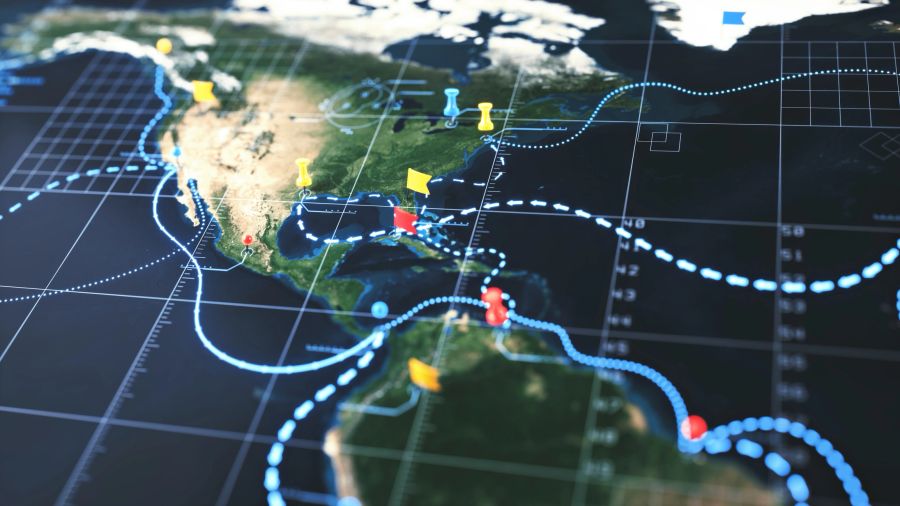
Using AI for Emergency Services Resource Coordination in Australia (2026)
How AI tools are improving resource coordination in Australian emergency services — from dispatch optimisation and predictive demand modelling to multi-agency coordination and logistics planning during major incidents.
Getting the right resources to the right place at the right time is the fundamental challenge of emergency services coordination. Whether it is an ambulance responding to a cardiac arrest, a fire crew responding to a structure fire, or a multi-agency response to a major disaster, resource coordination determines outcomes.
AI tools are improving resource coordination in Australian emergency services — making dispatch faster and more accurate, enabling better prediction of demand, and supporting coordination across multiple agencies during major incidents.
Dispatch Optimisation
Computer-Aided Dispatch with AI
Computer-aided dispatch (CAD) systems are the backbone of emergency services coordination. Modern CAD systems increasingly incorporate AI features:
- Resource recommendation: AI analyses the incident type, location, and available resources to recommend the most appropriate units to dispatch.
- Route optimisation: AI calculates the fastest route to the incident, taking into account real-time traffic conditions.
- Simultaneous incident management: AI helps dispatchers manage multiple simultaneous incidents by tracking resource availability and prioritising deployments.
Australian ambulance services use CAD systems with varying levels of AI capability. Ambulance Victoria and other state services have been investing in technology to improve dispatch efficiency.
Priority Dispatch Protocols
AI tools can help dispatchers apply priority dispatch protocols consistently — asking the right questions, assigning the correct priority, and selecting the appropriate response. This reduces variation in dispatch decisions and helps ensure that the most critical incidents receive the fastest response.
Predictive Demand Modelling
Predicting where and when emergency services will be needed allows organisations to pre-position resources, reducing response times.
Ambulance Demand Prediction
Ambulance services can use AI to analyse historical call data, weather patterns, event schedules, and demographic data to predict demand by location and time of day. This allows services to pre-position ambulances in areas where demand is likely to be high.
Research published in academic journals has demonstrated that AI-based demand prediction can reduce ambulance response times by enabling better resource positioning.
Fire Risk Prediction
Fire agencies use AI to predict fire risk based on weather forecasts, fuel conditions, and historical fire data. This allows agencies to pre-position resources in high-risk areas during periods of elevated fire danger.
The NSW Rural Fire Service and other state fire agencies use fire danger rating systems that incorporate AI and machine learning to predict fire risk.
Multi-Agency Coordination
Major incidents in Australia typically involve multiple agencies — fire, ambulance, police, SES, and others. Coordinating these agencies effectively is complex.
Common Operating Picture
Emergency management organisations use common operating picture (COP) systems to share situational awareness across agencies. AI tools are being integrated into these systems to:
- Automatically update the COP with information from multiple sources
- Flag emerging issues and resource gaps
- Support decision-making by providing analysis of the current situation
Resource Tracking
AI tools can track the location and status of resources across multiple agencies in real time, providing incident commanders with an accurate picture of what resources are available and where they are deployed.
Logistics Planning
For large-scale operations — major bushfires, flood responses, mass casualty incidents — logistics planning is complex. AI tools can help with:
- Planning the movement of resources from staging areas to deployment locations
- Tracking the consumption of supplies (fuel, food, medical supplies) and predicting when resupply will be needed
- Coordinating accommodation and welfare for personnel deployed over extended periods
Volunteer Management
Many Australian emergency services rely heavily on volunteers — the NSW Rural Fire Service has approximately 70,000 volunteers, according to the organisation's published figures. Managing the deployment of large numbers of volunteers during major incidents is a significant coordination challenge.
AI tools can help with:
- Matching volunteer skills and availability to incident needs
- Communicating deployment instructions to large numbers of volunteers
- Tracking volunteer hours and welfare during extended operations
After-Action Analysis
After a major incident, AI tools can help analyse what happened — reviewing resource deployment decisions, identifying bottlenecks, and extracting lessons for future operations.
This includes:
- Analysing CAD data to identify patterns in response times and resource utilisation
- Reviewing communications logs to identify coordination issues
- Comparing actual resource deployment with optimal deployment based on the information available at the time
Key Considerations
Human Decision-Making Remains Central
AI tools can provide better information and recommendations to support resource coordination decisions, but the decisions themselves must be made by qualified, accountable humans. Incident commanders and dispatchers retain responsibility for resource deployment decisions.
System Reliability
AI-powered dispatch and coordination systems must be reliable under the conditions in which they will be used — including during major disasters when communications infrastructure may be degraded. Backup systems and manual processes must be maintained.
Interoperability
Effective multi-agency coordination requires that AI tools used by different agencies can share data and communicate with each other. Interoperability standards and data sharing agreements are important prerequisites for effective AI-assisted multi-agency coordination.
Privacy and Civil Liberties
Some resource coordination applications — particularly those involving real-time tracking of personnel and vehicles — raise privacy considerations. These applications require clear policies and oversight.
Stay informed
Get AI news every Friday
The AI Digest delivers the week's most important AI stories — free, in plain English.
Subscribe free →Related Articles
More Professions →
Using AI for Emergency Services Training in Australia (2026)
How Australian emergency services organisations are using AI to improve training — from AI-powered simulation environments and scenario generation to performance assessment, e-learning, and personalised training pathways.

Using AI for Non-Profit Fundraising in Australia (2026)
How Australian non-profit organisations can use AI to improve fundraising — from grant writing and donor communications to crowdfunding campaigns, major donor stewardship, and corporate partnerships.

Using AI for Defence Training and Simulation in Australia (2026)
How AI is being used to improve training and simulation in the Australian Defence Force — from AI-powered synthetic environments and adaptive training systems to performance assessment and the development of realistic training scenarios.