
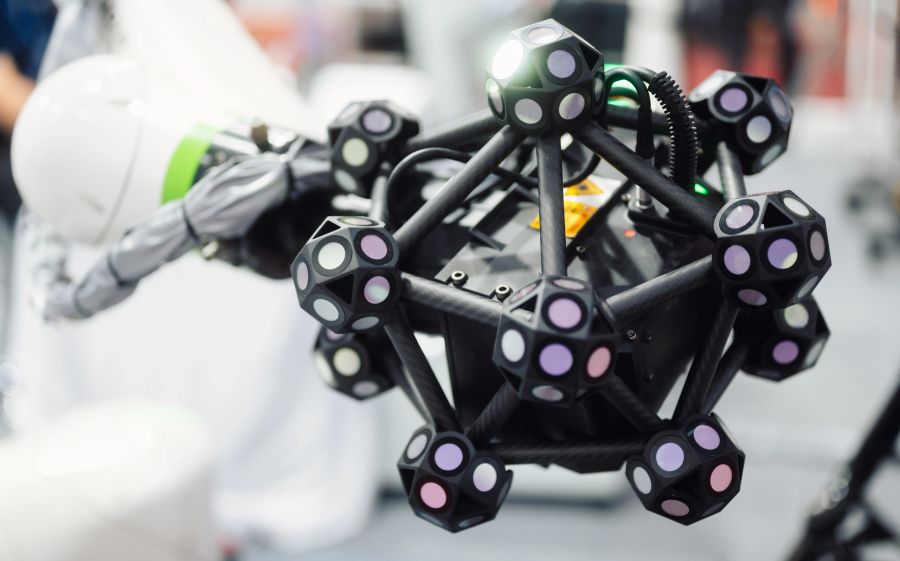
AI for Defect Detection in Australian Manufacturing
AI vision systems are improving defect detection rates in Australian manufacturing — catching surface flaws, dimensional errors, and assembly faults faster and more consistently than manual inspection. Here is what the technology can and cannot do.
Defect detection is one of the most technically mature AI applications in manufacturing. AI vision systems — cameras combined with machine learning models trained to identify non-conforming products — are now deployed across a range of Australian manufacturing sectors, from food processing and packaging to precision engineering and electronics.
This article examines how the technology works, where it delivers genuine value, and what quality managers need to understand before committing to an implementation.
How AI Vision Inspection Works
Traditional automated inspection systems use rule-based algorithms — they look for specific patterns and flag deviations from those patterns. These systems work well for simple, consistent defects but struggle with the variability of real-world manufacturing.
AI vision systems take a different approach. They are trained on large datasets of images — both conforming and non-conforming products — and learn to identify defects from examples rather than rules. This makes them more adaptable to the variability of real manufacturing conditions: lighting changes, surface variation, and the wide range of defect types that occur in practice.
The core components of an AI vision inspection system are:
- Cameras — industrial cameras positioned to capture the relevant surfaces or features of the product
- Lighting — controlled lighting to ensure consistent image quality
- Processing hardware — typically a GPU-equipped computer running the AI model
- Software — the AI model itself, plus the interface for configuring inspection parameters and reviewing results
What AI Vision Can Detect
Surface defects — scratches, dents, pitting, discolouration, contamination, and surface finish variations. This is the most common application and the one where AI vision consistently outperforms manual inspection, particularly at production speeds where human inspectors experience fatigue.
Dimensional verification — checking that components meet dimensional specifications. AI vision can measure dimensions from images with high accuracy, though for tight tolerances, dedicated metrology equipment remains more reliable.
Label and packaging inspection — verifying that labels are present, correctly positioned, correctly printed, and contain the right information. Particularly important in food, pharmaceutical, and consumer goods manufacturing where labelling errors have regulatory and liability implications.
Assembly verification — confirming that all required components are present and correctly assembled. AI vision can check for missing fasteners, incorrect component orientation, and incomplete assemblies.
Colour and appearance matching — verifying that products meet colour specifications, which is important in paint, coatings, textiles, and consumer goods manufacturing.
Performance Benchmarks
AI vision systems consistently outperform manual inspection on several metrics:
- Speed — AI systems can inspect at full production speed without fatigue effects. Manual inspection at high speeds is inherently unreliable.
- Consistency — AI systems apply the same criteria to every product, every shift. Manual inspection varies with inspector fatigue, attention, and interpretation.
- Sensitivity — AI systems can detect defects below the threshold of reliable human visual detection, particularly for subtle surface variations.
However, AI vision systems are not infallible. They can miss defect types not represented in their training data, and they can generate false positives — flagging conforming products as defective — particularly when production conditions change.
Building the Training Dataset
The quality of an AI vision system depends entirely on the quality of its training data. This is the most important and most underestimated aspect of implementation.
A good training dataset requires:
- Representative samples of both conforming and non-conforming products
- Diverse defect examples — the system cannot reliably detect defect types it has not seen in training
- Accurate labelling — images must be correctly labelled as conforming or non-conforming, with defect type identified
- Sufficient volume — the required number of images varies by application, but hundreds to thousands of examples per defect type is typical
Building this dataset takes time — often 3–6 months for a new application. Facilities that have been collecting and archiving inspection images have a significant advantage.
Implementation Considerations for Australian Manufacturers
Integration with existing production lines — AI vision systems need to be integrated with the production line, which may require modifications to conveyor systems, guarding, and reject mechanisms. This integration work is often the most complex and costly part of implementation.
Lighting and environment — consistent lighting is critical for reliable AI vision performance. Facilities with variable ambient lighting or dusty environments need to address these conditions before deployment.
Ongoing model maintenance — AI vision models need to be updated as products change, new defect types emerge, or production conditions shift. This requires ongoing investment in data collection and model retraining.
Regulatory compliance — in regulated industries (food, pharmaceutical, medical devices), AI vision systems used for quality inspection may need to be validated under the relevant regulatory framework. Quality managers should confirm validation requirements before selecting a system.
Australian Vendors and Support
Several vendors offer AI vision inspection systems with Australian support:
- Cognex — market leader with strong local presence through Australian distributors
- Keyence — integrated hardware/software systems with direct Australian sales and support
- Sick AG — industrial sensor and vision systems with Australian distribution
- Landing AI — cloud-based platform for building custom inspection models
The AMGC co-investment program can offset implementation costs for qualifying projects.
Stay informed
Get AI news every Friday
The AI Digest delivers the week's most important AI stories — free, in plain English.
Subscribe free →Related Articles
More Professions →
Robots on the Factory Floor: How AI Is Changing Australian Manufacturing Jobs
Cobots and AI quality inspection are on Australian factory floors. Some jobs are changing, others are being created. Here's what the evidence actually shows.

How AI Is Improving Production Scheduling in Australian Manufacturing
Production scheduling in Australian manufacturing is complex — high product mix, shared equipment, and frequent disruptions make manual scheduling slow and error-prone. AI scheduling tools are delivering measurable improvements in throughput and on-time delivery.
AI for Workforce Scheduling in Australian Manufacturing
Shift rostering in Australian manufacturing is complex — award conditions, fatigue management, skills coverage, and leave management all interact. AI rostering tools are reducing the time burden and improving compliance.