
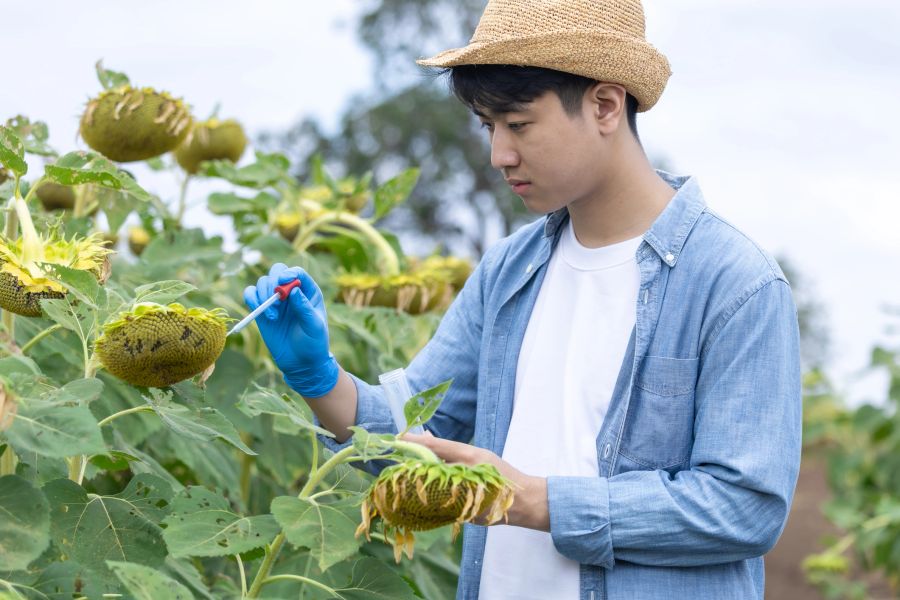
AI for Crop Scouting and Disease Identification in Australia (2026)
How Australian agronomists are using AI image recognition tools and remote sensing to improve crop scouting efficiency, identify diseases and pests earlier, and provide more timely advice.
AI-Assisted Crop Scouting in Australian Agriculture
Crop scouting — the systematic inspection of crops to identify pest, disease, and weed problems — is the foundation of effective agronomic advice. AI tools are changing how scouting is conducted, making it possible to cover more ground, identify problems earlier, and integrate field observations with remote sensing data.
AI Image Recognition for Disease and Pest Identification
AI image recognition tools that can identify crop diseases and pests from smartphone photographs have become increasingly capable and accessible. Apps such as Plantix, Agrio, and Cropwise Protector allow agronomists and farmers to photograph affected plants and receive an AI-generated identification and management recommendation.
These tools are trained on large datasets of crop disease and pest images and can identify a wide range of conditions across multiple crops. Their accuracy has improved significantly in recent years, but they have important limitations that agronomists should understand.
AI image recognition tools perform best when the image quality is high, the affected tissue is clearly visible, and the condition is one that is well-represented in the training data. They perform less well with early-stage symptoms, mixed infections, or conditions that are less common in the training dataset. In Australian conditions, some locally important diseases and pests may be underrepresented in tools developed primarily for international markets.
The correct approach is to use AI identification tools as a starting point for diagnosis — a way to quickly generate a list of possible causes — and then verify the identification through physical examination, laboratory testing if needed, and comparison with authoritative Australian identification resources such as those published by the GRDC and state agricultural departments.
Remote Sensing for Crop Monitoring
Satellite and drone-based remote sensing provides a way to monitor crop health across large areas more frequently than is possible with physical scouting alone. AI algorithms analyse multispectral imagery to identify areas of crop stress, which can then be prioritised for physical inspection.
NDVI (Normalised Difference Vegetation Index) and other vegetation indices derived from satellite imagery can detect crop stress before it is visible to the naked eye. AI platforms such as Climate FieldView and Agworld integrate satellite imagery with field records to provide agronomists with a spatial view of crop performance across their clients' farms.
Remote sensing is most useful for identifying where to look — it cannot replace physical inspection for diagnosis. An area of low NDVI could indicate disease, nutrient deficiency, waterlogging, soil variability, or equipment damage. Physical inspection is required to determine the cause.
Integrated Pest Management and Decision Support
Integrated pest management (IPM) requires regular monitoring to assess pest populations and compare them against economic thresholds before making spray decisions. AI tools can assist with recording and analysing monitoring data, tracking pest population trends, and generating alerts when thresholds are approached.
The GRDC's IPM resources and state-based agricultural department publications provide economic threshold data and monitoring protocols for Australian broadacre crops. AI tools that integrate this information with field monitoring data can help agronomists make more consistent and defensible spray decisions.
Weed Mapping and Management
Weed management is a major challenge in Australian cropping systems, particularly with the widespread development of herbicide resistance. AI tools can assist with mapping weed populations across paddocks, tracking changes in weed pressure over time, and identifying areas where herbicide resistance testing is warranted.
Drone-based weed mapping using AI image recognition is an active area of development. Several Australian research institutions and commercial companies are developing tools for mapping specific weed species — including ryegrass, wild radish, and wild oats — in broadacre crops. Commercial availability and accuracy vary.
Data Integration and Reporting
The value of AI-assisted scouting tools depends on how effectively the data is integrated and used. Agronomists who use multiple tools — a scouting app, a remote sensing platform, and a farm management system — need to be able to bring this data together to provide coherent advice to clients.
Farm management platforms such as Agworld are designed to integrate data from multiple sources and facilitate data sharing between agronomists and their clients. Establishing consistent data collection and recording practices is a prerequisite for effective use of these platforms.
Stay informed
Get AI news every Friday
The AI Digest delivers the week's most important AI stories — free, in plain English.
Subscribe free →Related Articles
More Agriculture →
AI for Horticultural Pest and Disease Management in Australia (2026)
How Australian horticulturists are using AI tools for pest and disease identification, disease risk modelling, and integrated pest management to protect crops and reduce chemical use.
AI for Horticultural Market Access in Australia (2026)
How Australian horticulturists are using AI tools to improve market intelligence, meet retailer and export requirements, manage supply chain logistics, and access new markets.
AI Mistakes Horticulturists Should Avoid in Australia (2026)
The most common AI mistakes Australian horticulturists make — misidentifying pests and diseases, over-relying on automated systems, neglecting food safety compliance, and choosing tools not suited to their operation.