
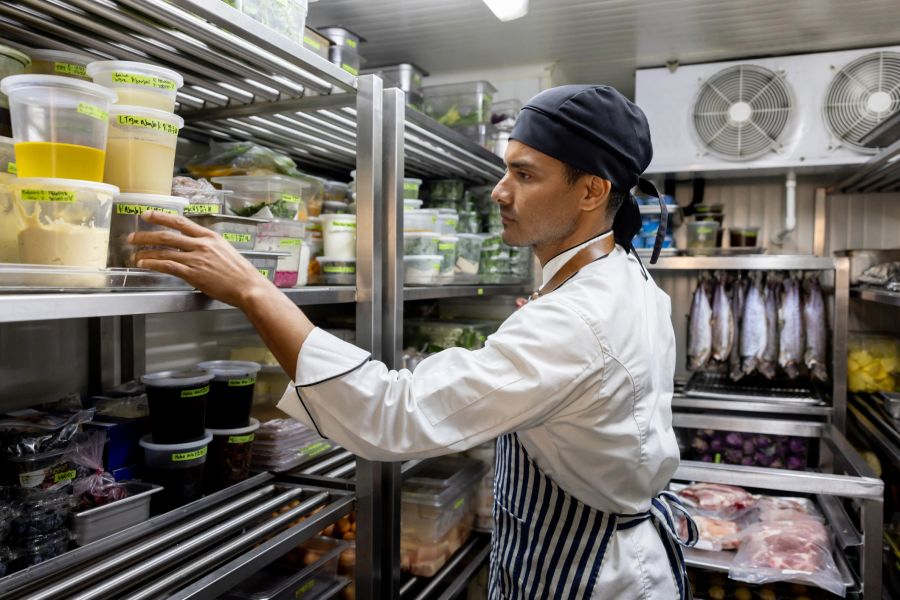
AI for Chef Kitchen Waste Reduction in Australia (2026)
How Australian chefs are using AI to reduce kitchen waste — food waste tracking, inventory optimisation, nose-to-tail cooking, and sustainability reporting.
Food waste is one of the most significant cost and sustainability challenges in professional kitchens. Australian restaurants and food service operations generate substantial food waste, and the financial cost — in wasted ingredients, disposal fees, and lost revenue — is significant. AI tools are helping chefs and kitchen managers address this challenge more systematically.
This guide covers how AI is being applied to kitchen waste reduction in Australia, what the tools can realistically deliver, and how chefs are integrating waste reduction into their broader kitchen management practices.
Understanding Where Waste Occurs
Effective waste reduction starts with understanding where waste is actually occurring. In most professional kitchens, waste happens at multiple points: over-ordering of ingredients, over-preparation of mise en place, plate waste from customers, and spoilage from poor storage or rotation practices.
AI tools can help chefs and kitchen managers identify the sources of waste more precisely. Winnow is a food waste management platform that uses computer vision and AI to track what is being thrown away in commercial kitchens. A camera and scale system monitors waste at the point of disposal, identifies the type of food being discarded, and quantifies the financial cost. Over time, the system builds a picture of where waste is concentrated, allowing chefs to target their waste reduction efforts more effectively.
Winnow is used in large-scale food service operations including hotels, contract catering, and institutional kitchens. For smaller restaurant kitchens, the investment may not be justified, but the principle — tracking waste systematically rather than estimating it — applies regardless of the tools used.
Leanpath is another food waste tracking platform that uses AI to analyse waste patterns and generate recommendations for reduction. It is used in healthcare, education, and corporate food service settings.
Inventory Management and Over-Ordering
Over-ordering is one of the most common sources of food waste in professional kitchens. Chefs order more than they need as a buffer against running out, and the excess spoils before it can be used.
AI-powered inventory management tools help chefs order more accurately by analysing historical usage data and predicting demand. MarketMan integrates with POS systems to track ingredient usage in real time and generate purchase orders based on actual consumption rather than estimates. When a chef orders through MarketMan, the system compares the order quantity against predicted usage and flags potential over-ordering.
Apicbase provides similar functionality with a focus on recipe-level analysis. It calculates the theoretical ingredient usage for each dish based on recipe quantities and sales data, and compares this against actual inventory movements to identify discrepancies — which may indicate waste, theft, or recipe inconsistency.
For chefs managing seasonal menus, AI tools can help plan ingredient quantities more accurately by analysing how similar dishes have performed in previous seasons and adjusting order quantities accordingly.
Nose-to-Tail and Root-to-Stem Cooking
Nose-to-tail and root-to-stem cooking — using the whole animal or vegetable rather than just the prime cuts — is both a culinary philosophy and a practical waste reduction strategy. AI tools can help chefs develop dishes that use secondary cuts and vegetable trimmings more creatively.
ChatGPT and Claude are being used by chefs to generate ideas for using secondary ingredients. A chef with a surplus of fish bones and heads can ask the AI to suggest dishes or preparations that use these ingredients — fish stock, fish head curry, bone broth, or other applications. The AI can draw on a broad base of culinary knowledge to suggest options that the chef might not have considered.
This is particularly useful for chefs who are committed to reducing waste but are working with ingredients they are less familiar with. A chef who primarily works with European cuisine might use AI to research how Asian or Middle Eastern culinary traditions use secondary cuts and trimmings that would otherwise be discarded.
Menu Planning for Waste Reduction
Menu design has a significant impact on kitchen waste. Menus that share ingredients across multiple dishes reduce the risk of over-ordering and spoilage. AI tools can help chefs design menus with ingredient sharing in mind.
A chef can describe their current menu to ChatGPT and ask the AI to identify opportunities to share ingredients across dishes — for example, using the same herb in multiple preparations, or designing dishes that use different parts of the same protein. The AI can also suggest how to use seasonal produce across multiple dishes to reduce the risk of spoilage when a single dish does not sell as expected.
Sustainability Reporting
As sustainability reporting becomes more important for hospitality businesses — driven by customer expectations, investor requirements, and emerging regulatory frameworks — chefs and kitchen managers are increasingly required to document their waste reduction efforts.
AI tools can help with the documentation and reporting aspects of sustainability management. ChatGPT can help chefs draft sustainability reports, structure waste reduction data for reporting purposes, and communicate their waste reduction initiatives to customers and stakeholders.
For kitchens using food waste tracking platforms like Winnow or Leanpath, the data generated by these systems can be used to support sustainability claims with quantitative evidence — which is increasingly important as greenwashing scrutiny increases.
Practical Starting Points
For most Australian restaurant kitchens, the most practical starting point for AI-assisted waste reduction is improving inventory management and ordering accuracy. This does not require significant technology investment — it starts with tracking ingredient usage more carefully and using that data to inform ordering decisions.
The second most impactful step is menu design — ensuring that ingredients are shared across multiple dishes and that the menu is designed to use whole ingredients rather than just prime cuts. AI tools can help with the ideation and planning aspects of this work, but the implementation requires the chef's culinary judgment and creativity.
Food waste tracking technology like Winnow is most appropriate for larger operations where the investment can be justified by the scale of waste reduction. For smaller kitchens, manual waste tracking — recording what is being thrown away and why — can provide similar insights at lower cost.
Stay informed
Get AI news every Friday
The AI Digest delivers the week's most important AI stories — free, in plain English.
Subscribe free →Related Articles
More Professions →
AI for Chef Personal Brand Building in Australia (2026)
How Australian chefs are using AI to build their personal brand — cookbooks, social media, content creation, media appearances, and online presence.
AI for Chef Recipe Development in Australia (2026)
How Australian chefs are using AI for recipe development — flavour pairing, ingredient substitution, dietary adaptation, and seasonal menu ideation.

AI for Warehouse Safety and Compliance in Australia (2026)
How Australian warehouse managers are using AI to improve safety outcomes and manage WHS compliance — forklift monitoring, PPE detection, racking inspection, and incident management.