
AI for Chef Recipe Development in Australia (2026)
How Australian chefs are using AI for recipe development — flavour pairing, ingredient substitution, dietary adaptation, and seasonal menu ideation.
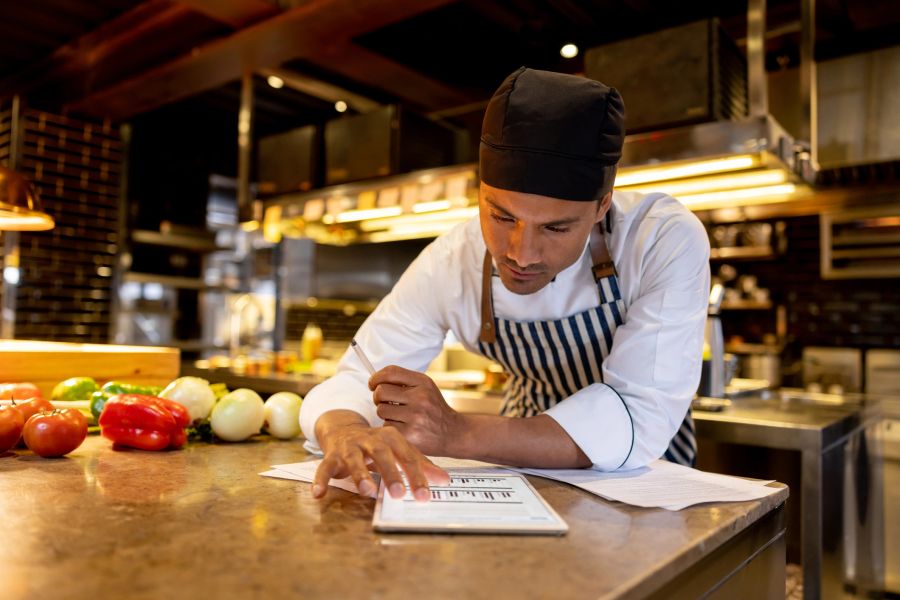
Recipe development has always been a creative process driven by a chef's knowledge, experience, and instinct. AI tools are not replacing that process — they are accelerating the research and ideation phases, giving chefs more options to evaluate and more information to draw on when developing new dishes.
This guide covers how Australian chefs are using AI for recipe development in 2026, what the tools can realistically contribute, and where culinary expertise remains irreplaceable.
Flavour Pairing and Ingredient Exploration
One of the most time-consuming aspects of recipe development is researching flavour combinations — understanding which ingredients work well together, which cooking methods bring out the best in a particular ingredient, and how different culinary traditions approach similar ingredients.
AI tools like ChatGPT and Claude can significantly accelerate this research phase. A chef developing a dish featuring a specific Australian native ingredient — finger lime, wattleseed, lemon myrtle, or Davidson plum — can ask the AI to suggest complementary flavours, relevant cooking methods, and examples of how the ingredient is used in different culinary contexts. The AI draws on a broad base of culinary knowledge to generate suggestions that the chef can then evaluate against their own expertise.
This is particularly useful when working with less familiar ingredients. A chef exploring the use of saltbush in a contemporary Australian menu can use AI to quickly survey how the ingredient has been used in other contexts, what flavours it pairs well with, and what cooking methods are most commonly applied to it. This research might previously have taken hours of reading; with AI it can be done in minutes.
It is important to note that AI flavour pairing suggestions are starting points, not finished recipes. The chef's role is to evaluate these suggestions against their knowledge of the ingredient, their kitchen's capabilities, and the specific context of the dish they are developing.
Dietary Adaptation and Allergen Management
Adapting recipes for dietary requirements is one of the most common and time-consuming tasks in professional kitchens. As the range of dietary requirements that restaurants need to accommodate has expanded — vegan, gluten-free, dairy-free, nut-free, low-FODMAP, and others — the complexity of menu management has increased significantly.
AI tools can help chefs think through dietary adaptations more systematically. A chef can describe a dish and its ingredients to ChatGPT and ask for suggestions on how to adapt it for a specific dietary requirement. The AI can identify which ingredients need to change, suggest appropriate substitutions, and flag any potential issues with the adapted recipe.
For example, a chef developing a gluten-free version of a pasta dish can ask the AI to suggest alternative pasta options, identify any other ingredients in the dish that might contain hidden gluten (soy sauce, certain stocks, some vinegars), and recommend adjustments to the cooking method that might be needed when using gluten-free pasta.
This kind of systematic analysis is useful as a starting point, but chefs must always verify the output. AI tools can make errors in allergen information — for example, incorrectly classifying an ingredient as safe for a particular dietary requirement. In a professional kitchen context, where allergen errors can have serious health consequences, AI-generated dietary information must always be verified against authoritative sources before being relied upon.
Seasonal Menu Ideation
Developing seasonal menus requires balancing creativity with practical constraints — available produce, kitchen capabilities, food cost targets, and the need to maintain consistency across service periods. AI tools can help chefs generate a broader range of options to consider when planning seasonal menu changes.
A chef planning a spring menu can describe the key seasonal produce available — asparagus, peas, broad beans, spring lamb, new season garlic — and ask ChatGPT to suggest dish concepts that feature these ingredients. The AI can generate a range of options across different courses, cooking methods, and flavour profiles, giving the chef a broader palette of ideas to evaluate.
This is most useful in the early stages of menu development, when the goal is to generate a wide range of options before narrowing down to the dishes that will actually be developed and tested. AI can help expand the initial ideation phase without requiring the chef to spend hours researching before they can start cooking.
Recipe Scaling and Costing
Scaling recipes accurately is a fundamental kitchen skill, but it is also one where errors are common — particularly for recipes that involve leavening agents, gelatin, or other ingredients where the relationship between quantity and effect is not linear. AI tools can help chefs think through scaling challenges more carefully.
A chef scaling a recipe from 10 portions to 100 portions can ask ChatGPT to identify which ingredients are likely to need non-linear scaling adjustments and why. The AI can flag ingredients like baking powder, salt, and gelatin where scaling is not straightforward, and suggest how to approach the adjustment.
For food cost analysis, AI tools can help chefs structure their costing calculations and identify where food cost assumptions might be incorrect. A chef can describe a recipe and its ingredient costs and ask the AI to help calculate the food cost per portion and identify which ingredients are driving the highest cost.
Writing Recipe Documentation
Professional kitchens require clear, accurate recipe documentation — standardised recipes that allow any trained member of the kitchen team to produce a dish consistently. Writing this documentation is time-consuming, and it is often deprioritised in busy kitchen environments.
AI tools can help chefs produce recipe documentation more efficiently. A chef can describe a dish verbally or in rough notes and ask ChatGPT to structure it as a standardised recipe with ingredients listed by weight, method written in clear steps, and notes on quality standards and common errors. The AI produces a first draft that the chef can then review and refine.
This is particularly useful for new dishes that need to be documented quickly before service, or for kitchens that are building a recipe library for the first time.
The Chef's Role Remains Central
AI tools can accelerate research, generate options, and help with documentation — but they cannot taste, smell, or feel the texture of a dish. The sensory judgment that is central to recipe development remains entirely the chef's domain.
The most effective use of AI in recipe development is as a research and ideation tool that expands the chef's options and reduces the time spent on information gathering, freeing up more time for the creative and technical work that only a skilled chef can do.
Stay informed
Get AI news every Friday
The AI Digest delivers the week's most important AI stories — free, in plain English.
Subscribe free →Related Articles
More Professions →
AI for Chef Personal Brand Building in Australia (2026)
How Australian chefs are using AI to build their personal brand — cookbooks, social media, content creation, media appearances, and online presence.
AI for Chef Kitchen Waste Reduction in Australia (2026)
How Australian chefs are using AI to reduce kitchen waste — food waste tracking, inventory optimisation, nose-to-tail cooking, and sustainability reporting.

How to Use AI for Property Development Feasibility in Australia (2026)
How Australian property developers can use AI to speed up feasibility analysis — site assessment, planning controls, construction cost benchmarks, market research, and financial modelling.