AI for Warehouse Safety and Compliance in Australia (2026)
How Australian warehouse managers are using AI to improve safety outcomes and manage WHS compliance — forklift monitoring, PPE detection, racking inspection, and incident management.
Warehouses are among the higher-risk workplaces in Australia. Forklifts, racking systems, manual handling, hazardous chemicals, and the constant movement of people and equipment create a complex safety environment. Safe Work Australia data consistently shows warehousing and storage with elevated rates of serious workplace injuries — musculoskeletal injuries from manual handling, crush injuries from forklifts, and falls from height are the most common serious incident types.
AI tools are being applied to warehouse safety and WHS compliance in ways that deliver measurable improvements — real-time hazard detection, systematic compliance monitoring, and data-driven safety management that identifies risks before they become incidents.
The WHS Compliance Framework for Australian Warehouses
Work Health and Safety Act
Warehouses in Australia are regulated under the Work Health and Safety Act in each state and territory (the model WHS Act applies in most jurisdictions; Victoria and Western Australia have their own legislation). The primary duty of care requires persons conducting a business or undertaking (PCBUs) to ensure, so far as is reasonably practicable, the health and safety of workers and others.
For warehouse managers, this means:
- Identifying hazards — systematic identification of all hazards in the warehouse environment
- Assessing risks — evaluating the likelihood and consequence of harm from each hazard
- Implementing controls — applying the hierarchy of controls to eliminate or minimise risks
- Reviewing controls — monitoring the effectiveness of controls and updating them when circumstances change
Key Hazard Areas in Warehouses
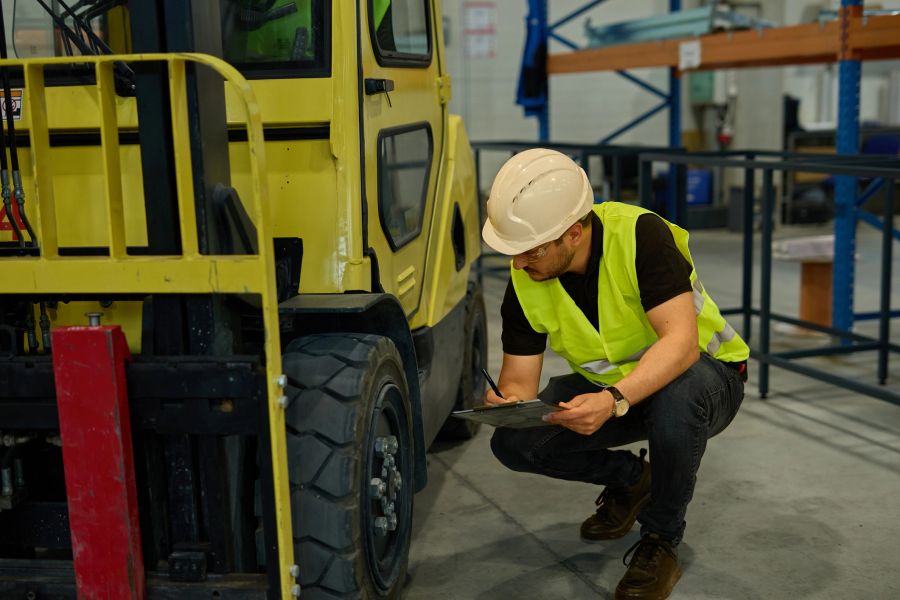
Forklift operations. Forklifts are involved in a significant proportion of serious warehouse injuries. Key risks include pedestrian-forklift collisions, load instability, and tip-overs. WHS regulations require forklift operators to hold a high risk work licence (forklift truck — LF class) in all Australian jurisdictions.
Racking systems. Damaged or overloaded racking can collapse, causing serious injuries and significant property damage. Regular inspection and load rating compliance are essential.
Manual handling. Musculoskeletal injuries from manual handling — lifting, carrying, pushing, pulling — are the most common injury type in warehouses. Risk assessment and engineering controls (mechanical aids, ergonomic workstation design) are required.
Working at heights. Accessing high-level racking, mezzanine floors, and loading docks creates fall risks. Falls from height are a leading cause of serious injuries in warehouses.
Hazardous chemicals. Many warehouses store hazardous chemicals — cleaning products, battery acid, aerosols, flammable liquids. Storage, handling, and emergency response requirements are regulated under the WHS Regulations and Australian Standards.
Noise. Warehouses with high forklift activity, conveyor systems, or automated equipment can generate noise levels that require hearing protection and engineering controls.
AI Applications for Warehouse Safety
1. Computer Vision Safety Monitoring
Computer vision systems use cameras and AI to monitor the warehouse environment in real time, detecting safety violations and hazards as they occur.
Pedestrian-forklift proximity detection. AI analyses camera feeds to detect when pedestrians enter forklift operating zones, generating immediate alerts to the forklift operator and the safety manager. This is one of the highest-value AI safety applications in warehouses — pedestrian-forklift collisions are a leading cause of serious injuries.
PPE compliance monitoring. AI can identify workers not wearing required personal protective equipment — hard hats, high-visibility vests, safety footwear, gloves. Real-time alerts allow supervisors to address non-compliance immediately rather than discovering it during a safety audit.
Unsafe behaviour detection. AI can detect a range of unsafe behaviours — workers standing on racking, operating forklifts at excessive speed, carrying loads that obstruct visibility, or working in areas where they should not be.
Spill and hazard detection. AI can identify spills, obstructions, and damaged flooring that create slip, trip, and fall risks — alerting maintenance staff for prompt remediation.
Key platforms:
- Protex AI — computer vision safety monitoring for warehouses and manufacturing facilities. Analyses existing camera infrastructure.
- Intenseye — AI-powered EHS (environment, health, and safety) platform with computer vision monitoring.
- Verizon Connect — includes safety monitoring features for warehouse and logistics operations.
2. Racking Inspection and Damage Detection
Racking damage is a significant safety risk that is often missed in manual inspections — particularly damage to lower rack uprights that occurs from forklift impacts and may not be immediately visible.
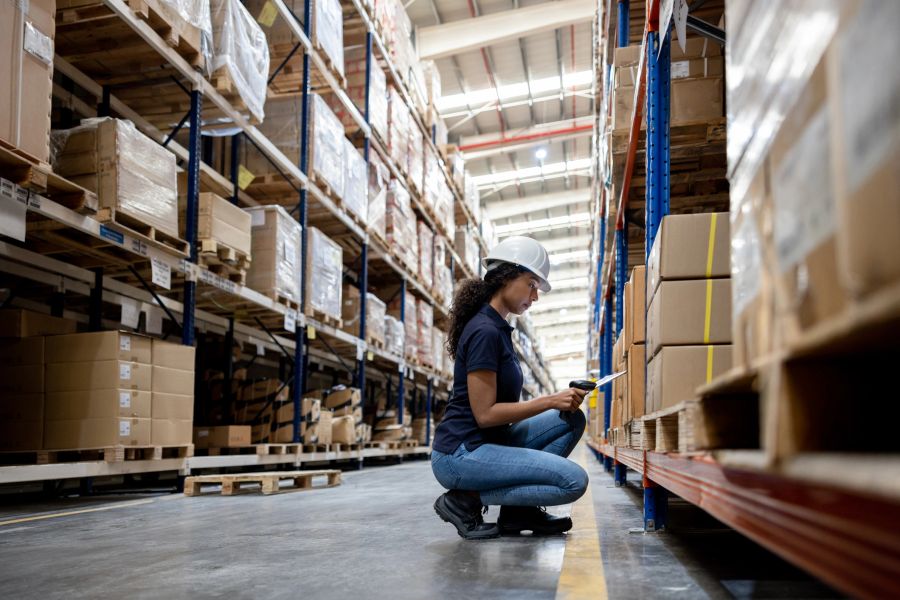
AI-assisted racking inspection uses cameras (handheld, mounted, or drone-based) to systematically inspect racking for damage, identifying issues that might be missed in a manual walkthrough. The AI analyses images against known damage patterns and generates inspection reports with prioritised repair recommendations.
Inspection frequency. The Storage Equipment Manufacturers' Association of Australia (SEMA) recommends formal racking inspections at least annually, with regular informal inspections by trained staff. AI-assisted inspection can increase inspection frequency and consistency.
Load rating compliance. AI systems can verify that racking is loaded within its rated capacity — comparing actual load weights against the racking's load rating placard. Overloading is a common cause of racking failure.
3. Forklift Telematics and Safety Management
AI-powered forklift telematics systems monitor forklift operations in real time:
- Speed monitoring — alerting when forklifts exceed speed limits in different zones
- Impact detection — recording and alerting on forklift impacts, which may indicate racking damage or near-miss incidents
- Operator behaviour — tracking harsh acceleration, braking, and cornering
- Pre-shift inspection — digital pre-shift inspection checklists with AI-assisted defect identification
- Access control — ensuring only licensed operators can start forklifts
Key platforms: Crown Equipment's InfoLink system, Toyota Material Handling's I_Site, and Jungheinrich's ISM Online all provide AI-powered forklift management for Australian operations.
4. Incident Reporting and Investigation
AI tools can improve the quality and consistency of incident reporting and investigation:
Digital incident reporting. Mobile-based incident reporting systems allow workers to report incidents and near-misses immediately, with photo and video evidence. AI analyses reports to identify patterns — recurring hazard types, locations, times of day, or work activities associated with incidents.
Investigation assistance. AI can assist with incident investigation by analysing incident data, identifying contributing factors, and suggesting corrective actions based on similar incidents in the database.
Near-miss analysis. Near-miss reporting is a leading indicator of safety performance — organisations with high near-miss reporting rates typically have lower serious injury rates. AI analysis of near-miss data can identify systemic risks before they result in injuries.
5. WHS Compliance Management
AI-powered compliance management systems help warehouse managers track and manage their WHS obligations:
- Licence and certification tracking — monitoring forklift licences, first aid certificates, and other required certifications, with automated alerts when renewals are due
- Training records — tracking completion of required safety training for all workers
- Inspection scheduling — automated scheduling of required inspections (racking, fire equipment, first aid kits, emergency exits)
- Document management — maintaining current versions of safety procedures, risk assessments, and SWMS documents
- Audit preparation — generating compliance reports for internal audits and regulator inspections
Key platforms: Safety Champion, Donesafe, and Vault EHS are compliance management platforms used by Australian warehouse operators.
Building an AI-Assisted Safety Management System
Step 1: Establish your safety baseline
Before implementing AI safety tools, establish a clear picture of your current safety performance:
- Review your incident and near-miss records for the past 2–3 years
- Identify your top hazard categories by frequency and severity
- Assess your current compliance status — are all required inspections current? Are all workers' licences and certifications valid?
- Calculate your LTIFR (lost time injury frequency rate) and TRIFR (total recordable injury frequency rate)
Step 2: Prioritise by risk
Use your baseline data to prioritise safety investments. For most warehouses, the highest-priority areas are:
- Forklift-pedestrian separation — the highest consequence risk in most warehouses
- Racking integrity — systematic inspection and damage management
- Manual handling — engineering controls for the highest-risk tasks
- PPE compliance — ensuring required PPE is worn consistently
Step 3: Implement monitoring technology
For the highest-priority risks, implement AI monitoring technology:
- Computer vision for pedestrian-forklift proximity and PPE compliance
- Forklift telematics for speed, impact, and operator behaviour monitoring
- Digital incident reporting for near-miss capture and analysis
Step 4: Build compliance management systems
Implement digital compliance management to ensure all required inspections, training, and certifications are current and documented.
Step 5: Review and improve
Review safety performance monthly — are incident rates declining? Are near-miss reports increasing (a positive sign of safety culture improvement)? Are AI monitoring alerts being acted on promptly? Use this data to refine your safety program.
What AI Cannot Do for Warehouse Safety
Create a safety culture. A genuine safety culture — where workers feel safe to raise concerns, where near-misses are reported without fear of blame, and where safety is genuinely valued — requires human leadership. AI monitoring supports safety management; it cannot create the culture that makes safety programs effective.
Replace safety expertise. WHS risk assessments, SWMS documents, and safety management plans require expertise in WHS law and practice. AI tools can assist with drafting and documentation, but compliance-sensitive documents must be reviewed by a qualified safety professional.
Guarantee compliance. Documented safety management systems and AI monitoring are important evidence of due diligence, but they do not guarantee compliance. A warehouse manager who monitors safety but ignores alerts, or who fails to act on identified hazards, remains exposed to WHS liability.
Key Safety Metrics for Warehouse Managers
- LTIFR — lost time injury frequency rate (injuries per million hours worked)
- TRIFR — total recordable injury frequency rate
- Near-miss report rate — near-miss reports per million hours worked (higher is better — indicates reporting culture)
- Hazard close-out rate — percentage of identified hazards addressed within target timeframe
- PPE compliance rate — percentage of observations with full PPE compliance
- Forklift incident rate — forklift impacts and near-misses per million hours worked
- Racking damage rate — damaged racking bays as a percentage of total bays
Stay informed
Get AI news every Friday
The AI Digest delivers the week's most important AI stories — free, in plain English.
Subscribe free →Related Articles
More Professions →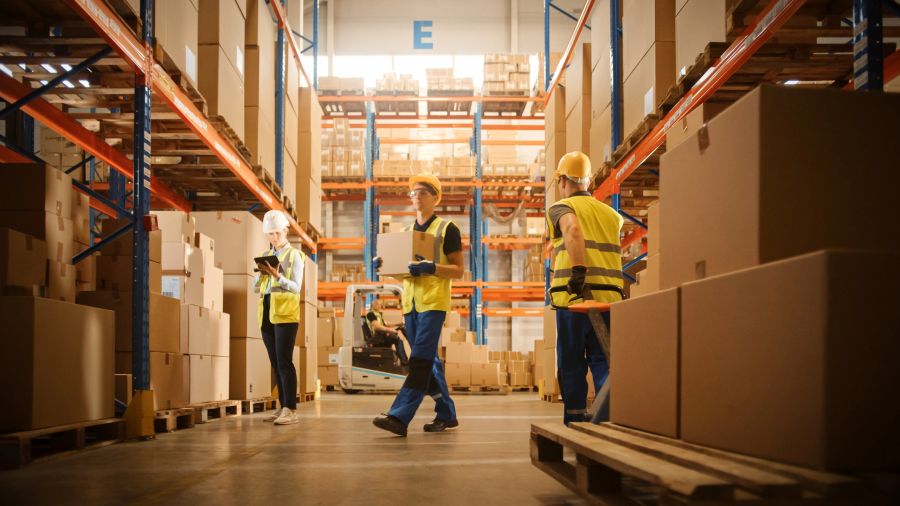
AI for Warehouse Safety and Compliance in Australia (2026)
How Australian warehouse managers are using AI to monitor safety compliance, detect hazards in real time, manage WHS obligations, and reduce workplace injuries.
AI for Warehouse Picking Efficiency in Australia (2026)
How Australian warehouse managers are using AI to improve picking speed and accuracy — pick path optimisation, voice picking, goods-to-person robotics, and batch picking strategies.
AI for Warehouse Inventory Accuracy in Australia (2026)
How Australian warehouse managers are using AI to achieve and maintain inventory accuracy above 99 per cent — cycle counting, RFID, computer vision, and demand forecasting explained.