
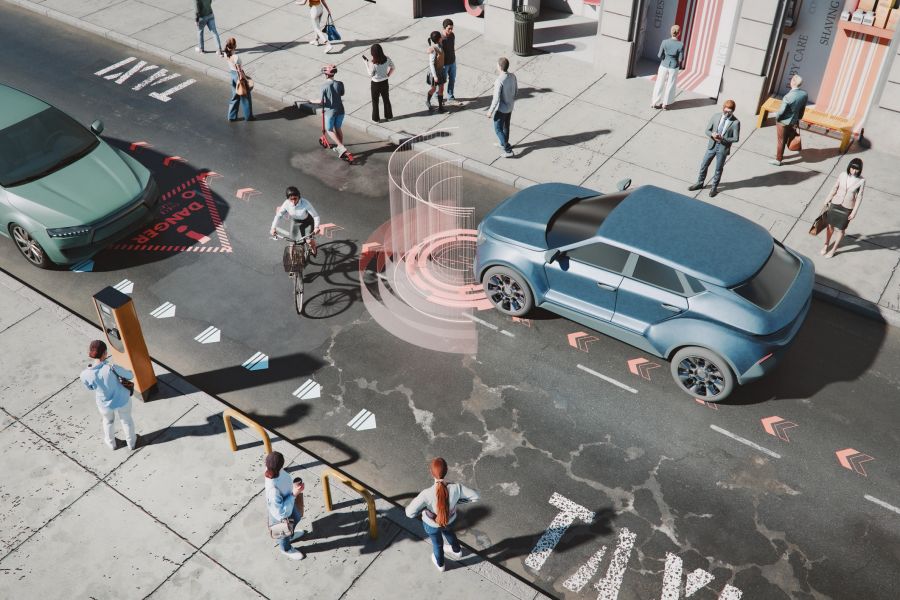
Self-Driving Cars in Australia: Where Things Actually Stand in 2026
Self-driving cars are closer than most Australians realise. Here's where autonomous vehicles stand in 2026 — from Waymo to what local regulators are planning.
Autonomous vehicles have been a fixture of technology forecasts for over a decade. But in 2026, the gap between promise and reality is narrowing faster than most expected — and Australia is beginning to grapple seriously with what AI-powered transport means for its roads, its cities, and its regulatory frameworks.
Here is where things stand, drawing on developments from global manufacturers, Australian government policy, and independent road safety research.
The Global State of Play
Waymo's Commercial Expansion
Waymo, the autonomous vehicle subsidiary of Alphabet (Google's parent company), has been operating fully driverless commercial robotaxi services in San Francisco, Phoenix, and Los Angeles. As of early 2026, Waymo was completing more than 150,000 paid trips per week across its US markets — a commercial scale that no other autonomous vehicle operator had come close to matching.
Waymo's vehicles use a combination of lidar, radar, and camera systems processed by AI to navigate complex urban environments without human intervention. The company has published safety data showing its vehicles are involved in significantly fewer injury-causing crashes per million miles than the US national average for human drivers — though independent researchers note that direct comparisons remain methodologically difficult given the controlled conditions in which robotaxis currently operate.
Tesla's Full Self-Driving
Tesla's Full Self-Driving (FSD) software, now in its 13th major version, represents one of the most ambitious and widely deployed AI driving systems in the world. Using a camera-only AI approach — no lidar — FSD has been refined through billions of real-world kilometres driven by Tesla's global fleet, giving it an unmatched dataset for training its neural networks.
Tesla currently describes FSD as a supervised driver assistance system, meaning the driver remains engaged and ready to take over. But the scale of Tesla's real-world data collection is a genuine competitive advantage: every Tesla on the road contributes to improving the system, creating a feedback loop that purpose-built robotaxi operators simply cannot replicate at the same speed or volume.
FSD is available to Australian Tesla owners and continues to receive over-the-air software updates — meaning the car you buy today becomes meaningfully more capable over time without any hardware changes. For Australians who want the most advanced driver assistance technology available in a production vehicle right now, Tesla's system remains the benchmark.
Chinese Manufacturers
China's autonomous vehicle sector has advanced rapidly. Baidu's Apollo Go robotaxi service operates in multiple Chinese cities, and BYD — now the world's largest electric vehicle manufacturer by sales volume — has integrated advanced driver assistance systems across its model range. Chinese EV manufacturers including BYD, NIO, and Li Auto are all selling vehicles in or entering the Australian market, bringing their AI driver assistance technology with them.
Australia's Regulatory Position
The National Transport Commission Framework
Australia's approach to autonomous vehicles is coordinated through the National Transport Commission (NTC), which works with state and territory governments to develop a nationally consistent regulatory framework.
The NTC has published a series of policy papers establishing the foundations for automated vehicle regulation in Australia. Key principles include:
- Automated Driving System (ADS) entities — companies deploying autonomous vehicles must be registered and accept legal responsibility for the vehicle's driving behaviour when the system is in control
- Safety assurance — ADS entities must demonstrate their systems are safe before deployment, with ongoing reporting obligations
- In-service monitoring — real-world performance data must be collected and reported to regulators
The Automated Vehicle Safety Law, which provides the federal legislative foundation for this framework, passed the Australian Parliament in 2023. State and territory governments are progressively implementing complementary legislation.
Trials on Australian Roads
Autonomous vehicle trials have been conducted across several Australian states. Notable examples include:
- South Australia has been the most active jurisdiction for AV trials, with the state government establishing a dedicated regulatory pathway and hosting trials by multiple operators on public roads in Adelaide
- New South Wales has conducted trials of autonomous shuttle buses in controlled environments, including at Sydney Olympic Park
- Victoria has hosted trials of automated freight vehicles on selected highway corridors
These trials operate under specific permits and remain at an early commercial stage. No jurisdiction in Australia currently permits fully driverless commercial passenger services on public roads without a safety operator present.
The ANCAP Safety Dimension
The Australasian New Car Assessment Program (ANCAP) — which conducts independent vehicle safety testing for Australia and New Zealand — has been expanding its assessment criteria to include advanced driver assistance systems (ADAS). ANCAP now evaluates systems including automatic emergency braking, lane-keeping assistance, and driver monitoring as part of its star rating methodology.
ANCAP's assessments are increasingly relevant to Australian consumers as vehicles with higher levels of AI-assisted driving enter the market. The organisation has noted that the quality and reliability of ADAS systems varies significantly between manufacturers — a finding with direct implications for how Australians should evaluate new vehicle purchases.
How AI Is Already Transforming the Drive
AI is not a future promise for Australian drivers — it is already working quietly in the background of hundreds of thousands of vehicles on the road today, making every journey safer, smoother, and more connected.
Automatic Emergency Braking
Automatic Emergency Braking (AEB) uses AI-powered cameras and radar to detect an imminent collision and apply the brakes faster than any human can react. AEB is now standard on virtually every new car sold in Australia, and research from the Insurance Institute for Highway Safety shows it reduces rear-end crashes by approximately 50%. For Australian families, that translates directly into lives saved and injuries prevented.
Adaptive Cruise Control
Modern adaptive cruise control uses AI to read the traffic ahead in real time — automatically adjusting speed to maintain a safe following distance, slowing for congestion, and accelerating when the road clears. On long Australian highway drives, this technology meaningfully reduces driver fatigue and makes multi-hour journeys significantly less taxing.
Lane Centring and Highway Assist
AI-powered lane centring systems continuously monitor road markings and gently steer the vehicle to stay perfectly centred in its lane. Combined with adaptive cruise control, these systems form a highway driving assistant that handles the repetitive, tiring aspects of motorway travel — a genuine quality-of-life improvement for the millions of Australians who commute long distances.
Intelligent Parking Assistance
AI parking systems use cameras and ultrasonic sensors to map the surrounding space and guide the vehicle into tight spots automatically — or in some vehicles, park entirely without driver input. For urban Australians navigating crowded city streets, this technology removes one of the most stressful parts of daily driving.
AI-Powered Navigation
Platforms like Google Maps and Apple Maps now use AI to predict traffic conditions, suggest faster routes in real time, and learn individual driving preferences over time. These systems process enormous amounts of live data — from other vehicles, road sensors, and historical patterns — to route drivers around congestion before it builds.
Driver Monitoring Systems
The latest AI driver monitoring systems use in-cabin cameras to detect signs of fatigue or distraction — tracking eye movement, head position, and blinking patterns. When the system detects a drowsy or inattentive driver, it issues an alert before a dangerous situation develops. Several Australian states are actively exploring how these systems can support road safety policy, particularly for heavy vehicle operators.
Over-the-Air Improvements
One of the most exciting aspects of AI in modern vehicles is that the car you buy today keeps getting better. Tesla, and increasingly other manufacturers, deliver software updates over the air that improve safety features, add new capabilities, and refine AI performance — without the owner ever visiting a dealership. The vehicle you drive in 2027 will be meaningfully more capable than the one you drove off the lot in 2026.
The Road Safety Case
Australia's road toll remains a significant public health issue. Road crashes impose an enormous economic burden on Australia — spanning emergency response, hospital treatment, rehabilitation, and the long-term productivity losses that follow serious injury. Government transport research bodies have put the total annual cost to the economy in the tens of billions of dollars.
Human error is a contributing factor in the vast majority of serious crashes. Proponents of autonomous vehicles argue that removing human error from the driving equation could dramatically reduce the road toll over time.
The evidence from current ADAS systems is cautiously encouraging. Research published by the Insurance Institute for Highway Safety (IIHS) in the United States found that automatic emergency braking systems reduce rear-end crashes by approximately 50%. Australian research from the Monash University Accident Research Centre (MUARC) has similarly found that lane departure warning and autonomous emergency braking systems reduce crash rates when properly calibrated and used.
However, researchers also note a phenomenon called automation complacency — where drivers become over-reliant on assistance systems and less attentive than they would be without them. This is a challenge for the industry broadly, and one that manufacturers are actively addressing through driver monitoring cameras and attention-detection systems that prompt drivers to stay engaged.
The Jobs and Economic Dimension
The potential economic disruption from autonomous vehicles is significant and contested. Transport is one of Australia's largest employment sectors — the ABS estimates approximately 600,000 Australians work in transport, postal, and warehousing industries.
The most immediate impact is likely to be felt in long-haul freight, where autonomous trucks operating on defined highway corridors are closer to commercial viability than urban robotaxis. Several Australian companies are involved in automated freight trials, and the economics of long-haul trucking — driver shortages, fatigue regulations, fuel costs — create strong commercial incentives for automation.
The National Centre for Vocational Education Research (NCVER) has noted that transport and logistics workers face among the higher displacement risks from automation of any occupational group in Australia. However, researchers also point to the creation of new roles in vehicle monitoring, fleet management, maintenance of complex AI systems, and regulatory compliance.
The net employment effect remains genuinely uncertain. The timeline for large-scale displacement is likely measured in decades rather than years, given the pace of regulatory approval and the long replacement cycle of commercial vehicle fleets.
Infrastructure and the Australian Context
Australia presents specific challenges for autonomous vehicle deployment that differ from the US and European markets where most development has occurred.
Road quality variability is significant. Australia has extensive rural and regional road networks with lower maintenance standards than urban arterials. Autonomous systems trained primarily on well-marked urban roads may perform less reliably on unmarked outback highways — a genuine safety concern for a country where long rural drives are common.
Connectivity is another factor. Many autonomous vehicle systems rely on high-speed mobile connectivity for real-time mapping updates and remote monitoring. Australia's mobile coverage outside major cities remains patchy, which constrains where fully connected autonomous systems can safely operate.
Heat and dust present engineering challenges. Australian conditions — particularly in inland and northern regions — are more demanding than the temperate climates where most AV testing has occurred. Lidar and camera systems require validation in high-UV, high-dust environments.
These are solvable engineering problems, but they mean that the Australian deployment timeline for autonomous vehicles is likely to lag behind the US and parts of Europe.
What to Watch
Several developments will shape how quickly AI vehicles arrive on Australian roads:
- NTC regulatory milestones — The National Transport Commission's ongoing work to finalise the in-service monitoring framework and state-level implementation of the Automated Vehicle Safety Law will determine when commercial driverless services can legally operate
- Chinese EV market penetration — As BYD and other Chinese manufacturers grow their Australian market share, their ADAS technology will become more prevalent on Australian roads, raising questions about data sovereignty and system validation
- ANCAP ADAS ratings — Expanded ANCAP assessment criteria will give Australian consumers better information for comparing the real-world performance of driver assistance systems
- Freight corridor trials — Progress on automated freight on defined highway corridors (particularly in Western Australia and Queensland) will be an early indicator of commercial viability in the Australian context
- Insurance framework — How Australian insurers price and respond to claims involving ADS-controlled vehicles will significantly influence consumer and fleet adoption rates
The Bottom Line
AI-powered vehicles are not a distant concept — they are already on Australian roads in the form of Level 2 driver assistance systems, and the regulatory framework for higher levels of automation is being built now.
Fully driverless commercial services remain years away from widespread Australian deployment, constrained by regulation, infrastructure, and the genuine engineering challenges of the Australian environment. But the direction of travel is clear.
For Australian consumers, the most immediate practical implication is straightforward: when buying a new vehicle, the quality of its AI driver assistance systems is now a meaningful safety consideration — and ANCAP's expanding assessment criteria are the most reliable independent guide to evaluating them.
Stay informed
Get AI news every Friday
The AI Digest delivers the week's most important AI stories — free, in plain English.
Subscribe free →Related Articles
More Technology →
Why Australia Cannot Afford to Sit Out the AI Investment Race
As global technology companies restructure their entire revenue models around AI, Australian businesses face a defining choice: invest now and shape the future, or fall behind in the most consequential economic shift of the century.
What Australia's AI Data Centre Boom Really Means for the Country
Billions of dollars in AI data centre investment are flowing into Australia — and the effects go well beyond server racks. From new jobs and cleaner energy grids to faster internet and a stronger sovereign tech capability, here is what the build-out actually means.

How AI Is Changing Life for Australia's 5.5 Million People with Disability
5.5 million Australians live with disability. AI tools now help with communication, employment, and daily independence in ways not possible two years ago.