
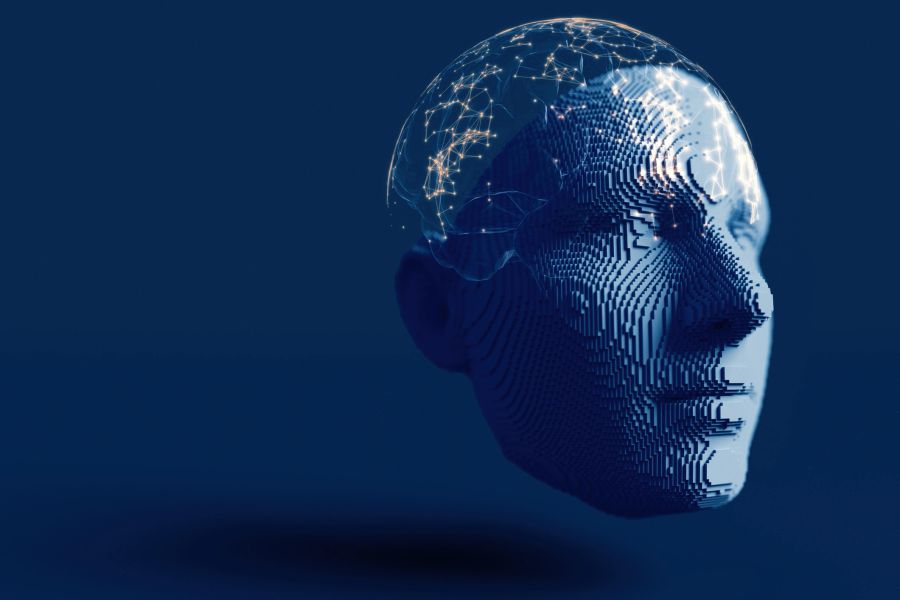
What Is AI? The Definitive Australian Guide to Artificial Intelligence (2026)
AI is everywhere — but what does it mean? This plain-English guide explains artificial intelligence and what it means for everyday Australians. No jargon.
What Is AI? The Definitive Australian Guide to Artificial Intelligence (2026)
Artificial intelligence is the defining technology of our era. It is reshaping how Australians work, learn, access healthcare, manage money, and interact with government. Yet for all the coverage it receives, the term itself is rarely explained clearly.
No jargon, no hype — just a thorough, factual account of what AI is, how it works, where it came from, what it can and cannot do, and what it means for everyday life in Australia.
What AI Actually Means
Artificial intelligence refers to computer systems designed to perform tasks that would normally require human thinking. These include recognising speech, understanding written language, identifying objects in images, making recommendations, translating between languages, and solving complex problems.
The word "artificial" simply means the intelligence is produced by a machine rather than a person. The word "intelligence" is used loosely — AI systems do not think or feel the way humans do. They process data and produce outputs based on patterns they have learned from large amounts of examples.
A useful way to think about it: AI is software that has been trained to get good at a specific task by processing enormous quantities of data. The more data, and the more sophisticated the training process, the more capable the system becomes.
A Brief History of AI
The idea of building thinking machines has been around for centuries in philosophy and fiction. The modern scientific field began in earnest in the mid-twentieth century.
The term "artificial intelligence" was coined in 1956 by American computer scientist John McCarthy at a research conference at Dartmouth College in the United States. The early decades of AI research were characterised by optimism and, ultimately, disappointment. Early systems were rule-based — programmers wrote explicit instructions for every situation the system might encounter. This worked for narrow, well-defined tasks but struggled with the complexity of the real world.
Two periods of reduced funding and interest, known as "AI winters," occurred in the 1970s and again in the late 1980s and early 1990s, when the limitations of rule-based approaches became apparent.
The shift that changed everything was the rise of machine learning, and in particular a technique called deep learning, which became practically powerful in the 2010s. Instead of being programmed with rules, these systems learn from data. Show a system enough examples of cats, and it learns to recognise cats. Show it enough text, and it learns to generate text.
The release of ChatGPT by OpenAI in late 2022 marked a turning point in public awareness. The product reached 100 million users within approximately two months of launch — a pace that analysts at the time described as among the fastest for any consumer software product on record, based on data reported by UBS in February 2023.
By 2026, AI tools have become embedded in everyday Australian life, from banking and healthcare to education and agriculture.
The Main Types of AI
Not all AI is the same. Understanding the main categories helps make sense of the technology.
Narrow AI
This is the only type of AI that currently exists in practical form. Narrow AI systems are designed to do one specific thing well — translate languages, recommend videos, detect fraud, generate text, or identify objects in photographs. They can be extraordinarily capable within their domain, but they cannot transfer that capability to a different task.
Every AI product you use right now — ChatGPT, Google Search, Spotify's recommendations, your bank's fraud detection system — is narrow AI.
General AI
General AI, sometimes called artificial general intelligence or AGI, refers to a hypothetical system that could perform any intellectual task a human can. It does not currently exist. Researchers disagree significantly about how far away it might be, or whether it is achievable at all. When people talk about AI "becoming conscious" or "taking over," they are usually imagining general AI — something that remains theoretical.
Generative AI
This is the category that has attracted the most attention in recent years. Generative AI systems produce new content — text, images, audio, video, or code — in response to a prompt. ChatGPT, Google Gemini, Anthropic's Claude, and image tools like DALL-E and Midjourney all fall into this category.
These systems are trained on vast datasets of existing human-created content. They learn the statistical patterns in that content and use those patterns to generate new outputs that are plausible and coherent.
Agentic AI
A more recent development is agentic AI — systems that can take sequences of actions to complete a goal, rather than simply responding to a single prompt. An AI agent might be given a task like "research this topic and write a report" and autonomously browse the web, gather information, synthesise it, and produce a document. This category is developing rapidly in 2026.
How AI Actually Learns
Most modern AI is built on a technique called machine learning. Here is how it works.
Training data. An AI system starts with a large dataset of examples. For a language model, this might be hundreds of billions of words from books, websites, academic papers, and other sources. For an image recognition system, it might be millions of labelled photographs.
Pattern recognition. The system processes this data and adjusts its internal parameters — numerical values that determine how the system responds to inputs — to get better at predicting the right output for a given input. This process is called training and can require enormous amounts of computing power.
Neural networks. Most modern AI systems use a structure loosely inspired by the human brain called a neural network. It consists of layers of interconnected nodes that transform input data into output predictions. Deep learning refers to neural networks with many layers — sometimes hundreds — that can learn increasingly abstract representations of data.
Inference. Once trained, the system can take new inputs it has never seen before and produce outputs based on what it learned. When you type a question into ChatGPT, the model is doing inference — predicting the most likely useful response based on its training.
Importantly, the system is not retrieving stored answers from a database. It is generating responses based on statistical patterns learned during training. This is why AI can produce confident-sounding answers that are factually wrong — a phenomenon researchers call "hallucination." Treating AI outputs as a starting point rather than a final answer, and verifying important claims independently, remains good practice.
Where Australians Already Encounter AI
Most Australians interact with AI multiple times a day without necessarily realising it.
Search engines. Google uses AI extensively to understand search queries, rank results, and generate the summary answers that appear at the top of the page. The quality of search results has improved dramatically over the past decade largely because of AI.
Banking and fraud detection. Australian banks use AI to monitor transactions in real time and flag unusual activity. The Australian Prudential Regulation Authority (APRA) has issued guidance — including Prudential Standard CPS 234 — that addresses technology risk management, which encompasses AI systems used in financial services.
Healthcare. AI tools are increasingly used in Australian hospitals and medical practices to assist with tasks like reading medical scans, flagging abnormal results, and supporting clinical decision-making. The CSIRO, Australia's national science agency, has been active in developing AI applications for healthcare through its Data61 division.
Email filtering. The spam filter that keeps unwanted messages out of your inbox is an AI system trained to recognise the patterns of junk mail. Modern spam filters use machine learning to adapt to new tactics as they emerge.
Voice assistants. Siri, Google Assistant, and Amazon Alexa all use AI to understand spoken language and respond to requests. These systems have improved substantially in accuracy and naturalness over the past decade.
Navigation. Google Maps and Apple Maps use AI to predict traffic, suggest routes, and estimate arrival times based on real-time data from millions of devices.
Streaming recommendations. When Netflix or Spotify suggests something you might enjoy, that recommendation comes from an AI system that has analysed your history alongside the behaviour of millions of other users.
Agriculture. Australian farmers are using AI-powered tools for crop monitoring, livestock management, and precision irrigation. The CSIRO has conducted research into AI applications for agriculture, including tools for detecting crop disease and optimising water use.
Education. Australian schools and universities are grappling with both the opportunities and challenges AI presents. The Australian Government's Department of Education has been developing guidance for schools on responsible AI use.
What Large Language Models Are
Much of the current excitement around AI centres on a specific type of system called a large language model, or LLM. ChatGPT, Google Gemini, and Anthropic's Claude are all LLMs.
An LLM is a type of neural network trained on enormous amounts of text. Through that training, it develops a sophisticated ability to understand and generate human language. It can answer questions, summarise documents, write code, translate between languages, draft emails, explain complex topics, and carry on extended conversations.
The "large" in large language model refers to the scale of both the training data and the model itself. Modern LLMs have hundreds of billions of parameters — the numerical values the model adjusts during training to improve its outputs.
Several important limitations are worth understanding:
No persistent memory by default. Most LLMs do not remember previous conversations unless specifically designed to do so. Each conversation typically starts fresh.
Knowledge cutoffs. LLMs are trained on data up to a certain date. They do not have real-time knowledge of current events unless given a tool to browse the web.
Hallucination. LLMs can generate plausible-sounding but factually incorrect information. This is a known limitation of the technology, not a bug that has been fully solved. Always verify important claims from AI-generated content.
Bias. LLMs learn from human-generated text, which contains human biases. These biases can be reflected in model outputs. Researchers and developers are working to identify and reduce bias, but it remains a challenge.
AI in Australia: The Policy and Regulatory Landscape
Australia is an active participant in the global AI landscape, both as a user and as a developer of AI technology.
The Australian Government released its Interim Responsible AI Standard in 2024 and has been developing a broader AI regulatory framework. The focus has been on ensuring AI systems used in high-risk settings — such as healthcare, employment, and government services — are safe, transparent, and accountable.
The Australian Signals Directorate (ASD), through the Australian Cyber Security Centre (ACSC), has published guidance on the secure use of AI systems, including considerations for organisations deploying AI in sensitive environments.
The Office of the Australian Information Commissioner (OAIC) has issued guidance on how the Privacy Act 1988 applies to AI systems that collect, use, or disclose personal information. Organisations using AI to process personal data of Australians must comply with the Australian Privacy Principles.
APRA has addressed AI risk in the context of its broader technology risk standards, including CPS 234, which requires regulated entities to maintain information security capabilities commensurate with the threats they face — including threats that may involve AI.
The CSIRO's Data61 division is one of Australia's leading national AI research bodies, conducting work across healthcare, agriculture, environmental monitoring, and cybersecurity. Australian universities including the University of Melbourne, ANU, UNSW, and the University of Sydney have dedicated AI research groups contributing to the global body of knowledge.
AI and the Australian Workforce
The impact of AI on employment is one of the most discussed aspects of the technology. The picture is more nuanced than either "AI will take all the jobs" or "AI will create more jobs than it destroys."
A widely held view among workforce researchers — including those at the OECD and the McKinsey Global Institute — is that AI is more likely to augment many roles than to replace them entirely, particularly roles that involve judgment, interpersonal skills, creativity, and physical dexterity in unstructured environments. Roles that involve highly repetitive, well-defined cognitive tasks face greater automation pressure.
For Australian workers, the practical implication is that familiarity with AI tools is increasingly valuable across a wide range of professions. Accountants, lawyers, healthcare workers, teachers, tradespeople, and small business owners are all finding that AI tools can handle routine tasks, freeing time for higher-value work.
The Australian Government's National Skills Commission and various state-level bodies have been examining AI's workforce implications and developing training programs to support workers in adapting to an AI-influenced job market.
What AI Is Not
Given the volume of coverage AI receives, it is worth being clear about what current AI systems are not.
AI is not conscious. Current AI systems do not have awareness, feelings, intentions, or desires. They process inputs and produce outputs. The appearance of understanding or personality in a chatbot is a product of training on human-generated text, not genuine comprehension or sentience.
AI is not infallible. AI systems make mistakes. They can produce incorrect information, reflect biases present in their training data, and fail in unexpected ways. Human oversight remains important, particularly in high-stakes decisions involving health, law, finance, or safety.
AI is not magic. Every AI system is software built by people, trained on data collected by people, and deployed for purposes chosen by people. Understanding this helps cut through both the hype and the fear that often surrounds the technology.
AI is not one thing. The term covers an enormous range of technologies with very different capabilities, limitations, and applications. A fraud detection system at a bank and a generative image tool are both "AI" but have almost nothing in common technically.
AI is not a replacement for professional advice. AI tools can assist with research, drafting, and analysis, but they are not substitutes for qualified legal, medical, financial, or other professional advice. This is particularly important in Australia, where professional licensing and liability frameworks exist to protect consumers.
Practical Tips for Using AI in Australia
Whether you are new to AI or looking to use it more effectively, these practical guidelines will help.
Start with free tools. ChatGPT is free to access at chat.openai.com. Google Gemini is available at gemini.google.com. Both work in a web browser with no technical knowledge required. Direct experience with these tools builds a more accurate intuition than any amount of reading about them.
Be specific in your prompts. The quality of AI output depends heavily on the quality of your instructions. Instead of asking "write me an email," try "write a professional email to a client explaining a two-week delay in a project, in a tone that is apologetic but confident." More context produces better results.
Verify important information. Do not rely on AI-generated content for important decisions without checking the facts independently. This is especially important for medical, legal, financial, and safety-related information.
Protect your privacy. Be cautious about entering sensitive personal information — including names, addresses, financial details, or health information — into AI tools, particularly free consumer products. Read the privacy policy of any AI tool you use regularly. The OAIC's guidance on AI and privacy is a useful reference.
Use AI as a starting point, not an endpoint. AI is most valuable as a tool that accelerates your work, not one that replaces your judgment. Review, edit, and take responsibility for any AI-generated content you use professionally.
Stay informed. AI is developing rapidly. Following reputable sources of AI news — including Australian-focused coverage — helps you stay aware of new tools, emerging risks, and regulatory developments that may affect you.
The Future of AI in Australia
Looking ahead, several developments are likely to shape how AI affects Australian life.
Regulation will increase. The Australian Government is developing more comprehensive AI governance frameworks, and international standards — including those from the OECD and ISO — are influencing Australian policy. Organisations using AI in high-risk settings should expect more formal compliance requirements.
AI capabilities will continue to improve. The pace of development in AI has been rapid, and there is no sign of it slowing. Tools available in 2026 are substantially more capable than those available in 2022. Planning on the basis that current capabilities represent a ceiling is likely to be wrong.
Australian AI development will grow. Investment in Australian AI startups and research has been increasing. The CSIRO, Australian universities, and a growing ecosystem of technology companies are contributing to AI development, not just adoption.
The skills gap will matter. Australians who develop practical familiarity with AI tools — who understand what they can and cannot do, and who can use them effectively in their work — will be better positioned in an AI-influenced economy than those who do not.
Frequently Asked Questions About AI in Australia
What is AI in simple terms? AI is software that has been trained on large amounts of data to perform tasks that would normally require human thinking — such as understanding language, recognising images, making recommendations, or generating text. It does not think or feel; it identifies patterns and produces outputs based on what it has learned.
Is AI safe to use in Australia? General-purpose AI tools like ChatGPT and Google Gemini are safe to use for everyday tasks. As with any technology, there are risks to be aware of: AI can produce incorrect information, and you should be cautious about entering sensitive personal data. For high-stakes decisions — medical, legal, financial — always consult a qualified professional. The OAIC provides guidance on AI and privacy under Australian law.
Does Australia have AI laws? Australia does not yet have a single comprehensive AI law, but existing laws apply to AI systems. The Privacy Act 1988 governs how AI systems handle personal data. APRA's CPS 234 addresses technology risk in financial services. The Australian Government released an Interim Responsible AI Standard in 2024 and is developing a broader regulatory framework. Sector-specific regulators including ASIC, AHPRA, and the ATO have also issued guidance relevant to AI use in their domains.
What is the difference between AI and machine learning? Machine learning is a subset of AI — it is one of the main techniques used to build AI systems. Machine learning refers specifically to systems that learn from data rather than being programmed with explicit rules. All machine learning is AI, but not all AI uses machine learning. Rule-based systems and expert systems are also forms of AI that predate machine learning.
What is ChatGPT and how does it work? ChatGPT is a large language model developed by OpenAI. It was trained on a large dataset of text from the internet, books, and other sources. When you type a message, it predicts the most likely useful response based on the patterns it learned during training. It does not retrieve answers from a database — it generates them. ChatGPT is available free at chat.openai.com, with a paid version offering additional capabilities.
Can AI replace my job? For most Australian workers, AI is more likely to change how you do your job than to replace it entirely. Roles involving repetitive, well-defined cognitive tasks face greater automation pressure. Roles requiring judgment, interpersonal skills, creativity, and physical dexterity in varied environments are more resilient. Research from bodies including the OECD and McKinsey Global Institute suggests that workers who learn to use AI tools effectively tend to be more productive, not replaced.
What is the best free AI tool for Australians? ChatGPT (chat.openai.com) and Google Gemini (gemini.google.com) are the most capable free AI tools available to Australians as of 2026. Both are accessible in a web browser with no technical setup. For image generation, Adobe Firefly and Microsoft Designer offer free tiers. For productivity, Microsoft Copilot is available to Microsoft 365 subscribers. Pricing and availability change frequently — check each provider's current offering.
Is AI-generated content legal in Australia? Using AI tools to assist with writing, research, or creative work is generally legal in Australia. However, several legal considerations apply. Copyright in AI-generated content is an unsettled area of Australian law — the Australian Copyright Act does not clearly address AI authorship. Using AI to generate misleading or defamatory content remains subject to existing laws. In professional contexts — law, medicine, financial advice — AI-generated content must meet the same standards as human-generated content, and professionals remain responsible for advice they provide.
How is AI used in Australian healthcare? AI is used in Australian healthcare for tasks including medical imaging analysis (detecting abnormalities in X-rays, CT scans, and pathology slides), clinical documentation assistance, patient triage support, and drug interaction checking. The CSIRO's Data61 has been involved in healthcare AI research. The Therapeutic Goods Administration (TGA) regulates AI-based medical devices in Australia. AI tools in healthcare are intended to assist clinicians, not replace clinical judgment.
What is Australia's AI strategy? The Australian Government has published several documents outlining its approach to AI, including the National Artificial Intelligence Centre (NAIC) strategy and the Interim Responsible AI Standard (2024). The focus areas include supporting AI adoption in industry, investing in AI research through the CSIRO and universities, developing AI governance frameworks, and building AI skills in the workforce. The government has also committed funding to AI through various industry and research programs.
Stay informed
Get AI news every Friday
The AI Digest delivers the week's most important AI stories — free, in plain English.
Subscribe free →Related Articles
More For You →
The Best AI Tools for Australian Small Businesses in 2026 (Practical Guide)
The specific AI tools Australian small businesses are using in 2026 — from Xero and Canva to ChatGPT, Mailchimp AI, and customer service tools that save hours each week without requiring technical skills.

How AI Can Help Parents: A Practical Guide for Australian Families
From homework help to managing the family schedule, AI tools are making life a little easier for Australian parents. Here's how to put them to work.

How to Create Images from Text Using AI: A Beginner's Guide for Australians
Discover how to turn a simple text description into stunning images using AI tools like Midjourney, DALL·E 3, and Adobe Firefly. No art skills required — just your imagination.