
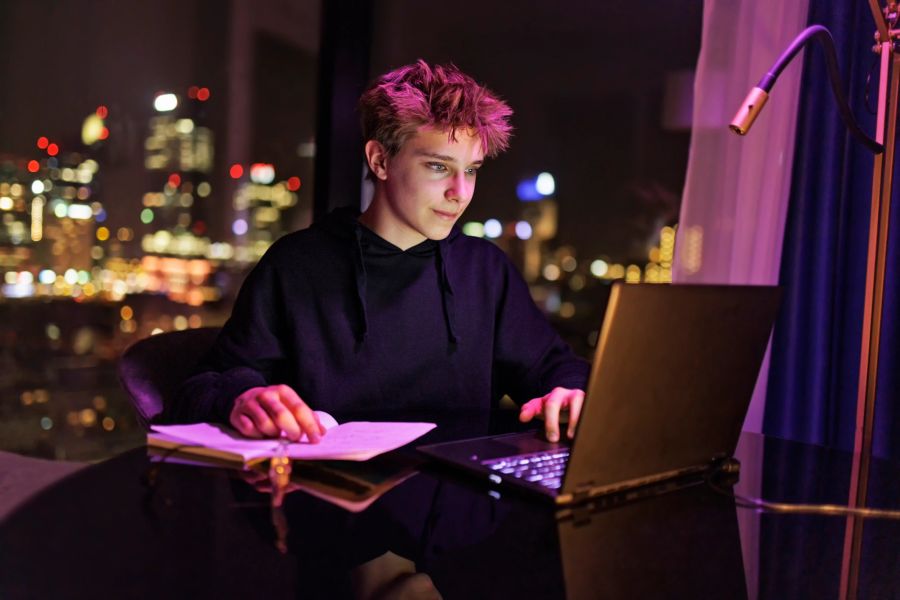
How to Create Images from Text Using AI: A Beginner's Guide for Australians
Discover how to turn a simple text description into stunning images using AI tools like Midjourney, DALL·E 3, and Adobe Firefly. No art skills required — just your imagination.
How to Create Images from Text Using AI: A Beginner's Guide for Australians
You type a sentence. A few seconds later, a fully formed image appears on your screen — one that didn't exist anywhere in the world until that moment. That's the magic of AI image generation, and it's now available to anyone with a browser and a bit of curiosity.
Whether you want to create social media graphics, illustrate a blog post, design a logo concept, or just have fun making wild digital art, AI image tools have made it genuinely accessible. No design degree. No Photoshop skills. Just words.
Here's everything you need to know to get started.
What Is Text-to-Image AI?
Text-to-image AI is a type of generative AI that converts written descriptions — called prompts — into visual images. You describe what you want to see, and the AI produces it.
These tools are trained on enormous datasets of images paired with text descriptions. Over time, they learn the relationships between words and visual concepts, allowing them to generate new images that match a given description.
The results can range from photorealistic portraits to abstract digital paintings, cartoon characters, architectural renders, product mockups, and everything in between.
The Main Tools Available in 2026
Several AI image generators are widely used and accessible to Australians. Each has its own strengths:
Midjourney
Midjourney is widely regarded as producing some of the most visually striking and artistically refined results of any AI image tool. It operates through Discord, where you type prompts in a dedicated channel and receive images in return.
Midjourney offers a free trial with a limited number of image generations, after which a paid subscription is required. Plans start at around USD $10 per month. It excels at cinematic, painterly, and concept-art styles.
DALL·E 3 (via ChatGPT)
Developed by OpenAI, DALL·E 3 is integrated directly into ChatGPT. If you have a ChatGPT Plus subscription (around USD $20/month), you can generate images by simply describing what you want in a conversation. Free-tier ChatGPT users also receive a limited number of DALL·E 3 generations per month.
DALL·E 3 is particularly strong at following detailed instructions and generating text within images — something many other tools struggle with.
Adobe Firefly
Adobe Firefly is Adobe's AI image generator, available at firefly.adobe.com. It's designed with commercial use in mind — Adobe trains Firefly exclusively on licensed content and public domain images, which means images generated with Firefly are safe to use commercially without copyright concerns.
Firefly is integrated into Adobe Photoshop and Illustrator, making it a natural choice for anyone already in the Adobe ecosystem. A free tier is available with a monthly credit allowance.
Canva AI (Magic Media)
Canva's built-in AI image generator, called Magic Media, is available to Canva Pro subscribers and offers a limited number of free generations. It's ideal for people who want to create images and immediately use them in social media posts, presentations, or marketing materials within the same platform.
Stable Diffusion
Stable Diffusion is an open-source model that can be run locally on your own computer (if you have a capable GPU) or accessed through platforms like DreamStudio. It offers the most flexibility and customisation of any tool on this list, but has a steeper learning curve. It's popular among developers and enthusiasts who want fine-grained control.
Understanding Prompts: The Key to Great Results
The quality of your output depends heavily on the quality of your prompt. A vague prompt produces vague results. A specific, descriptive prompt produces something much closer to what you have in mind.
Basic Prompt Structure
A solid prompt typically includes:
- Subject — What is the main focus of the image?
- Style — What visual style do you want? (e.g. photorealistic, watercolour, oil painting, 3D render, anime)
- Setting or context — Where is the subject? What's the environment?
- Lighting — How is the scene lit? (e.g. golden hour, studio lighting, neon glow)
- Mood or atmosphere — What feeling should the image convey?
- Technical details — Camera angle, lens type, aspect ratio
Example: Weak vs Strong Prompt
Weak prompt:
A dog on a beach
Strong prompt:
A golden retriever running along a deserted Australian beach at sunset, waves crashing in the background, warm golden light, shallow depth of field, photorealistic, shot on a 50mm lens
The second prompt gives the AI far more to work with and produces a much more specific, polished result.
Style Keywords That Work Well
- Photorealistic — looks like a real photograph
- Cinematic — dramatic, movie-like quality
- Watercolour — soft, painterly, translucent
- Digital art — clean, modern illustration style
- Oil painting — rich texture, classical feel
- Anime — Japanese animation style
- Isometric — geometric, 3D-looking flat design
- Concept art — detailed, imaginative, often used in games and films
Step-by-Step: Creating Your First Image with DALL·E 3
DALL·E 3 via ChatGPT is one of the easiest entry points for beginners. Here's how to use it:
Step 1: Go to chat.openai.com and sign in (or create a free account).
Step 2: Start a new conversation. If you're on the free tier, look for the image generation option in the model selector.
Step 3: Type your prompt. For example:
Create an image of a cosy Australian café in the morning, warm light streaming through the window, a flat white on the table, watercolour illustration style
Step 4: ChatGPT will generate the image and display it in the chat. You can download it directly.
Step 5: If you're not happy with the result, refine your prompt. Try adding more detail, changing the style, or asking ChatGPT to adjust specific elements (e.g. "make the lighting warmer" or "change the style to photorealistic").
Step-by-Step: Creating Your First Image with Midjourney
Step 1: Go to midjourney.com and sign in with a Discord account.
Step 2: Join the Midjourney Discord server and navigate to one of the #newbies channels.
Step 3: Type /imagine followed by your prompt. For example:
/imagine prompt: aerial view of the Sydney Opera House at dusk, dramatic clouds, long exposure photography, ultra-detailed
Step 4: Midjourney will generate four image variations. You can upscale any of them (U1–U4) for a higher-resolution version, or generate new variations (V1–V4).
Step 5: Once you're happy with an image, click the upscale button and then download it.
Tips for Better Results
Be specific about what you don't want
Most tools support negative prompts — a list of things you want excluded from the image. In Midjourney, you add these with --no followed by the unwanted elements. For example: --no text, watermarks, blurry, distorted hands
Use aspect ratio controls
Most tools let you specify the dimensions of your image. For social media posts, a square (1:1) or portrait (4:5) ratio works well. For website banners, use landscape (16:9). In Midjourney, add --ar 16:9 to your prompt.
Iterate and refine
Rarely does the first generation nail it perfectly. Treat it as a starting point. Adjust your prompt, try different styles, and keep iterating. The more you experiment, the better you'll understand how each tool interprets language.
Save prompts that work
When you find a prompt structure that produces great results, save it. You can reuse and adapt it for future images.
What Can You Actually Use These Images For?
AI-generated images are being used across a wide range of applications:
- Blog and article illustrations — create custom visuals for written content
- Social media graphics — generate eye-catching images for Instagram, LinkedIn, or Facebook posts
- Presentation slides — add professional visuals to PowerPoint or Google Slides
- Product mockups — visualise product concepts before investing in design
- Marketing materials — create banners, flyers, and promotional images
- Personal projects — book covers, greeting cards, desktop wallpapers, gifts
- Concept art and storyboarding — sketch out ideas for creative projects
A Note on Copyright and Commercial Use
This is an important area that's still evolving. In Australia, the legal status of AI-generated images is not yet fully settled, but here are the practical guidelines as of 2026:
- Adobe Firefly images are explicitly cleared for commercial use by Adobe, as the model is trained on licensed content.
- DALL·E 3 — OpenAI's terms of service grant users ownership of the images they generate, including for commercial use, subject to their usage policies.
- Midjourney — paid subscribers own the images they generate and can use them commercially. Free-tier users operate under a Creative Commons licence.
- Stable Diffusion — as an open-source model, generated images are generally considered to be owned by the user, though this varies by deployment.
If you're using AI images for commercial purposes, it's worth checking the current terms of service for whichever tool you're using, as these policies are updated regularly.
Common Beginner Mistakes (and How to Avoid Them)
Prompts that are too short: "A cat" will give you a generic cat. Add context, style, and detail.
Ignoring aspect ratio: The default square format doesn't suit every use case. Specify the ratio that fits your project.
Expecting perfection on the first try: AI image generation is iterative. Plan to generate multiple versions.
Forgetting about hands: AI tools have historically struggled with generating realistic human hands. If hands are important to your image, check carefully and regenerate if needed. Tools have improved significantly in 2026, but it's still worth reviewing.
Not saving your prompts: You'll forget what worked. Keep a simple document with your best prompts.
Getting Started Today
The best way to learn is to jump in. Here's a suggested starting path:
- Start with DALL·E 3 via ChatGPT — it's the most beginner-friendly and requires no additional setup beyond a free account.
- Try Adobe Firefly if you need commercially safe images or are already using Adobe tools.
- Explore Midjourney once you're comfortable with prompting — it produces some of the most impressive artistic results.
- Experiment with Canva's Magic Media if you want to create images and use them in designs immediately.
AI image generation is one of the most genuinely fun and immediately rewarding things you can do with AI. The barrier to entry has never been lower, and the results can be genuinely impressive — even on your very first attempt.
Give it a go. You might surprise yourself.
Stay informed
Get AI news every Friday
The AI Digest delivers the week's most important AI stories — free, in plain English.
Subscribe free →Related Articles
More For You →
How to Use ChatGPT: The Beginner's Guide for Australians (Step-by-Step)
Never used ChatGPT? This guide walks Australians through how to get started, what to ask, and how to get genuinely useful answers — step by step.
The Best AI Tools for Australian Small Businesses in 2026 (Practical Guide)
The specific AI tools Australian small businesses are using in 2026 — from Xero and Canva to ChatGPT, Mailchimp AI, and customer service tools that save hours each week without requiring technical skills.
AI for Older Australians: A Simple, Jargon-Free Guide to Getting Started
AI tools are as simple as having a conversation. This guide explains which tools are worth trying for older Australians — and how to use them safely.