
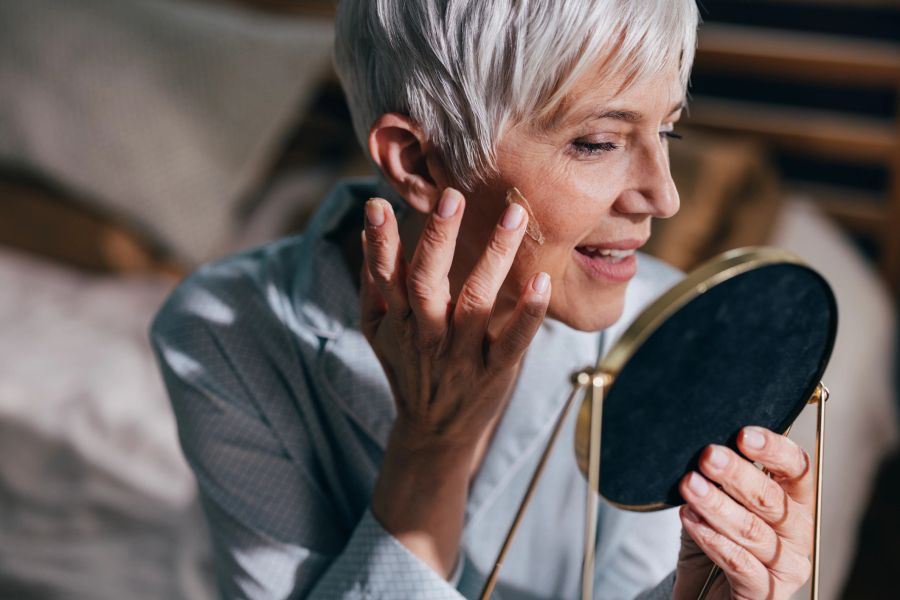
How AI Can Help With Beauty and Appearance in 2026
From personalised skincare advice to virtual try-ons and haircut previews, AI tools are changing the way Australians approach beauty — making expert-level guidance more accessible than ever.
Looking your best does not have to mean expensive consultations or trial-and-error with products that do not suit you. A growing range of AI-powered tools are making it easier for everyday Australians to get personalised beauty guidance — whether that is finding the right skincare routine, previewing a new hair colour before committing, or understanding which makeup shades work for your complexion.
This guide covers the practical ways AI is being used in beauty and appearance, the tools that are genuinely useful, and what to keep in mind when using them.
How AI Is Being Applied in Beauty
The beauty industry has been one of the earlier adopters of AI technology, largely because so much of what makes a product or style work comes down to individual characteristics — skin tone, face shape, hair texture, and personal preference. These are exactly the kinds of variables that AI systems can analyse and respond to at scale.
The main applications fall into a few categories: personalised skincare analysis, virtual try-on for makeup and hair, product recommendation engines, and ingredient analysis tools. Each of these addresses a real problem that people face when making beauty decisions — and each has become meaningfully more capable over the past few years.
1. Personalised Skincare Analysis
One of the most practical applications of AI in beauty is skincare analysis. Several tools now allow you to upload a photo of your face and receive an analysis of your skin — identifying concerns such as uneven tone, dryness, oiliness, or the appearance of fine lines — along with product recommendations tailored to what the analysis finds.
Skin + Me is an Australian-founded personalised skincare service that uses a detailed intake questionnaire combined with dermatologist review to create a custom treatment plan. While not purely AI-driven, it uses technology to match your skin profile to formulations, and ships a personalised product to your door.
PROVEN Skincare (provenskincare.com) uses what it calls a Skin Genome Project — a database of over 47 million consumer reviews, 8,000 ingredients, and 100,000 products — to generate a personalised skincare formula based on your answers to a detailed questionnaire. It ships internationally including to Australia.
Rael Beauty and Neutrogena Skin360 (available via the Neutrogena app) offer AI-powered skin scanning tools that use your smartphone camera to assess skin condition and recommend products from their respective ranges. These are free to use and require no subscription.
For general skincare guidance without a specific product recommendation, tools like ChatGPT and Claude can provide useful information about skincare ingredients, routines, and how to address common concerns — though they cannot analyse a photo and should not replace advice from a dermatologist for medical skin conditions.
2. Virtual Makeup Try-On
Buying makeup without being able to try it on is one of the most common frustrations in beauty shopping — particularly when purchasing online. AI-powered virtual try-on tools address this by using augmented reality and facial mapping to show you how a product will look on your face in real time.
YouCam Makeup (youcam.com) is one of a widely used virtual try-on apps, with over 900 million downloads globally. It allows you to try on lipstick, eyeshadow, foundation, blush, and other products from a wide range of brands using your smartphone camera. The app is free to download, with some premium features available via subscription.
L'Oréal's ModiFace technology powers virtual try-on features across a number of major beauty retailers and brands, including Priceline in Australia. When you shop for foundation or lipstick on participating retailer websites, you may see a "try it on" option — this is typically ModiFace technology working in the background. It is free to use wherever it is integrated.
MAC Cosmetics and Sephora both offer virtual try-on features on their websites and apps, allowing you to see how specific products from their ranges look on your face before purchasing. Both are free to use.
These tools are not perfect — lighting conditions, screen quality, and the accuracy of the facial mapping all affect how realistic the result looks — but they are genuinely useful for narrowing down choices and avoiding purchases that do not suit you.
3. Hair Colour and Style Previews
Changing your hair is one of the more significant appearance decisions you can make, and one of the harder ones to reverse. AI-powered hair try-on tools let you preview different colours and styles before you commit.
YouCam Makeup (mentioned above) also includes a hair colour try-on feature, allowing you to preview a wide range of shades on a photo of yourself. It handles both natural tones and fashion colours.
Garnier Hair Color offers a virtual hair colour try-on tool on its website (garnier.com.au) that lets you upload a photo and preview shades from its product range. It is free to use and does not require an account.
Schwarzkopf offers a similar tool at schwarzkopf.com.au, covering its colour product range. Both the Garnier and Schwarzkopf tools are straightforward to use and give a reasonable indication of how a colour will look, though results vary depending on your starting hair colour and the quality of the photo you upload.
For haircut style previews, Style My Hair by L'Oréal Professionnel allows you to try different haircut styles on a photo of yourself. It is available as a free app and covers a broad range of lengths and styles.
4. Finding Your Undertone and Best Colours
Understanding your skin undertone — whether it is warm, cool, or neutral — is one of the most useful pieces of information for making beauty decisions. It affects which foundation shades suit you, which hair colours are flattering, and which clothing colours work best. Many people are unsure of their undertone, and getting it wrong leads to products that look off.
AI tools can help with this. Several virtual try-on apps include undertone analysis as part of their skin assessment. Perfect Corp (the company behind YouCam) has published research on AI-based skin tone and undertone analysis, and the technology is integrated into a number of its tools.
For a simpler approach, ChatGPT or Claude can walk you through the process of identifying your undertone based on observable characteristics — the colour of your veins, how your skin reacts to sun, which metal jewellery tends to suit you — and explain what that means for product selection. This is not as precise as a professional colour analysis, but it is a useful starting point and costs nothing.
5. Ingredient Analysis and Product Safety
Beauty products contain a lot of ingredients, and understanding what they do — and whether any of them are problematic for your skin type or health concerns — is not straightforward. AI tools are making this more accessible.
INCI Beauty (incibeauty.com) and CosDNA (cosdna.com) are ingredient analysis tools that allow you to search for a product or paste in an ingredient list and receive an analysis of what each ingredient does, its safety rating, and whether it is likely to cause issues for acne-prone or sensitive skin. Both are free to use.
Think Dirty is an app that lets you scan a product barcode and receive a rating based on the safety of its ingredients, drawing on publicly available toxicology data. It is free to download and covers a large database of products available in Australia.
For more conversational guidance — asking questions like "is retinol safe to use with vitamin C?" or "what does niacinamide do?" — ChatGPT and Claude are both useful. They draw on a large body of publicly available dermatology and cosmetic chemistry information and can explain ingredient interactions, layering order, and what to avoid combining in a skincare routine.
As with any health-adjacent information, it is worth verifying important decisions with a qualified professional — a dermatologist or pharmacist — particularly if you have a skin condition or are pregnant.
6. Personalised Style and Outfit Advice
Beyond skincare and makeup, AI tools are being applied to personal style more broadly — helping people understand what suits their body shape, colouring, and lifestyle.
Stitch Fix operates in Australia and uses AI to match customers with a personal stylist who selects clothing items based on a detailed style profile. The AI component analyses your preferences, feedback on previous selections, and style data from millions of customers to improve recommendations over time.
Cladwell is an app that helps you build a capsule wardrobe by cataloguing what you already own and suggesting outfits based on your existing pieces. It uses AI to identify gaps in your wardrobe and suggest additions.
For more general style advice — understanding what cuts suit different body shapes, how to dress for a specific occasion, or how to build a more cohesive wardrobe — ChatGPT and Claude can provide useful, personalised guidance based on the details you share. This is not a replacement for a professional stylist, but it is a free and accessible starting point.
7. Fitness and Body Composition Tracking
Appearance is not only about products and styling — physical wellbeing plays a significant role, and AI tools are making it easier to track and improve fitness in ways that are relevant to how you look and feel.
MyFitnessPal uses AI to analyse your food diary and provide nutritional insights, flagging patterns and suggesting adjustments. It integrates with a wide range of fitness trackers and wearables.
Whoop and Fitbit both use AI to analyse sleep, recovery, and activity data and provide personalised recommendations. These are wearable devices rather than apps alone, but the AI-driven insights they provide go beyond simple step counting — they help you understand how your lifestyle choices are affecting your body.
For workout planning, AI tools including ChatGPT can generate personalised exercise programs based on your goals, available equipment, and fitness level. This is not a substitute for a qualified personal trainer, but it is a practical way to get a structured starting point without cost.
What AI Cannot Do in Beauty
It is worth being clear about the limits of these tools.
AI-powered beauty tools work best for general guidance, product discovery, and visual previewing. They are not a substitute for professional advice when it comes to medical skin conditions (see a dermatologist), hair colouring that involves significant chemical processes (see a professional colourist), or any appearance concern that has a health component.
Virtual try-on tools give a useful approximation, but the result on screen will not be identical to the result in person — lighting, skin texture, and the physical properties of products all affect the real-world outcome. Use them to narrow down choices, not to make final decisions with certainty.
AI product recommendations are based on the data available to the tool — they reflect patterns across large populations, not a precise understanding of your individual skin or hair. Treat them as informed starting points rather than definitive answers.
Getting Started
If you are new to using AI for beauty, the simplest starting point is one of the free virtual try-on tools. YouCam Makeup is free to download and covers a wide range of products and looks — it gives you a practical sense of what AI-assisted beauty tools can do without any cost or commitment.
For skincare, the ingredient analysis tools (INCI Beauty, CosDNA, Think Dirty) are free and immediately useful if you want to understand what is in the products you are already using.
For personalised advice, ChatGPT and Claude are both free to use at a basic level and can answer specific questions about skincare routines, ingredients, and style in a conversational way.
The tools that are most worth exploring:
- YouCam Makeup (youcam.com) — free, virtual try-on for makeup and hair
- Garnier Hair Color Try-On (garnier.com.au) — free, hair colour preview
- Schwarzkopf Colour Try-On (schwarzkopf.com.au) — free, hair colour preview
- INCI Beauty (incibeauty.com) — free, ingredient analysis
- Think Dirty (thinkdirtyapp.com) — free app, product safety ratings
- Skin + Me (skinandme.com.
- Stitch Fix (stitchfix.com.
All pricing is as of August 2026 and subject to change — check each provider's website for current rates.
Stay informed
Get AI news every Friday
The AI Digest delivers the week's most important AI stories — free, in plain English.
Subscribe free →Related Articles
More For You →
How AI Can Help You Study Smarter and Land a New Career in Australia (2026–2027)
Whether you're a new student or thinking about a career change, AI tools can help you learn faster, find the right path, and break into Australia's growing AI job market.

The Best AI Tools for Writing Articles, Emails, Copywriting and Content (2026)
Whether you're drafting emails, writing blog posts, or producing marketing copy, AI writing tools can cut your workload in half. Here's what actually works for Australians in 2026.

How AI Can Help Parents: A Practical Guide for Australian Families
From homework help to managing the family schedule, AI tools are making life a little easier for Australian parents. Here's how to put them to work.