
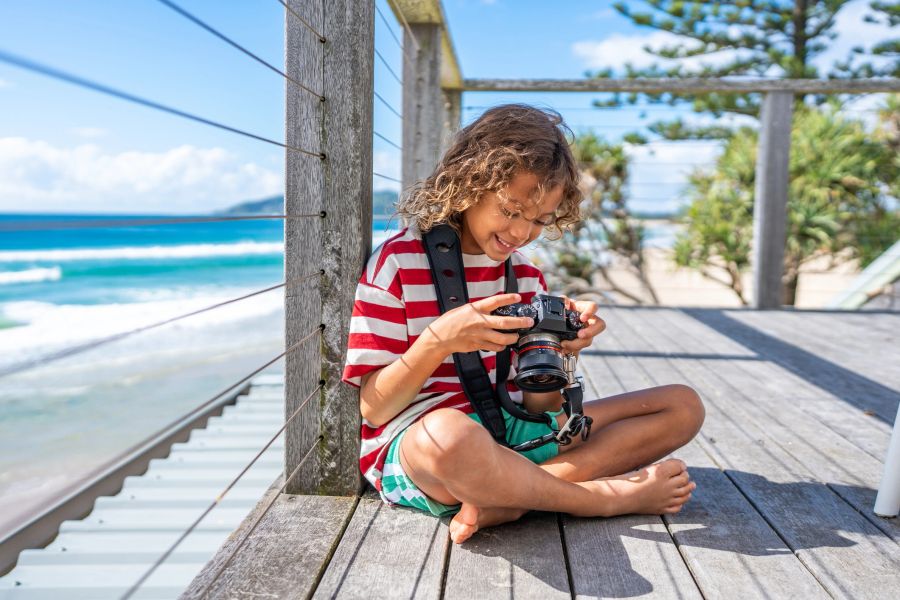
AI for Photographers in Australia: The Complete Guide (2026)
How Australian photographers are using AI in 2026 — from editing and culling to client delivery, business growth, and navigating the ethical questions AI raises for the profession.
The State of Photography in Australia in 2026
Photography in Australia covers an enormous range of specialisations — wedding and portrait, commercial and advertising, editorial and news, real estate, food and product, wildlife and nature, sports, and more. Practitioners range from part-time hobbyists supplementing their income to full-time professionals running established studios.
What has changed significantly in recent years is the role of AI in the post-production workflow — and, increasingly, in the business side of running a photography practice. AI tools have moved from specialist software to mainstream platforms, and Australian photographers are navigating both the opportunities and the genuine questions these tools raise about authenticity, ethics, and professional standards.
This guide covers how Australian photographers are using AI in 2026, which tools are delivering real results, and what to think carefully about.
How AI Is Being Used in Australian Photography
Culling and Selection
For photographers shooting at volume — weddings, events, sports — the culling process (selecting the best images from hundreds or thousands of shots) has traditionally been one of the most time-consuming parts of the workflow. AI-powered culling tools analyse images for technical quality — sharpness, exposure, composition — and can dramatically reduce the time spent on initial selection.
Tools like Aftershoot and Narrative Select use AI to rank images and flag the strongest candidates, allowing photographers to focus their editing time on the images most likely to be delivered. The photographer still makes the final selection — AI tools assist the process rather than replace the editorial judgment involved.
Editing and Retouching
AI-powered editing has become one of the most widely adopted changes in photography workflows. Lightroom's AI masking tools — which can automatically select subjects, skies, and backgrounds with high accuracy — have replaced many hours of manual masking work. Luminar Neo's AI portrait tools can adjust skin, eyes, and facial features with a level of precision that previously required significant Photoshop expertise.
For photographers delivering large volumes of edited images — wedding photographers who may deliver hundreds of images from a single event — AI editing tools that apply consistent style adjustments across a batch have become standard. Aftershoot's AI editing feature, for example, learns a photographer's editing style and applies it automatically, with the photographer reviewing and adjusting as needed.
Background Removal and Replacement
For product, portrait, and real estate photographers, AI background removal has become a standard production tool. Adobe Photoshop's Remove Background function, powered by AI, produces results that would have required significant manual effort just a few years ago. This is particularly relevant for real estate photographers, where sky replacement and background clean-up are common client requirements.
Upscaling and Restoration
AI upscaling tools — including Topaz Gigapixel AI and Adobe's Super Resolution — can increase the resolution of images significantly while preserving detail. This is useful for photographers working with older files, images shot at lower resolution, or situations where a client needs a larger print than the original file supports.
Client Galleries and Delivery
AI tools are also changing how photographers manage client galleries and delivery. Platforms like Pic-Time and Pixieset use AI to suggest album layouts, identify favourite images based on client behaviour, and personalise the gallery experience. For photographers offering print products, AI tools can suggest appropriate print sizes and products based on image content.
The Australian Photography Industry Context
The Australian Institute of Professional Photography (AIPP) is the peak body for professional photographers in Australia. The AIPP has been actively engaging with the questions AI raises for the profession — particularly around image authenticity, disclosure, and the distinction between AI-assisted editing and AI-generated imagery.
The AIPP's position is that AI tools used to enhance or edit real photographs are a natural evolution of the editing tools photographers have always used. The more complex question is around AI-generated imagery — images that are entirely or substantially created by AI rather than captured by a camera. The AIPP has noted that disclosure is important: clients and audiences should know when they are looking at AI-generated imagery rather than a photograph.
This distinction matters practically for Australian photographers in several contexts:
Editorial and news photography: The Australian Press Council and individual news organisations have strict policies on image manipulation. AI-generated or substantially AI-altered images are generally not acceptable in news contexts without clear disclosure.
Advertising and commercial photography: The ACCC's consumer protection framework applies to advertising imagery. Images that misrepresent products — including through AI manipulation — may breach consumer law.
Wedding and portrait photography: Clients have a reasonable expectation that the images they receive represent what actually happened. Significant AI alteration — particularly of people's appearance — raises questions about consent and authenticity that photographers need to navigate carefully.
Privacy and Data Considerations
Australian photographers working with images of people need to be aware of how AI tools handle that data. When images are uploaded to cloud-based AI editing platforms, the terms of service of those platforms govern how the data is used. Some platforms use uploaded images to train their AI models — a practice that raises questions about client consent and data privacy.
The Privacy Act 1988 governs how personal information — including photographs of identifiable individuals — is collected, used, and disclosed. Photographers working with client images should review the privacy policies of any AI tools they use and consider whether their client contracts address AI processing of images.
The Office of the Australian Information Commissioner (OAIC) provides guidance on privacy obligations for small businesses and sole traders, including photographers.
Business Applications
Beyond the editing workflow, AI tools are helping Australian photographers run their businesses more efficiently.
Client Communication
AI writing tools can help photographers draft client emails, inquiry responses, booking confirmations, and follow-up sequences. For photographers who receive a high volume of inquiries, AI-assisted responses can reduce the time spent on routine communication while maintaining a professional tone.
Marketing and Social Media
AI tools can assist with writing social media captions, blog posts, and website copy. For photographers who are strong visually but find written marketing challenging, AI writing tools can help bridge that gap. The key is to review and personalise AI-generated content rather than publishing it verbatim — generic AI copy does not reflect the individual voice that distinguishes a photography brand.
Pricing and Quoting
AI tools can help photographers research market rates, structure pricing packages, and draft quotes. This is particularly useful for photographers moving into new specialisations or markets where they have less pricing experience.
SEO and Online Visibility
For photographers relying on organic search to attract clients, AI tools can assist with keyword research, website copy optimisation, and blog content that helps potential clients find them. This is an area where consistent effort over time delivers results — AI tools can make that effort more efficient.
The Ethical Questions AI Raises for Photographers
Photography has always carried an implicit claim to authenticity — the photograph as a record of what was in front of the lens. AI tools are complicating that claim in ways the profession is still working through.
Disclosure: When AI tools are used to substantially alter an image — removing people, changing backgrounds, altering appearances significantly — disclosure to clients and audiences is increasingly expected. The AIPP has been developing guidance on disclosure standards.
Authenticity in competition: Photography competitions have been grappling with how to handle AI-assisted and AI-generated entries. Most major competitions now require disclosure of AI use and have categories that distinguish between traditional photography and AI-assisted work.
Client expectations: Clients who commission photography have expectations about what they are receiving. Photographers should be clear with clients about what AI tools they use in their workflow and what that means for the final images.
Copyright and ownership: The legal status of AI-generated imagery under Australian copyright law is still being worked through. The Copyright Act 1968 requires human authorship for copyright protection — the extent to which AI-assisted work qualifies is a question that courts and legislators are still addressing.
What AI Cannot Do for Photographers
Capture the moment: The fundamental skill of photography — being in the right place at the right time with the right technical settings and the right eye for a moment — is entirely human. AI tools work on images after they are captured; they cannot capture them.
Build client relationships: The trust that sustains a photography business — particularly in personal genres like weddings and portraits — is built through human connection, empathy, and reliability. AI tools do not replace this.
Exercise creative vision: The distinctive visual voice that makes a photographer's work recognisable is a product of their experience, aesthetic sensibility, and creative choices. AI tools can assist execution; they cannot generate a creative vision.
Navigate complex ethical situations: Decisions about what to photograph, how to represent people, and what to include or exclude from an image require human judgment and ethical reasoning.
The Skills That Matter Most in 2026
Australian photographers who are building sustainable practices in the current environment tend to combine strong technical and creative skills with genuine business acumen. AI tool fluency is increasingly a baseline expectation — knowing how to use Lightroom's AI masking, AI culling tools, and AI editing platforms is now standard. What differentiates strong practitioners is the quality of their creative vision, the strength of their client relationships, and their ability to run a business effectively.
This Guide Is Part of a Series
This article is the starting point for the AI We series on AI for photographers. The cluster covers the specific AI tools Australian photographers are using, ready-to-use ChatGPT prompts for photography businesses, deep-dive articles on AI for editing workflows, AI for client communication and business growth, AI for real estate and commercial photography, and the mistakes to avoid.
Stay informed
Get AI news every Friday
The AI Digest delivers the week's most important AI stories — free, in plain English.
Subscribe free →Related Articles
More Professions →
AI for Truck Drivers in Australia: The Complete Guide (2026)
A practical guide for Australian truck drivers on using AI to improve route planning, manage compliance obligations, reduce fatigue risk, and run a more efficient transport operation in 2026.
AI for Logistics Companies in Australia: The Complete Guide (2026)
A practical guide for Australian logistics companies on using AI to optimise supply chains, improve delivery performance, reduce costs, and compete more effectively in 2026.

AI for Fleet Managers in Australia: The Complete Guide (2026)
A practical guide for Australian fleet managers on using AI to reduce vehicle downtime, improve driver safety, cut fuel costs, and manage compliance more efficiently in 2026.