
AI for Logistics Companies in Australia: The Complete Guide (2026)
A practical guide for Australian logistics companies on using AI to optimise supply chains, improve delivery performance, reduce costs, and compete more effectively in 2026.
Australian logistics companies operate in an environment of rising customer expectations, increasing cost pressure, and growing supply chain complexity. The shift to e-commerce has accelerated demand for faster, more flexible delivery; labour costs and fuel prices have increased; and the disruptions of recent years have exposed vulnerabilities in supply chains that were previously invisible.
AI tools available in 2026 are being applied across the logistics sector — from demand forecasting and route optimisation to warehouse automation and customer communication. This guide covers what AI can realistically do for Australian logistics companies, which tools are worth considering, and how to approach implementation.
What AI Can Do for Australian Logistics Companies
1. Demand Forecasting and Inventory Optimisation
One of the most valuable applications of AI in logistics is demand forecasting — predicting what freight volumes will look like in the coming days, weeks, and months, and positioning resources accordingly. AI forecasting models can analyse historical data, seasonal patterns, customer behaviour, and external factors to generate more accurate forecasts than traditional methods.
For logistics companies that also manage warehousing, AI-powered inventory optimisation can reduce holding costs by ensuring stock levels match anticipated demand — reducing both stockouts and excess inventory.
2. Route Optimisation and Last-Mile Delivery
Route optimisation is one of the most mature AI applications in logistics. Modern route optimisation platforms can simultaneously optimise hundreds or thousands of delivery routes, accounting for vehicle capacity, delivery windows, driver hours, traffic conditions, and fuel costs. The efficiency gains — typically 10–20 per cent reduction in kilometres driven — translate directly to cost savings and improved delivery performance.
Last-mile delivery — the final leg from a distribution centre to the customer — is the most expensive and complex part of the delivery chain. AI tools are being applied to last-mile optimisation, dynamic routing, and customer communication to improve efficiency and customer experience.
3. Warehouse Management and Automation
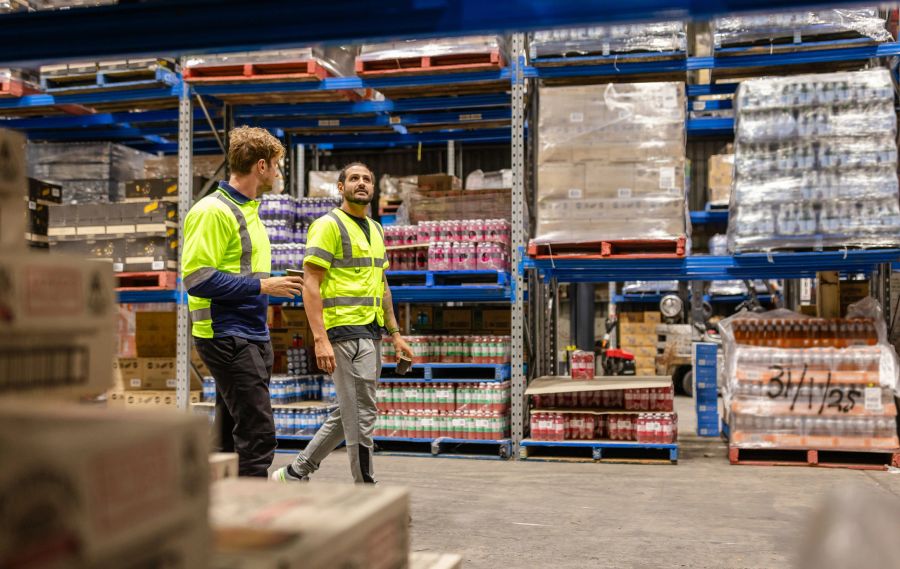
AI is transforming warehouse operations — from slotting optimisation (deciding where to store products to minimise pick travel time) to automated picking systems and quality control. Computer vision systems can identify damaged goods, verify pick accuracy, and monitor safety compliance.
For logistics companies that operate their own warehouses, AI-powered warehouse management systems (WMS) can significantly improve throughput, accuracy, and labour productivity.
4. Predictive Maintenance for Fleet
Unplanned vehicle breakdowns are expensive — both the direct cost of repairs and the indirect cost of missed deliveries and customer dissatisfaction. AI-powered predictive maintenance systems analyse vehicle sensor data to identify components that are likely to fail before they do, allowing maintenance to be scheduled proactively.
Fleet management platforms like Samsara and Teletrac Navman include predictive maintenance features that can significantly reduce unplanned downtime.
5. Customer Communication and Visibility
Customer expectations for delivery visibility have increased dramatically. Customers now expect real-time tracking, proactive notifications, and accurate delivery windows. AI tools can automate much of this communication — sending tracking updates, notifying customers of delays, and providing accurate ETAs based on real-time route data.
6. Document Processing and Administration
Logistics involves significant documentation — freight manifests, proof of delivery, customs documents, invoices, and compliance records. AI document processing tools can extract data from documents automatically, reducing manual data entry and the errors that come with it.
7. Pricing and Yield Management
Dynamic pricing — adjusting freight rates based on demand, capacity, and market conditions — is increasingly being applied in logistics. AI tools can analyse market data and capacity utilisation to recommend pricing that maximises revenue while remaining competitive.
The Best AI Tools for Australian Logistics Companies
Fleet Management and Route Optimisation
- Samsara — Comprehensive fleet management platform with AI-powered route optimisation, predictive maintenance, driver behaviour monitoring, and real-time tracking. Used by many Australian logistics operators.
- Teletrac Navman — Australian fleet management platform with route optimisation, NHVR-compliant EWD, and compliance reporting. Strong local support.
- Onfleet — Last-mile delivery management platform with route optimisation, driver tracking, and customer communication features. Used by courier and delivery companies.
- Circuit — Route optimisation platform designed for delivery businesses. Includes driver app, customer notifications, and proof of delivery.
Warehouse Management
- Manhattan Associates — Enterprise warehouse management system with AI features for slotting, labour management, and automation integration. Used by large logistics operators.
- Körber (formerly HighJump) — WMS platform with AI features for warehouse optimisation. Used across the Australian logistics sector.
- Fishbowl — Mid-market inventory and warehouse management software with Australian support. Suitable for smaller logistics operations.
Demand Forecasting and Supply Chain
- Blue Yonder (formerly JDA) — Supply chain planning platform with AI-powered demand forecasting and inventory optimisation. Used by major Australian retailers and logistics companies.
- Kinaxis — Supply chain management platform with AI features for demand sensing and supply planning.
- Netstock — Cloud-based inventory optimisation platform designed for mid-market businesses. Used by Australian distributors and logistics companies.
Document Processing
- ABBYY FlexiCapture — Document processing platform that can extract data from freight documents, invoices, and customs paperwork automatically.
- Microsoft Azure Form Recognizer — AI document processing service that can be integrated into existing logistics systems.
General AI Tools
- ChatGPT (OpenAI) — Useful for drafting customer communications, preparing tender responses, analysing operational data, and business planning.
- Microsoft Copilot — AI assistant integrated into Microsoft 365, useful for logistics companies that use Excel, Word, and Outlook for operations management.
Australian Context: What Logistics Companies Need to Know
The NHVR and Heavy Vehicle Compliance
Logistics companies that operate heavy vehicles are subject to the Heavy Vehicle National Law and the chain of responsibility provisions. CoR means that logistics companies — as schedulers and consignors — have compliance obligations that extend beyond their drivers. AI tools can assist with CoR documentation and compliance management, but the NHVR website is the authoritative source for current requirements.
The Warehousing Award and Employment Obligations
Warehouse workers are covered by the Storage Services and Wholesale Award or the Road Transport and Distribution Award, depending on their role. Logistics companies must comply with Fair Work Act obligations including minimum pay rates, penalty rates, and leave entitlements. AI tools can assist with rostering and workforce planning, but employment law compliance requires professional advice.
Customs and Border Force
Logistics companies involved in international freight must comply with Australian Border Force requirements for customs documentation, biosecurity declarations, and import/export controls. AI document processing tools can assist with customs documentation, but compliance with ABF requirements is a specialised area where professional customs brokers should be engaged.
Privacy and Data Security
Logistics companies collect significant data about their customers, freight, and operations. This data is subject to the Privacy Act 1988 and the Australian Privacy Principles. AI tools that process customer data — including tracking systems, customer communication platforms, and document processing tools — must comply with Australian privacy requirements.
The Freight and Logistics Industry Digital Transformation
The Australian government has identified freight and logistics as a priority sector for digital transformation. The National Freight Data Hub (freightdata.gov.au) provides data and analytics resources for the sector. Logistics companies that engage with these initiatives may be better positioned to access government support and industry partnerships.
Getting Started: A Practical Approach for Logistics Companies
Start with route optimisation. For most logistics companies, route optimisation delivers the clearest and most measurable return on investment. A 10–15 per cent reduction in kilometres driven translates directly to fuel savings and improved delivery performance. Most route optimisation platforms offer free trials.
Invest in customer visibility. Customer expectations for delivery tracking and communication are high and rising. Implementing real-time tracking and automated customer notifications can significantly improve customer satisfaction and reduce inbound enquiries.
Use AI for document processing. If your operation involves significant manual data entry from freight documents, invoices, or customs paperwork, AI document processing can deliver immediate productivity gains with relatively low implementation complexity.
Build data foundations before advanced AI. The most sophisticated AI applications — demand forecasting, predictive maintenance, dynamic pricing — require good quality historical data. Before investing in advanced AI, ensure your data collection and management practices are sound.
What AI Cannot Replace in Logistics
Operational judgement. Experienced logistics managers develop deep knowledge of their network — which routes are reliable, which customers have unusual requirements, which suppliers are likely to cause problems. This knowledge is not captured in any database.
Supplier and customer relationships. The relationships that logistics companies build with their customers and suppliers — built on trust, reliability, and personal connection — are a genuine competitive advantage that AI cannot replicate.
Crisis management. When things go wrong — natural disasters, port disruptions, major vehicle accidents — experienced logistics managers draw on relationships, creativity, and judgement that AI cannot provide.
Stay informed
Get AI news every Friday
The AI Digest delivers the week's most important AI stories — free, in plain English.
Subscribe free →Related Articles
More Professions →
AI for Truck Drivers in Australia: The Complete Guide (2026)
A practical guide for Australian truck drivers on using AI to improve route planning, manage compliance obligations, reduce fatigue risk, and run a more efficient transport operation in 2026.

Best AI Tools for Logistics Companies in Australia (2026)
The best AI tools for Australian logistics companies in 2026 — transport management systems, demand forecasting, route optimisation, warehouse automation, and supply chain visibility platforms.

ChatGPT Prompts for Logistics Companies in Australia (2026)
Ready-to-use ChatGPT prompts for Australian logistics managers — carrier communications, customer updates, SOP drafting, incident reporting, and supply chain analysis.