
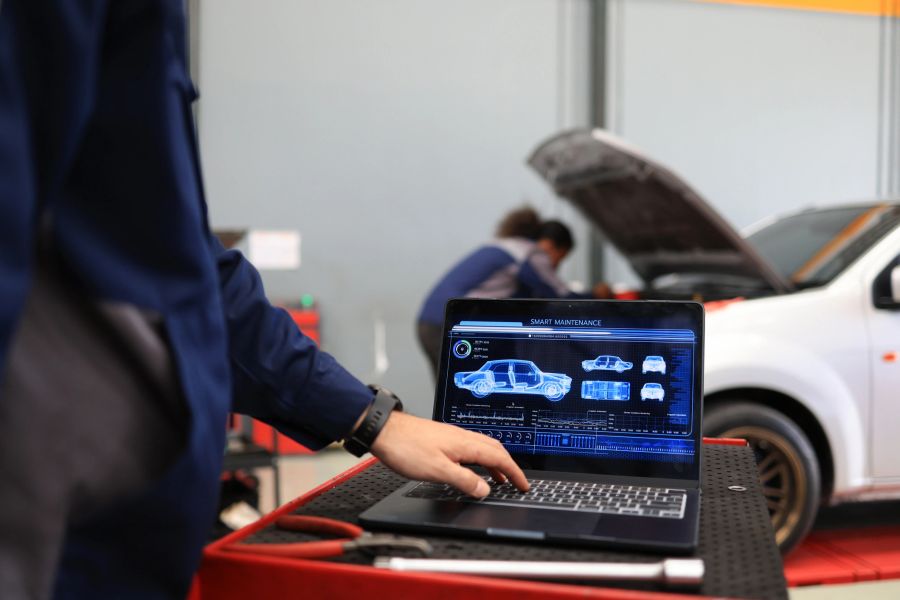
AI for Fleet Predictive Maintenance in Australia (2026)
How Australian fleet managers are using AI-powered predictive maintenance to reduce unplanned breakdowns, extend vehicle life, and lower total cost of ownership.
Unplanned vehicle breakdowns are one of the most expensive problems in fleet management. The direct costs — towing, emergency repairs, and parts at premium prices — are significant. The indirect costs — missed deliveries, customer compensation, driver downtime, and the operational disruption of managing a breakdown remotely — can be even larger.
Predictive maintenance uses AI to analyse vehicle data and identify components likely to fail before they do. For Australian fleet managers, this means fewer breakdowns, lower maintenance costs, and more reliable service to customers.
How Predictive Maintenance Works
Modern heavy vehicles generate continuous streams of diagnostic data — engine temperature, oil pressure, brake performance, tyre pressure, fuel consumption, and dozens of other parameters — through the vehicle's onboard diagnostics system (OBD-II for light vehicles, J1939 for heavy vehicles).
Fleet management platforms collect this data via a telematics device installed in the vehicle. AI algorithms then analyse the data in several ways:
Fault code analysis. When a vehicle's onboard computer generates a fault code (a diagnostic trouble code, or DTC), the AI analyses the code in context — the vehicle's history, operating conditions, and patterns associated with that fault code in similar vehicles — to assess the likely severity and urgency.
Anomaly detection. AI can identify patterns in vehicle data that deviate from normal — a gradual increase in engine temperature, a subtle change in fuel consumption, or a shift in brake performance — before these anomalies trigger a fault code or become visible to the driver.
Failure pattern matching. AI systems trained on large fleets can identify patterns that precede specific failures — the sequence of data changes that typically occurs in the weeks before a particular component fails. When a vehicle's data matches a known failure pattern, the system generates an alert.
Usage-based maintenance scheduling. Rather than scheduling maintenance at fixed intervals (every 20,000km or every 6 months), AI can recommend maintenance based on actual vehicle usage and condition — accounting for the fact that a vehicle doing heavy interstate work ages faster than one doing light urban deliveries.
The Business Case for Predictive Maintenance in Australia
The economics of predictive maintenance are compelling for Australian fleet operators, particularly those running long-haul or remote area operations.
Breakdown cost comparison. A planned maintenance stop — scheduled during a period of low demand, at a workshop with the right parts in stock — might cost $2,000–$5,000 for a major service. An unplanned breakdown on a remote route can cost $10,000–$30,000 or more when towing, emergency parts, driver accommodation, and lost freight revenue are included.
Tyre management. Tyres are one of the largest maintenance costs for heavy vehicle operators. AI tyre pressure monitoring and wear analysis can extend tyre life by identifying under-inflation (which accelerates wear and increases fuel consumption) and uneven wear patterns (which indicate alignment or suspension issues).
Brake system monitoring. Brake failures are a serious safety risk and a significant source of unplanned maintenance costs. AI monitoring of brake performance data — brake application pressure, response time, and wear indicators — can identify brake issues before they become failures.
Engine health monitoring. Engine rebuilds are among the most expensive maintenance events for heavy vehicles. AI monitoring of engine data — oil pressure, temperature, fuel consumption, and exhaust parameters — can identify developing engine issues early, when they can be addressed at lower cost.
Predictive Maintenance Tools for Australian Fleet Managers
Integrated Fleet Management Platforms
Samsara Samsara's predictive maintenance features include fault code analysis, maintenance scheduling based on vehicle data, and integration with workshop management systems. The platform generates maintenance alerts with severity ratings and recommended actions.
Teletrac Navman Teletrac Navman includes vehicle health monitoring and maintenance scheduling features. Its NHVR compliance integration means maintenance records can be linked to compliance documentation.
Geotab Geotab's MyGeotab platform includes engine fault analysis, predictive maintenance alerts, and integration with third-party maintenance management systems. Its open platform architecture allows integration with specialist maintenance tools.
Specialist Maintenance Management
Fleetio Fleetio is a dedicated fleet maintenance management platform that integrates with telematics systems to use vehicle data for maintenance scheduling. It includes work order management, parts inventory, and maintenance history tracking.
Dossier Systems Dossier provides fleet maintenance management software with preventive and predictive maintenance scheduling. Used by Australian transport operators for comprehensive maintenance management.
Tyre Management
Bridgestone Fleet Care Bridgestone's fleet management program includes tyre monitoring and predictive replacement scheduling for Australian fleets. Integrates with fleet management platforms.
Michelin Fleet Solutions Michelin offers fleet tyre management services including monitoring and predictive maintenance for Australian operators.
Implementing Predictive Maintenance: A Practical Approach
Step 1: Establish a telematics baseline
Predictive maintenance requires good quality vehicle data. Before implementing advanced predictive features, ensure your telematics system is:
- Installed and functioning correctly on all vehicles
- Collecting J1939 data (for heavy vehicles) — not just GPS location
- Integrated with your maintenance management system
- Generating accurate vehicle identification data
Step 2: Audit your current maintenance data
AI predictive maintenance works best when it has access to historical maintenance data — what work has been done on each vehicle, when, and at what mileage. Before implementing predictive maintenance, audit your maintenance records:
- Are records complete and accurate?
- Are they in a format that can be imported into your fleet management platform?
- Do they include fault codes and repair descriptions?
Step 3: Configure maintenance alerts
Most fleet management platforms allow you to configure maintenance alerts — which fault codes trigger an alert, what severity threshold generates a notification, and who receives the alert. Configure these settings based on your operation:
- Critical faults (brake failures, engine warnings) should generate immediate alerts to the fleet manager and driver
- Non-critical faults should generate scheduled maintenance recommendations
- Predictive alerts (anomaly detection) should be reviewed weekly
Step 4: Integrate with your workshop
Predictive maintenance is only valuable if it leads to timely maintenance action. Establish a workflow between your fleet management platform and your workshop:
- Maintenance alerts should automatically generate work orders
- Parts availability should be checked before scheduling maintenance
- Maintenance completion should be recorded in the fleet management platform
Step 5: Review and refine
After 3–6 months of operation, review the performance of your predictive maintenance system:
- How many predicted failures were prevented?
- How many alerts were false positives?
- What was the cost saving compared to reactive maintenance?
Use this data to refine your alert thresholds and maintenance scheduling.
What Predictive Maintenance Cannot Do
Replace regular inspections. Predictive maintenance supplements, but does not replace, regular vehicle inspections. Pre-trip inspections by drivers and periodic workshop inspections remain essential.
Detect all failure modes. Not all failures are preceded by detectable data patterns. Sudden failures — a tyre blowout from road debris, a brake line cut by road damage — cannot be predicted from vehicle data.
Substitute for driver awareness. Drivers are often the first to notice developing vehicle issues — unusual sounds, vibrations, or handling changes. A culture where drivers report concerns promptly is an important complement to AI monitoring.
Stay informed
Get AI news every Friday
The AI Digest delivers the week's most important AI stories — free, in plain English.
Subscribe free →Related Articles
More Professions →
AI for Fleet Managers in Australia: The Complete Guide (2026)
A practical guide for Australian fleet managers on using AI to reduce vehicle downtime, improve driver safety, cut fuel costs, and manage compliance more efficiently in 2026.
Best AI Tools for Fleet Managers in Australia (2026)
The best AI tools for Australian fleet managers in 2026 — telematics platforms, predictive maintenance systems, driver behaviour monitoring, fuel management, and compliance software.

ChatGPT Prompts for Fleet Managers in Australia (2026)
Ready-to-use ChatGPT prompts for Australian fleet managers — maintenance scheduling, driver communications, incident reporting, policy drafting, and fleet performance analysis.