
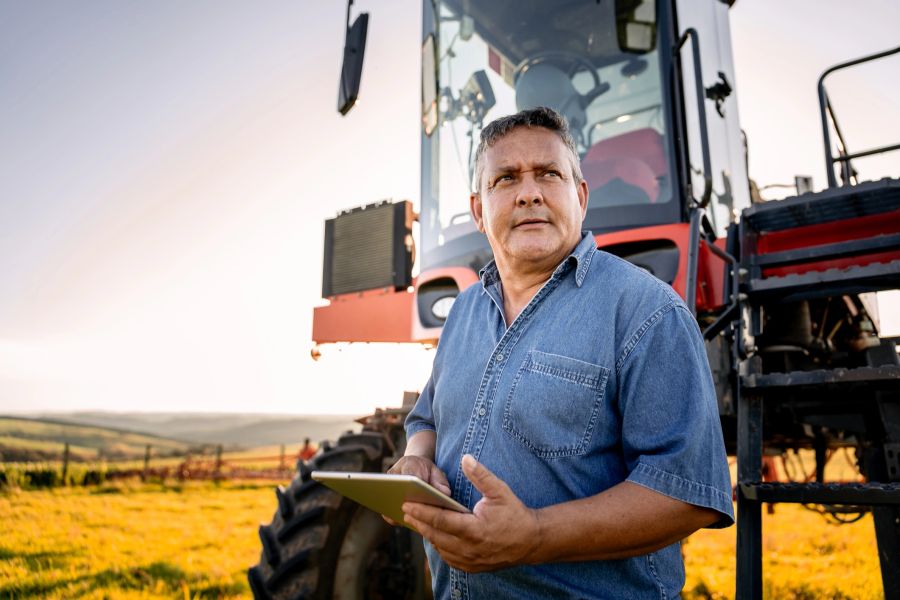
AI for Farmers in Australia: The Complete Guide (2026)
A practical guide for Australian farmers on using AI to improve yields, reduce costs, manage livestock, and run a more efficient farm business in 2026.
Artificial intelligence is changing the way Australian farms operate. From drones that monitor crop health to software that predicts the best time to sell grain, AI tools are helping farmers make better decisions, reduce waste, and improve profitability — without requiring a background in technology.
This guide covers the most practical AI applications for Australian farmers in 2026, what tools are available, and how to get started.
What AI Actually Means for Farmers
For most farmers, AI isn't a robot or a science fiction concept — it's software that analyses data and helps you make better decisions. That data might come from sensors in your soil, satellite images of your paddocks, weather stations on your property, or your own financial records.
The AI processes that data faster and more accurately than any person could, then presents the results in a way that's useful: a recommendation to irrigate a specific zone, an alert that a group of cattle may be unwell, or a forecast showing the optimal window to apply fertiliser.
Precision Farming and Crop Management
Precision farming uses AI to treat different parts of a paddock differently based on what the data shows. Rather than applying the same amount of fertiliser, water, or pesticide across an entire field, precision farming tools identify which zones need more and which need less — reducing input costs and improving yields.
Satellite imagery platforms like Agworld and Cropx analyse vegetation indices across your paddocks and flag areas of stress before they become visible to the naked eye. This early warning allows farmers to investigate and respond before a problem spreads.
AI-powered variable rate application systems can then direct machinery to apply inputs at different rates across a paddock in a single pass, based on the prescription maps generated from that imagery.
Weather and Climate Forecasting
Australian farmers have always had to manage climate variability, but AI is making weather forecasting significantly more accurate and localised. Platforms like The Weather Company's agricultural forecasting tools and IBM's farm-specific weather products provide hyperlocal forecasts that account for the specific topography and microclimate of individual properties.
AI seasonal outlooks from the Bureau of Meteorology and CSIRO's climate tools are also becoming more sophisticated, helping farmers make longer-range decisions about what to plant, when to plant it, and how to manage water storage heading into drier periods.
Livestock Monitoring and Health
For cattle, sheep, and dairy farmers, AI-powered livestock monitoring is one of the most immediately valuable applications. Ear tags and collar sensors from companies like Ceres Tag and Gallagher collect data on each animal's movement, temperature, and behaviour. AI algorithms analyse that data continuously and alert farmers when an individual animal shows signs of illness, injury, or reproductive activity.
This means health issues can be caught days earlier than they would be through visual inspection alone — reducing treatment costs, improving recovery rates, and cutting losses from undetected illness. For large properties where daily visual checks of every animal aren't practical, this technology is particularly valuable.
AI-powered cameras in dairy sheds can monitor cow behaviour and body condition, flagging animals that may need attention and helping optimise milking schedules.
Irrigation and Water Management
Water is one of the most critical and costly inputs on many Australian farms. AI irrigation management systems like CropX and Lindsay's FieldNET Advisor combine soil moisture sensor data, weather forecasts, and crop water requirement models to recommend precisely when and how much to irrigate.
These systems can reduce water use significantly compared to schedule-based irrigation, while maintaining or improving crop performance. For farms in water-limited regions or those operating under water allocation constraints, this kind of precision can make a meaningful difference to both productivity and sustainability.
Farm Business Management
AI isn't only useful in the paddock — it's also helping farmers run better businesses. AI-powered farm management software like Figured and AgriWebb integrates financial data, production records, and market information to give farmers a clearer picture of their business performance.
These platforms can model the financial impact of different decisions — changing enterprise mix, adjusting stocking rates, or investing in new equipment — helping farmers evaluate options before committing. Some tools also use AI to flag when costs are trending in the wrong direction or when a particular enterprise is underperforming relative to benchmarks.
Grain Marketing and Price Forecasting
Selling grain at the right time is one of the most significant financial decisions a cropping farmer makes each year. AI-powered grain marketing platforms analyse historical price data, supply and demand signals, currency movements, and seasonal forecasts to help farmers identify favourable selling windows.
Platforms like Grain Discovery and Agri-Spread provide market intelligence and price alerts that help farmers make more informed decisions about when to price grain and which buyers to approach. While no tool can predict markets with certainty, AI-assisted analysis gives farmers a more structured basis for their marketing decisions.
Getting Started with AI on Your Farm
The best way to start is to identify the area of your farm business where better information would make the biggest difference. For many cropping farmers, that's crop monitoring or weather forecasting. For livestock producers, it's often animal health monitoring. For those focused on the business side, farm management software is a logical starting point.
Most of the platforms mentioned in this guide offer free trials or demonstration accounts. Starting with one tool, learning how it fits into your operation, and then expanding from there is a more sustainable approach than trying to adopt multiple new technologies at once.
Australian farmers are among the most adaptable in the world — and those who engage with AI tools early are already seeing measurable improvements in efficiency, profitability, and resilience.
Stay informed
Get AI news every Friday
The AI Digest delivers the week's most important AI stories — free, in plain English.
Subscribe free →Related Articles
More Professions →
AI for Truck Drivers in Australia: The Complete Guide (2026)
A practical guide for Australian truck drivers on using AI to improve route planning, manage compliance obligations, reduce fatigue risk, and run a more efficient transport operation in 2026.
AI for Logistics Companies in Australia: The Complete Guide (2026)
A practical guide for Australian logistics companies on using AI to optimise supply chains, improve delivery performance, reduce costs, and compete more effectively in 2026.
AI for Fleet Managers in Australia: The Complete Guide (2026)
A practical guide for Australian fleet managers on using AI to reduce vehicle downtime, improve driver safety, cut fuel costs, and manage compliance more efficiently in 2026.