
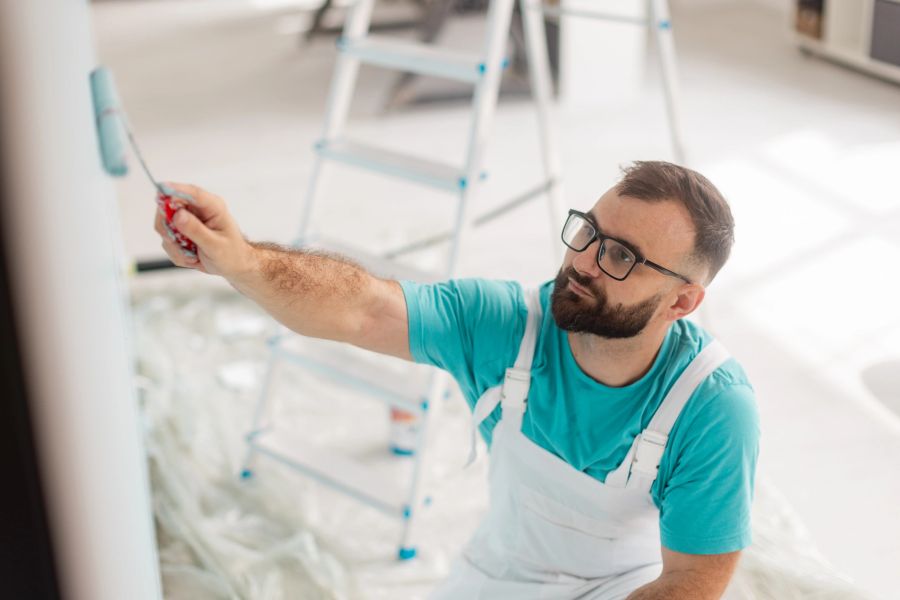
AI Mistakes Painters Should Avoid in Australia (2026)
The most common AI mistakes Australian painters make — from using AI to identify lead paint to unreviewed SWMS, colour specification disputes, and storing client data in public AI tools.
AI tools are useful for Australian painters — but they introduce new risks if used carelessly. The mistakes below are the ones most likely to cause real problems.
Mistake 1: Using AI to Identify Lead Paint
AI tools cannot identify lead paint. Lead paint identification requires physical testing — either with a lead paint test kit or XRF testing by a qualified assessor. Relying on AI to determine whether lead paint is present at a property is a serious safety and compliance risk.
What to do instead: Always test for lead paint on properties built before 1970 using an appropriate testing method. Never assume a property is lead-free based on AI output.
Mistake 2: Using AI to Determine Compliance Requirements
Painting compliance requirements — particularly for lead paint, working at heights, and commercial painting — vary by state and change regularly. AI tools may provide incorrect or outdated compliance information.
What to do instead: Always verify compliance requirements with the relevant state WHS authority and the current version of the relevant Australian Standards. Use AI to help you understand and communicate requirements — not to determine them.
Mistake 3: Submitting AI-Generated SWMS Without Review
A Safe Work Method Statement for painting work must accurately reflect the actual hazards and controls for the specific work being performed. An AI-generated SWMS that has not been reviewed by a competent person is a compliance risk.
What to do instead: Use AI to generate a SWMS template as a starting point. Have it reviewed by a qualified painter before it is signed and used on site.
Mistake 4: Sending AI-Generated Colour Specifications Without Client Confirmation
AI tools can help you produce colour specification documents — but they cannot confirm that the colours listed are what the client actually agreed to. Sending an AI-generated colour specification without having the client confirm their selections can lead to disputes.
What to do instead: Always have the client review and sign off on the colour specification document before commencing work. Use AI to produce the document — but make the client confirmation process explicit.
Mistake 5: Using AI-Generated Quotes Without Verifying Material Costs
Paint prices, labour rates, and material costs change regularly. An AI-generated quote that has not been verified against current prices is not a reliable basis for a fixed-price commitment.
What to do instead: Use AI to speed up the quoting process — generating quote documents and inclusions lists. But always verify costs against current supplier prices before submitting a fixed-price quote.
Mistake 6: Storing Client Information in Public AI Tools
When you paste client names, addresses, and project details into a public AI tool, that information may be used to train the AI model. This raises privacy concerns under the Privacy Act 1988.
What to do instead: Avoid pasting identifiable client information into public AI tools. Use generic placeholders when drafting communications and fill in the specific details manually.
Mistake 7: Not Reviewing AI-Generated Client Communications Before Sending
AI tools produce professional-sounding text — but they sometimes get facts wrong or produce wording that is not appropriate for your specific client relationship.
What to do instead: Always read AI-generated communications before sending. Check that the facts are correct, the tone is appropriate, and the content accurately reflects the situation.
Sources: Master Painters Australia (masterpainters.com.au), Safe Work Australia (safeworkaustralia.gov.au), AS 4361.2 (standards.org.au), OAIC Privacy Act guidance (oaic.gov.au)
Not Documenting Colour Selection and Approval
Disputes about paint colours — wrong shade, wrong finish, wrong brand — are a common source of conflict in painting projects. A painter who doesn't get written client approval for colour selection before purchasing paint is exposed to costly disputes if the client later claims the wrong colours were used.
The fix: Use AI to generate colour selection and approval documentation templates. Get written client approval — email confirmation is sufficient — for all colour selections, finishes, and brands before purchasing any materials.
Underestimating Surface Preparation Costs
Surface preparation is one of the most commonly underestimated cost items in painting quotes. A painter who quotes without properly assessing the surface condition risks underquoting for preparation work, which can turn a profitable job into a loss.
The fix: Always inspect surfaces carefully before quoting. Use AI to help you generate comprehensive surface assessment checklists, but base your actual quote on what you see on site. Include surface preparation as a clearly defined line item in your quotes so clients understand what is included.
Getting Started with AI as a Painter in Australia
The best way to begin is to identify one repetitive task that consumes significant time each week. For most painters, that is either documentation, client communication, or research. Start with a free tool like ChatGPT or Google Gemini, and test it on a low-stakes task before rolling it out across your practice or business.
Once you are comfortable with the basics, consider tools purpose-built for your profession. ServiceM8, Tradify, and Fergus are used by Australian painters for quoting, scheduling, and client communication. These platforms are designed with painter workflows in mind and often integrate with the software you already use.
Practical Tips for Painters Using AI
Start with prompts, not platforms. Before subscribing to any paid tool, spend time learning how to write effective prompts. A well-crafted prompt in a free tool will outperform a poorly used paid platform every time.
Keep Master Builders Australia and Safe Work Australia compliance front of mind. AI tools do not automatically know your professional obligations. Always review AI-generated content against your regulatory requirements before using it with clients or submitting it to any authority.
Use AI for drafts, not finals. The most effective painters use AI to produce a first draft quickly, then apply their professional judgement to refine it. This approach saves time without sacrificing quality or accuracy.
Document your AI use. As AI becomes more common in professional settings, keeping a record of how and when you use it protects you if questions arise later. This is especially important in regulated professions.
Preparing a Paint Quote: A Practical Example
Consider a painter who needs to draft a detailed quote for an interior repaint of a three-bedroom home including surface preparation. Traditionally this might take an hour or more. With AI, the same task can be completed in fifteen to twenty minutes by using a structured prompt that includes the relevant context, the desired output format, and any specific requirements.
The result still needs professional review — but the time saving is significant. Across a working week, this kind of efficiency gain adds up to several hours that can be redirected to higher-value work or client-facing time.
The Bottom Line for Australian Painters
Australian painters who have adopted AI tools consistently report three main benefits: faster turnaround on routine tasks, improved consistency in documentation and communications, and more time available for the work that actually requires their expertise.
The key is to approach AI as a capable assistant rather than a replacement for professional judgement. Used this way, it becomes one of the most valuable tools available to any painter operating in Australia today.
Stay informed
Get AI news every Friday
The AI Digest delivers the week's most important AI stories — free, in plain English.
Subscribe free →Related Articles
More Construction & Trades →
AI Mistakes Builders Should Avoid in Australia (2026)
The most common AI mistakes Australian residential builders make — from using AI-generated contracts without legal review to submitting unreviewed SWMS and storing client data in public AI tools.
AI Mistakes Electricians Should Avoid in Australia (2026)
The most common AI mistakes Australian electricians make — from using AI for compliance decisions to submitting unreviewed SWMS, incorrect solar specs, and storing client data in public AI tools.
AI Mistakes Plumbers Should Avoid in Australia (2026)
The most common AI mistakes Australian plumbers make — from using AI for compliance decisions to submitting unreviewed SWMS, providing gas safety advice, and storing client data in public AI tools.