
AI for Restaurant Marketing in Australia (2026)
How Australian restaurant owners are using AI for marketing — social media content, email campaigns, Google review management, local SEO, and content creation.
Marketing a restaurant in Australia has become more complex and more important than ever. Diners research restaurants online before visiting, online reviews influence booking decisions, and social media is a primary discovery channel for many customers. AI tools are helping restaurant owners manage this marketing workload more efficiently — producing more content, responding to reviews faster, and reaching the right customers with more relevant communications.
This guide covers the practical ways AI is being applied to restaurant marketing in Australia, what the tools can realistically deliver, and where human judgment remains essential.
Social Media Content Creation
Social media is one of the most time-consuming marketing tasks for restaurant owners and managers. Maintaining a consistent presence on Instagram, Facebook, and TikTok requires a steady stream of content — food photography, behind-the-scenes posts, event announcements, and promotional content.
AI tools are helping restaurants produce this content more efficiently. Canva is the most widely used tool for restaurant social media content creation. Its AI features include background removal for food photography, Magic Write for caption generation, and a growing library of AI-generated design elements. Restaurant teams can produce professional-looking social media graphics without a dedicated designer.
ChatGPT and Claude are used to generate caption drafts, post ideas, and content calendars. A restaurant owner can describe their upcoming specials, events, or seasonal menu changes and receive a week's worth of social media post drafts in minutes. These drafts require editing for accuracy and brand voice, but they provide a useful starting point.
Later and Buffer are social media scheduling platforms with AI-assisted features including optimal posting time recommendations and content performance analytics. Both integrate with Instagram, Facebook, and TikTok, allowing restaurant teams to plan and schedule content in advance rather than posting reactively.
Email Marketing
Email marketing remains one of the most effective channels for Australian restaurants, particularly for driving repeat visits from existing customers. AI-powered email platforms make it possible to send more relevant, personalised communications without proportionally increasing the time required.
Klaviyo and Mailchimp both offer AI-powered segmentation and automation features. Restaurants can set up automated email sequences for key moments in the customer relationship — a welcome email when someone joins the mailing list, a birthday offer, a win-back campaign for customers who have not visited in 90 days, and a post-visit follow-up requesting a review.
The AI component in these platforms goes beyond simple triggers. Predictive analytics can identify which customers are most likely to respond to a discount offer versus an event invitation, allowing restaurants to personalise the content of automated emails rather than sending the same message to everyone.
For restaurants with reservation systems like SevenRooms or OpenTable, customer dining history can be used to personalise email communications — referencing a customer's previous visits, dietary preferences, or favourite dishes.
Google Review Management
Online reviews are one of the most significant factors influencing restaurant booking decisions in Australia. A restaurant's Google rating and the quality of its review responses are visible to every potential customer who searches for it.
AI tools are helping restaurants manage their review presence more systematically. Birdeye and Reputation.com monitor reviews across Google, TripAdvisor, and other platforms and use AI to generate draft responses. Restaurant owners can review and edit these drafts before posting, significantly reducing the time required to respond to every review.
For restaurants receiving a high volume of reviews, AI-assisted response tools can ensure that every review receives a timely, professional response — which is itself a positive signal to potential customers reading the reviews.
It is important that AI-generated review responses are reviewed and edited before posting. Generic responses that do not acknowledge the specific content of a review can feel dismissive and may do more harm than good.
Local SEO
Local search engine optimisation — ensuring that a restaurant appears prominently when potential customers search for relevant terms in their area — is an important long-term marketing investment. AI tools are helping restaurants improve their local SEO more efficiently.
Maintaining an accurate and complete Google Business Profile is the foundation of local SEO for restaurants. AI tools can help generate optimised business descriptions, suggest relevant categories, and identify missing information that could improve search visibility.
For restaurants with websites, AI-assisted content tools can help create location-specific pages, blog content about local events and seasonal menus, and FAQ content that addresses common customer questions. This kind of content can improve organic search visibility over time.
Semrush and BrightLocal are SEO platforms with AI-assisted features that help restaurants track their local search rankings, identify keyword opportunities, and monitor their online presence relative to competitors.
Food Photography and Visual Content
High-quality food photography is essential for restaurant marketing, but professional photography is expensive and time-consuming. AI tools are helping restaurants produce better visual content more efficiently.
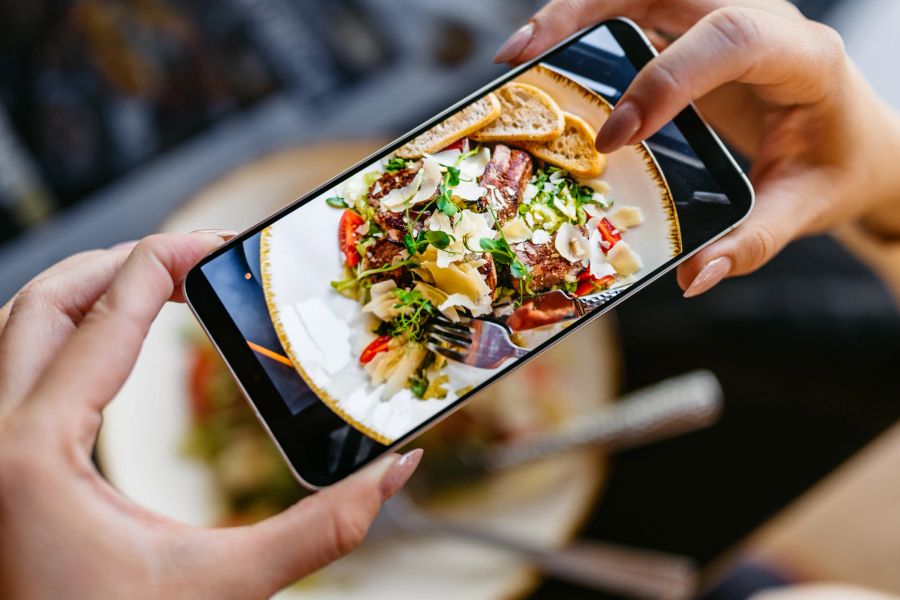
Canva's background removal and image enhancement features allow restaurant teams to produce clean, professional product shots from photos taken on a smartphone. Adobe Lightroom's AI-powered editing features can significantly improve the quality of food photography with minimal editing skill required.
For restaurants that cannot afford regular professional photography, AI image enhancement tools can help bridge the gap between smartphone photography and professional-quality visual content.
Delivery Platform Optimisation
For restaurants operating on delivery platforms like Uber Eats, DoorDash, and Menulog, AI tools can help optimise their presence on these platforms. This includes writing compelling menu descriptions, selecting the right dish photography, and analysing performance data to identify which menu items perform best in the delivery context.
Delivery platform algorithms favour restaurants with complete profiles, high ratings, and strong order volumes. AI tools can help restaurants maintain the content quality and responsiveness that these algorithms reward.
Stay informed
Get AI news every Friday
The AI Digest delivers the week's most important AI stories — free, in plain English.
Subscribe free →Related Articles
More Professions →
AI for Cafe Marketing in Australia (2026)
How Australian cafe owners are using AI for marketing — social media, Google reviews, email campaigns, local SEO, and content creation on a small budget.

AI Mistakes SEO Specialists Should Avoid in Australia (2026)
The most common AI mistakes Australian SEO specialists make — and how to avoid them to protect client rankings, maintain quality, and stay on the right side of Google.
AI for Travel Agent Marketing in Australia (2026)
How Australian travel agents are using AI for marketing — social media, email campaigns, content creation, SEO, and growing a loyal client base.