
AI for Medical Diagnosis in Australia: What Doctors Need to Know (2026)
How AI diagnostic support tools are being used in Australian clinical practice — from radiology AI to differential diagnosis software — and what doctors need to know about their capabilities and limitations.
AI diagnostic support is one of the most discussed — and most misunderstood — applications of AI in medicine. This guide explains what AI diagnostic tools can actually do in Australian clinical practice in 2026, what the evidence shows, and how doctors can use them responsibly.
What AI Diagnostic Support Actually Does
It's important to be clear about what current AI diagnostic tools do and don't do. They do not diagnose patients independently. They analyse data — imaging, symptoms, test results, patient history — and generate outputs that support clinical decision-making: ranked differential diagnoses, flagged abnormalities, or alerts about potential drug interactions.
The treating doctor remains responsible for the diagnosis and the management plan. AI tools are designed to be a second set of eyes, a safety net, or a way to process large amounts of data more quickly than a human can — not a replacement for clinical judgement.
AI in Radiology: The Most Mature Application
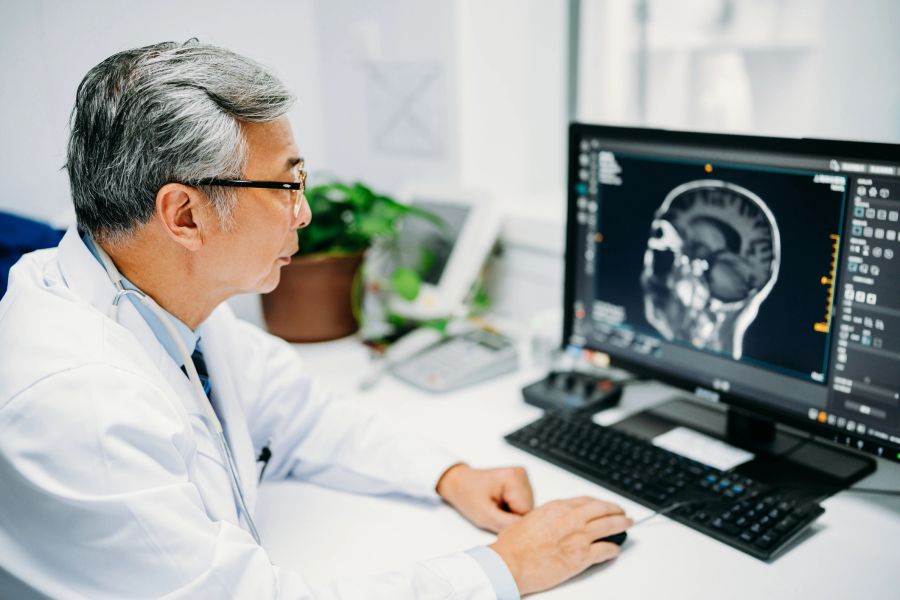
Radiology is the area where AI diagnostic tools are most mature and most widely deployed in Australia. AI algorithms trained on large datasets of medical images can detect specific findings — nodules, fractures, haemorrhages, pneumothorax — with accuracy that in some studies matches or exceeds that of experienced radiologists for specific tasks.
Annalise.ai, developed in Australia, is one of the leading platforms in this space. Its chest X-ray AI analyses images for more than 120 findings, generating a structured report of detected abnormalities and flagging urgent cases for prioritised review. Annalise is used in hospital and imaging centre settings across Australia and has been evaluated in peer-reviewed research.
Aidoc and Viz.ai are international platforms used in some Australian hospital networks for CT scan analysis, particularly for time-critical conditions like stroke and pulmonary embolism where rapid identification can significantly affect outcomes.
The value of AI radiology tools is not primarily in replacing radiologists — it's in prioritising worklists so that urgent cases are reviewed first, providing a safety net for findings that might be missed under time pressure, and extending the capacity of radiology services in areas with limited specialist access.
Differential Diagnosis Support
For GPs and specialists, AI-powered differential diagnosis tools allow clinicians to enter symptoms, patient demographics, and relevant history and receive a ranked list of possible diagnoses. These tools are designed as safety nets — a way to ensure that less common conditions are considered before a diagnosis is finalised.
Isabel DDx is one of the most established platforms in this category. It is used in both primary care and emergency settings and has been shown in research to improve the breadth of differential diagnoses considered by clinicians, particularly for rare and atypical presentations.
UpToDate and DynaMed integrate AI-assisted search and summarisation to help clinicians quickly find evidence-based guidance on clinical questions. These platforms are widely available through Australian hospital networks and are used by many clinicians as a first-line reference.
AI in Pathology
AI is also being applied to pathology, with algorithms trained to detect cancer cells, classify tissue types, and quantify pathological features in histology slides. In Australia, AI pathology tools are being evaluated in research settings and are beginning to be deployed in some clinical contexts, particularly for high-volume screening tasks like cervical cytology.
The Australian Institute of Health and Welfare has noted that AI pathology tools have the potential to improve the consistency and efficiency of pathology reporting, particularly in areas with high workloads or limited specialist pathologist access.
Clinical Decision Support in Electronic Health Records
Many Australian hospital electronic medical record systems incorporate AI-powered clinical decision support tools that operate in the background of clinical workflows. These tools can:
- Flag potential drug interactions when a new medication is prescribed
- Alert clinicians to abnormal investigation results that may require urgent action
- Suggest relevant clinical guidelines based on the patient's diagnosis
- Identify patients at high risk of deterioration based on vital sign trends
These tools are most effective when they are well integrated into clinical workflows and generate alerts that are specific and actionable. Alert fatigue — where clinicians begin to ignore alerts because too many are generated — is a recognised problem with poorly designed clinical decision support systems.
What the Evidence Shows
The evidence for AI diagnostic tools is strongest in radiology, where multiple peer-reviewed studies have demonstrated that AI can detect specific findings with high accuracy. The evidence for AI differential diagnosis tools is more mixed — studies generally show that they improve the breadth of differentials considered, but the impact on clinical outcomes is less well established.
It's important to note that AI diagnostic tools are typically validated on specific datasets and may perform less well on patient populations that differ from the training data. Australian doctors should be aware of this limitation and apply appropriate clinical scepticism to AI-generated outputs.
Regulatory Framework in Australia
AI diagnostic tools that are used to inform clinical decisions are regulated as medical devices in Australia by the Therapeutic Goods Administration (TGA). The TGA has published guidance on the regulation of AI-enabled medical devices, including requirements for clinical evidence, post-market surveillance, and transparency about the algorithm's performance characteristics.
Doctors using AI diagnostic tools should ensure that the tools they use are appropriately regulated and that they understand the evidence base and limitations of the specific algorithms they are using.
Using AI Diagnostic Tools Responsibly
The key principles for responsible use of AI diagnostic tools in Australian clinical practice are:
- Maintain clinical responsibility: AI tools support decision-making; the doctor remains responsible for the diagnosis and management plan.
- Understand the tool's limitations: Know what the algorithm was trained on, what it performs well on, and where it may be less reliable.
- Don't anchor on AI outputs: Use AI-generated differentials or findings as a starting point, not a conclusion. Apply independent clinical reasoning.
- Document your reasoning: When AI tools inform a clinical decision, document your reasoning — not just the AI output — in the clinical record.
Stay informed
Get AI news every Friday
The AI Digest delivers the week's most important AI stories — free, in plain English.
Subscribe free →Related Articles
More Professions →
AI Is Transforming Australian Healthcare — and Medicare Is Catching Up
AI cancer screening, Medicare rebates for AI diagnostics, better rural access — Australia's healthcare is changing fast. Here's what it means for patients.
Google DeepMind Is Advancing AI in Australian Healthcare
Google DeepMind's medical AI is being used in Australian hospitals for cancer screening and eye disease detection. Here's what it means for patients.
The Best AI Tools for Australian Doctors in 2026
A practical comparison of the AI tools Australian doctors are actually using — from AI scribes and diagnostic support to practice management software and medical literature tools.