
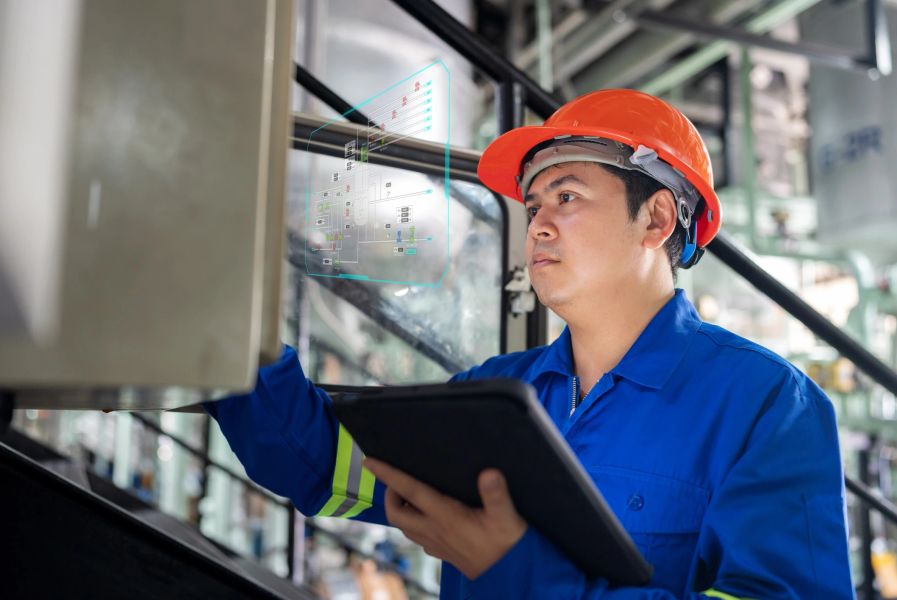
AI for Maintenance Engineers in Australia: A Complete Guide
Australian maintenance engineers are using AI for predictive maintenance, asset management, safety compliance, and work order optimisation. Here is what is working in practice and where the technology still has limits.
Maintenance engineering in Australian manufacturing sits at the intersection of technical expertise, safety obligation, and operational pressure. Maintenance engineers are responsible for keeping production equipment running reliably, managing the lifecycle of physical assets, ensuring compliance with safety regulations, and doing all of this within budget constraints that are rarely generous.
AI tools are changing what is possible in maintenance engineering — not by replacing the technical judgement of experienced engineers, but by providing better data, faster analysis, and more effective decision support. This guide covers the practical applications that Australian maintenance engineers are finding most useful in 2026.
The Core Challenges of Maintenance Engineering
Before examining AI applications, it is worth being clear about what maintenance engineers in Australian manufacturing actually spend their time on:
- Reactive maintenance — responding to equipment failures and breakdowns
- Preventive maintenance — scheduled maintenance activities to prevent failures
- Predictive maintenance — monitoring equipment condition to predict and prevent failures
- Asset management — tracking equipment lifecycle, planning replacements, managing spare parts
- Safety compliance — ensuring maintenance activities comply with OHS regulations, including isolation procedures, confined space entry, and working at heights
- Work order management — planning, scheduling, and documenting maintenance work
- Contractor management — supervising and coordinating external maintenance contractors
Each of these involves significant data handling and decision-making, which is where AI tools add the most value.
Predictive Maintenance: The Highest-Value Application
Predictive maintenance is the application where AI delivers the most compelling return on investment for maintenance engineers. The core idea is straightforward: monitor equipment condition continuously, identify patterns that precede failures, and intervene before the failure occurs.
The technology works by connecting sensors — vibration, temperature, current draw, acoustic emission, oil analysis — to an AI system that learns the normal operating signatures of each piece of equipment and flags deviations that indicate developing faults.
What it can detect:
- Bearing wear and failure (vibration signature changes)
- Motor winding degradation (current signature changes)
- Pump cavitation and impeller wear (vibration and acoustic changes)
- Gearbox wear (vibration and oil analysis)
- Heat exchanger fouling (temperature differential changes)
- Compressor valve wear (pressure and acoustic changes)
What it requires:
- Sensor infrastructure — either existing sensors or new installations
- Data connectivity — sensors need to transmit data to the AI system
- Training period — the system needs time to learn normal operating signatures (typically 3–6 months)
- Maintenance engineering input — the system's alerts need to be interpreted and acted on by engineers who understand the equipment
Australian manufacturers using AI predictive maintenance report reductions in unplanned downtime of 20–40% and reductions in maintenance costs of 10–25%. The gains are most significant for high-value, high-criticality equipment where failures are expensive and consequences are severe.
Asset Management and Lifecycle Planning
AI tools are improving asset management in several ways that are directly relevant to maintenance engineers:
Failure mode analysis — AI can analyse historical maintenance records to identify the most common failure modes for each asset type, informing preventive maintenance strategies and spare parts stocking decisions.
Remaining useful life estimation — combining sensor data with historical failure data, AI models can estimate the remaining useful life of equipment components, enabling more precise replacement planning.
Spare parts optimisation — AI inventory optimisation tools can analyse failure rates, lead times, and criticality to recommend optimal spare parts stocking levels, reducing both stockouts and excess inventory.
Maintenance schedule optimisation — AI scheduling tools can optimise preventive maintenance schedules to minimise production impact while maintaining equipment reliability.
Safety Compliance Support
Maintenance work in Australian manufacturing involves significant safety obligations. AI tools are assisting maintenance engineers with:
Isolation procedure documentation — AI writing tools can assist with drafting and updating isolation procedures (lockout/tagout) for specific equipment, ensuring they comply with AS/NZS 4024 and relevant state regulations.
Risk assessment drafting — AI can assist with drafting risk assessments for maintenance tasks, particularly for high-risk activities such as confined space entry, working at heights, and hot work.
Permit to work systems — AI tools can assist with permit to work documentation, ensuring that all required checks and approvals are captured before high-risk maintenance work commences.
Incident investigation — AI writing tools can assist with drafting incident investigation reports for maintenance-related incidents, accelerating the documentation process while maintaining quality.
Work Order Management
AI tools are improving work order management in several ways:
Work order prioritisation — AI can prioritise work orders based on equipment criticality, failure risk, and production impact, helping maintenance teams focus on the most important work.
Labour and parts estimation — AI can estimate the labour and parts requirements for maintenance tasks based on historical data, improving planning accuracy.
Documentation generation — AI writing tools can assist with generating maintenance reports, job cards, and completion records, reducing the administrative burden on maintenance engineers.
Getting Started
For maintenance engineers considering AI adoption, a practical starting sequence:
- Identify your highest-cost failure mode — which equipment failures are most expensive in terms of downtime, repair cost, and safety risk?
- Assess your sensor infrastructure — what condition monitoring data do you already have?
- Start with predictive maintenance on one critical asset — demonstrate value before scaling
- Measure the baseline — document current failure frequency and downtime before implementation
- Involve your team — operators often have valuable knowledge about equipment behaviour that improves AI model performance
Stay informed
Get AI news every Friday
The AI Digest delivers the week's most important AI stories — free, in plain English.
Subscribe free →Related Articles
More Professions →
AI for Software Engineers in Australia: The Complete Guide (2026)
A practical guide for Australian software engineers on using AI to design better systems, write higher-quality code, automate testing, and advance their careers in 2026.

AI for Workplace Trainers in Australia: A Complete Guide
Australian workplace trainers are using AI to design training programs faster, create engaging learning content, personalise learning pathways, and manage compliance training obligations. Here is what is working in 2026.

AI for Payroll Officers in Australia: A Complete Guide
Australian payroll officers are using AI to reduce processing errors, automate compliance checks, streamline award interpretation, and manage the complexity of Australian payroll obligations. Here is what is working in 2026.