
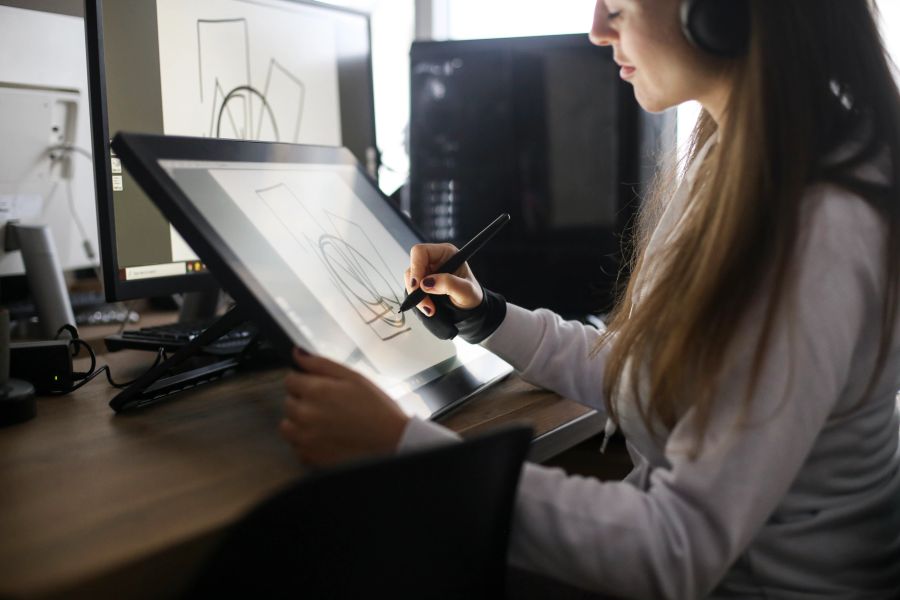
AI for Illustrators in Australia: The Complete Guide (2026)
How Australian illustrators are engaging with AI in 2026 — from concept development and reference generation to the copyright debate, industry standards, and running a sustainable illustration practice.
The State of Illustration in Australia in 2026
Illustration in Australia spans an enormous range of practice — children's book illustration, editorial and magazine illustration, graphic novels and comics, character design, concept art for games and film, surface pattern design, medical and scientific illustration, and commercial illustration for advertising and branding. Practitioners range from full-time illustrators with established client lists to part-time practitioners balancing illustration with other creative work.
What has changed significantly in recent years is the emergence of AI image generation tools — Midjourney, Stable Diffusion, Adobe Firefly, DALL-E, and others — that can produce images from text descriptions. These tools have generated significant debate within the illustration community about their impact on the profession, alongside raising genuine questions about copyright, training data, and the future of visual creative work.
This guide covers how Australian illustrators are engaging with AI in 2026, which tools are delivering real results, and what to think carefully about.
How AI Is Being Used by Australian Illustrators
Concept Development and Ideation
One of the most widely adopted uses of AI tools among professional illustrators is in the concept development phase — using AI image generation to quickly explore visual directions before committing to a finished approach.
An illustrator working on a children's book might use AI to generate rough visual explorations of character designs, colour palettes, or compositional approaches. These AI-generated images are not the final work — they are visual thinking tools that help the illustrator and client align on a direction before the illustrator produces the finished artwork.
This use of AI is analogous to using a mood board or reference collection — it accelerates the early stages of the creative process without replacing the illustrator's craft in producing the final work.
Reference and Research
AI image generation tools can produce reference images for poses, lighting conditions, environments, and objects that might be difficult or expensive to photograph. An illustrator working on a historical piece can use AI to generate rough visual references for period clothing, architecture, or objects.
The important discipline is treating AI-generated references as starting points for the illustrator's own observation and drawing, not as images to be directly traced or incorporated into finished work. The legal and ethical questions around AI-generated images used as reference are still being worked through.
Texture, Pattern, and Background Elements
Some illustrators use AI tools to generate textures, patterns, and background elements that they then incorporate into their work as part of a mixed-media approach. This is particularly common in surface pattern design and commercial illustration where the illustrator's distinctive style is applied to AI-generated base elements.
The extent to which this approach is disclosed to clients varies, and the industry is still developing norms around transparency. Many illustrators who use AI in this way are explicit with clients about their process.
Business and Administrative Work
Beyond the creative process, AI tools are helping Australian illustrators run their businesses more efficiently. AI writing tools can help draft client proposals, project briefs, licensing agreements, and follow-up emails. For illustrators who are strong visually but find written communication challenging, this is a meaningful productivity gain.
AI tools can assist with marketing — writing website copy, social media captions, and artist statements that help potential clients find and understand an illustrator's work. For illustrators managing their own social media presence, AI tools can help maintain a consistent publishing schedule.
The Copyright Debate in Australian Illustration
The use of existing artworks to train AI image generation models without the consent of the artists involved is a significant concern for the Australian illustration community. The Illustrators Australia organisation and the Australian Society of Authors have both been active in advocating for illustrator rights in the context of AI.
The Copyright Act 1968 protects original artistic works in Australia. Whether the use of copyrighted artworks to train AI models constitutes copyright infringement is a question that courts and legislators are actively working through in Australia and internationally. The Australian Government has conducted consultations on AI and intellectual property, and the position is evolving.
For illustrators, the practical implications include:
Opt-out registries: Some AI companies have established opt-out registries that allow artists to request their work not be used in future training. The effectiveness and coverage of these registries varies.
Licensing discussions: There are ongoing discussions in Australia and internationally about whether AI companies should be required to license the works used to train their models, and what compensation should look like.
Style imitation: AI tools can generate images in the style of specific artists. While style is not protected by copyright in Australia, the ability to produce convincing imitations of a living illustrator's distinctive style raises ethical questions that the industry is navigating.
Illustrators Australia and Industry Standards
Illustrators Australia is the peak body representing professional illustrators in Australia. The organisation has been actively engaged with questions about AI's impact on the profession, including developing guidance for members on how to approach AI tools and how to communicate with clients about AI use.
The Australian Society of Authors also represents illustrators, particularly those working in book illustration, and has been active in advocacy on AI and intellectual property.
For illustrators working in the games and film industries, the Media, Entertainment and Arts Alliance (MEAA) represents workers and has been engaged in negotiations about how AI tools should be used in productions covered by industrial agreements.
What AI Cannot Do for Illustrators
Distinctive style: The visual voice that makes an illustrator's work recognisable — the particular quality of their line, their approach to colour, their way of seeing — is the product of years of practice and artistic development. AI tools can generate images in a range of styles; they cannot develop a distinctive artistic voice.
Conceptual depth: The best illustration communicates ideas, emotions, and narratives through visual choices that require human understanding and judgment. AI tools can produce visually competent images; they cannot produce conceptual depth.
Client relationships: The trust that sustains an illustration practice — understanding a client's brief, managing revisions, delivering work that exceeds expectations — is built through human communication and reliability. AI tools do not replace this.
Craft: The physical and technical skills involved in illustration — whether digital or traditional — are developed through sustained practice. AI tools produce outputs; they do not develop craft.
The Skills That Matter Most in 2026
Australian illustrators who are building sustainable practices in the current environment combine strong technical and conceptual skills with genuine business acumen and a clear position on AI tools. Understanding how to use AI tools for concept development, reference generation, and business administration — while maintaining a distinctive artistic voice and strong client relationships — is increasingly important. The illustrators who are thriving are those who have a clear sense of what makes their work distinctive and use AI tools selectively to support that work rather than replace it.
This Guide Is Part of a Series
This article is the starting point for the AI We series on AI for illustrators. The cluster covers the specific AI tools Australian illustrators are using, ready-to-use ChatGPT prompts for illustration businesses, deep-dive articles on AI for concept development, AI for children's book illustration, AI for commercial illustration, and the mistakes to avoid.
Stay informed
Get AI news every Friday
The AI Digest delivers the week's most important AI stories — free, in plain English.
Subscribe free →Related Articles
More Professions →
AI for Authors in Australia: The Complete Guide (2026)
How Australian authors are using AI in 2026 — from research and drafting assistance to editing, querying, self-publishing, and navigating the copyright questions AI raises for the profession.
AI for Musicians in Australia: The Complete Guide (2026)
How Australian musicians are using AI in 2026 — from composition assistance and production tools to marketing, grant applications, and navigating the copyright questions AI raises for the profession.

ChatGPT Prompts for Illustrators in Australia (2026)
Ready-to-use ChatGPT prompts for Australian illustrators — covering client briefs, design rationale, proposals, licensing, artist statements, portfolio marketing, copyright, and grant applications.