
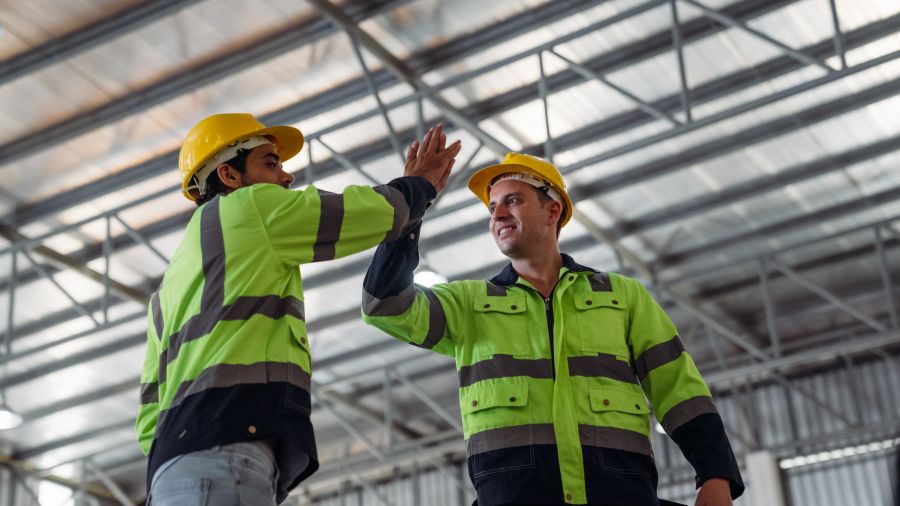
AI for Factory Managers in Australia: A Complete Guide
Australian factory managers are using AI to optimise production schedules, reduce downtime, manage OHS compliance, and improve workforce rostering. Here is what is actually working on the floor.
Factory managers in Australia are under constant pressure — production targets, OHS obligations, workforce rostering, equipment reliability, and cost control all compete for attention simultaneously. AI tools are beginning to make a measurable difference in each of these areas, not by replacing the judgement of experienced managers, but by handling the data-heavy groundwork that consumes so much time.
This guide covers the practical applications that Australian factory managers are finding most useful in 2026, along with honest assessments of where the technology still has limits.
What AI Can Actually Do for Factory Managers
The most useful framing is to think of AI as a capable analyst who never sleeps and never gets tired of data. It can monitor production line performance in real time, flag anomalies before they become stoppages, model the impact of schedule changes, and generate compliance documentation — all faster than any human team could manage manually.
What it cannot do is replace the contextual judgement that comes from years on the floor. AI tools work best when they surface information and options; the factory manager still makes the call.
Production Schedule Optimisation
Production scheduling is one of the highest-value applications of AI in manufacturing. Traditional scheduling relies on spreadsheets and experience — both valuable, but limited in their ability to model complex interdependencies across machines, materials, and workforce availability.
AI scheduling tools can ingest data from your ERP system, machine sensors, and workforce rosters to generate optimised production sequences that minimise changeover time, reduce work-in-progress inventory, and meet delivery commitments. When a machine goes down or a material delivery is delayed, the system can reoptimise the schedule in minutes rather than hours.
Australian manufacturers using AI-assisted scheduling report reductions in changeover time of 15–25% and improvements in on-time delivery rates. The gains are most pronounced in facilities with high product mix and frequent schedule changes.
Tools worth evaluating: Siemens Opcenter, Delfoi Planner, and Infor CloudSuite Industrial all offer AI-assisted scheduling capabilities with Australian support.
Predictive Maintenance and Downtime Reduction
Unplanned downtime is one of the most expensive problems in manufacturing. A production line that stops unexpectedly costs not just the repair bill but the lost output, the disrupted schedule, and the overtime required to catch up.
AI-driven predictive maintenance works by monitoring equipment sensors — vibration, temperature, current draw, acoustic signatures — and identifying patterns that precede failures. The system alerts maintenance teams to investigate before the breakdown occurs, allowing planned maintenance during scheduled downtime rather than emergency repairs during production.
The technology is now accessible to mid-sized Australian manufacturers through cloud-based platforms that connect to existing sensor infrastructure. Implementation typically takes 3–6 months to reach reliable predictive accuracy, as the system needs time to learn the normal operating signatures of your specific equipment.
Key consideration: The quality of your sensor data determines the quality of predictions. Facilities with older equipment may need to invest in additional sensors before predictive maintenance delivers its full value.
OHS Compliance and Safety Monitoring
Safe Work Australia data shows that manufacturing remains one of the higher-risk industries for workplace injuries. AI tools are being applied to safety monitoring in several ways that are relevant to factory managers.
Computer vision systems can monitor production areas for PPE compliance — hard hats, high-visibility vests, safety glasses — and alert supervisors when violations are detected. The same systems can identify unsafe behaviours such as workers entering exclusion zones or operating equipment incorrectly.
AI can also assist with the documentation burden of OHS compliance. Incident report drafting, risk assessment templates, and compliance checklist generation can all be accelerated with AI writing tools, freeing safety officers to focus on the substantive work of hazard identification and control.
Important caveat: AI safety monitoring systems must be implemented in consultation with workers and their representatives. Surveillance without consent and transparency creates industrial relations problems that outweigh the safety benefits.
Workforce Rostering and Scheduling
Workforce rostering in manufacturing is complex — shift patterns, skills requirements, fatigue management rules, award conditions, and leave requests all interact in ways that make manual rostering time-consuming and error-prone.
AI rostering tools can generate compliant rosters that optimise for skills coverage, minimise overtime costs, and respect fatigue management requirements under the relevant modern award or enterprise agreement. When an employee calls in sick, the system can identify the best available replacement based on skills, availability, and cost.
Australian manufacturers using AI rostering report time savings of 3–5 hours per week for supervisors who previously managed rosters manually, and reductions in overtime costs through better forward planning.
Quality Control and Defect Detection
AI vision systems for quality inspection are increasingly accessible to Australian manufacturers. These systems use cameras and machine learning to inspect products at production speed, identifying defects that are difficult to detect consistently by human visual inspection.
The technology is particularly valuable in food processing, packaging, and precision manufacturing where defect rates have direct cost and compliance implications. AI inspection systems can detect surface defects, dimensional variations, and labelling errors at speeds and consistency levels that manual inspection cannot match.
Getting Started: A Practical Approach
The most common mistake factory managers make when adopting AI is trying to do too much at once. A more effective approach:
- Identify your highest-cost problem — unplanned downtime, scheduling inefficiency, quality escapes, or OHS compliance burden
- Start with one tool that addresses that specific problem
- Measure the baseline before implementation so you can quantify the improvement
- Run a pilot on one line or one shift before full deployment
- Involve your team — operators and maintenance staff have knowledge that makes AI implementations more effective
The Advanced Manufacturing Growth Centre (AMGC) offers co-investment funding for Australian manufacturers adopting AI and advanced technologies, which can offset the cost of initial implementations.
The Limits of AI in Factory Management
AI tools are only as good as the data they receive. Facilities with poor data quality — inconsistent sensor readings, incomplete maintenance records, inaccurate production data — will not get reliable outputs from AI systems.
AI also cannot substitute for experienced judgement in novel situations. When something genuinely unexpected happens on the floor, the factory manager's experience and contextual knowledge remain irreplaceable. The goal is to free up that expertise for the situations that genuinely require it, by automating the routine data processing that currently consumes too much of a manager's time.
Stay informed
Get AI news every Friday
The AI Digest delivers the week's most important AI stories — free, in plain English.
Subscribe free →Related Articles
More Professions →
Best AI Tools for Factory Managers in Australia (2026)
A practical review of the AI tools Australian factory managers are using for production scheduling, predictive maintenance, OHS compliance, and workforce rostering — with honest assessments of what works.

Best AI Tools for HR Managers in Australia (2026)
A practical review of the AI tools Australian HR managers are using for recruitment, compliance documentation, performance management, and workforce analytics in 2026.

AI for HR Managers in Australia: A Complete Guide
Australian HR managers are using AI to streamline recruitment, automate compliance documentation, improve performance management, and reduce administrative workload. Here is what is actually working in 2026.