
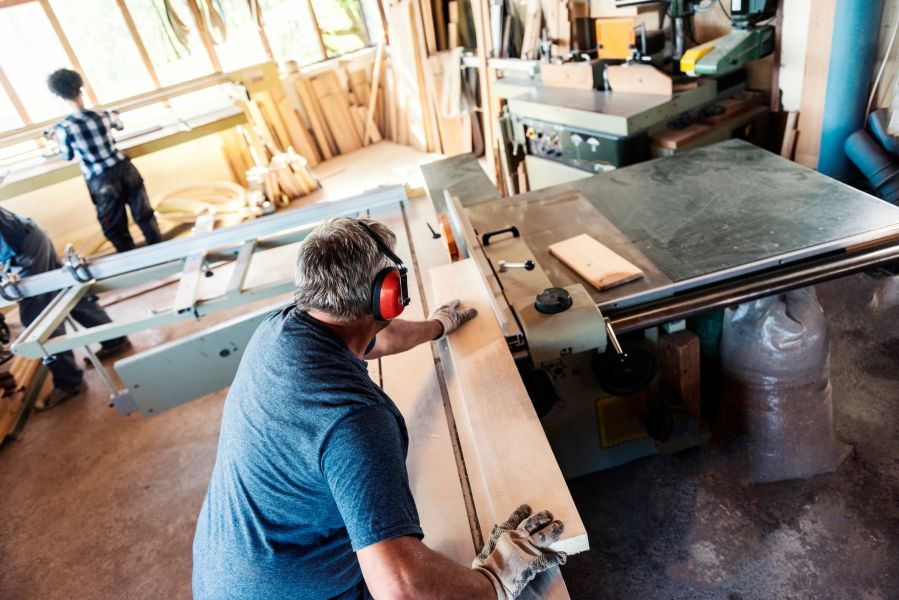
AI for Carpenter Joinery and Cabinetry in Australia (2026)
How Australian cabinet makers and joiners are using AI tools like Cabinet Vision, Polyboard, SketchUp, and ChatGPT for design, cutting optimisation, client proposals, and workshop management.
Custom joinery and cabinetry is one of the most technically demanding and commercially rewarding areas of carpentry in Australia. AI tools are helping cabinet makers and joiners design more efficiently, produce better client proposals, and manage the manufacturing process more accurately.
Design Software for Australian Cabinet Makers
Cabinet Vision
Cabinet Vision is the leading specialist design and manufacturing software for Australian cabinet makers and joiners. It allows designers to create detailed 3D cabinet designs, produce cutting lists, generate assembly drawings, and output CNC machine files. Cabinet Vision's AI-assisted features include automated hardware placement, optimised cutting layouts to minimise material waste, and automated bill of materials generation. It is used by Australian joinery businesses of all sizes, from small workshops to large manufacturing operations.
Polyboard
Polyboard is a cabinet design software used by smaller Australian joinery businesses. It produces cutting lists, assembly drawings, and hardware schedules from design inputs. Polyboard is a more affordable alternative to Cabinet Vision and is popular among sole trader cabinet makers and small workshops.
SketchUp
SketchUp is used by carpenters and joiners to create 3D visualisations of custom joinery for client presentations. While not a manufacturing tool like Cabinet Vision, SketchUp is excellent for producing photorealistic renders that help clients visualise the finished product before work commences.
Fusion 360 (Autodesk)
Fusion 360 is a professional CAD/CAM tool used by some Australian joinery businesses for complex custom furniture and architectural joinery. It includes AI-assisted design features and integrates with CNC machinery for precision manufacturing.
Material Optimisation
Cutting Optimisation Software
Several Australian joinery businesses use dedicated cutting optimisation software to minimise material waste when cutting sheet materials (MDF, plywood, melamine). These tools use AI algorithms to calculate the most efficient cutting layout for a given set of parts, reducing material costs and waste.
Cabinet Vision Optimisation
Cabinet Vision's built-in optimisation features calculate the most efficient cutting layout for each job, reducing sheet material waste and improving profitability.
Client Proposals and Presentations
ChatGPT is used by cabinet makers and joiners to:
- Draft client proposal documents that describe the design, materials, and construction process in plain language
- Produce detailed inclusions schedules that specify exactly what is included in the price
- Write variation notices when clients request changes to the agreed design
- Draft handover documentation that explains care and maintenance requirements for the finished joinery
Canva is used to create professional client presentation documents — mood boards, material samples, 3D renders, and project timelines — that help clients visualise the finished product and make confident decisions.
Quoting Custom Joinery
Custom joinery quoting is complex — every job is different, and accurate quoting requires detailed knowledge of material costs, hardware costs, and labour rates. AI tools help cabinet makers with:
Tradify and Fergus both include quoting features that allow cabinet makers to build detailed quotes with line items for materials, hardware, and labour. Job cost tracking helps identify where margins are being eroded on complex jobs.
ChatGPT is used to draft the written components of quotes — cover letters, inclusions schedules, and terms and conditions — quickly and professionally.
Workshop Management
Xero is used by Australian joinery businesses for accounting, invoicing, and financial management. Its integration with job management platforms provides a complete picture of the business's financial position.
Deputy is used by joinery workshops with employees for scheduling, timesheets, and leave management.
Australian Standards for Joinery
Australian joinery must comply with relevant Australian Standards, including:
- AS 4386: Domestic kitchen assemblies
- AS/NZS 4600: Cold-formed steel structures (for steel-framed joinery)
- AS 1684: Residential timber-framed construction
AI tools can help cabinet makers understand and communicate these standards to clients — but compliance decisions must be made by the qualified carpenter or joiner.
Sources: Cabinet Vision (cabinetvision.com), Polyboard (polyboard.com), SketchUp (sketchup.com), Tradify (tradifyhq.com), Standards Australia (standards.org.au)
Getting Started with AI as a Carpenter in Australia
The best way to begin is to identify one repetitive task that consumes significant time each week. For most carpenters, that is either documentation, client communication, or research. Start with a free tool like ChatGPT or Google Gemini, and test it on a low-stakes task before rolling it out across your practice or business.
Once you are comfortable with the basics, consider tools purpose-built for your profession. ServiceM8, Tradify, and Buildxact are used by Australian carpenters for quoting, job management, and client communication. These platforms are designed with carpenter workflows in mind and often integrate with the software you already use.
Practical Tips for Carpenters Using AI
Start with prompts, not platforms. Before subscribing to any paid tool, spend time learning how to write effective prompts. A well-crafted prompt in a free tool will outperform a poorly used paid platform every time.
Keep Master Builders Australia and Safe Work Australia compliance front of mind. AI tools do not automatically know your professional obligations. Always review AI-generated content against your regulatory requirements before using it with clients or submitting it to any authority.
Use AI for drafts, not finals. The most effective carpenters use AI to produce a first draft quickly, then apply their professional judgement to refine it. This approach saves time without sacrificing quality or accuracy.
Document your AI use. As AI becomes more common in professional settings, keeping a record of how and when you use it protects you if questions arise later. This is especially important in regulated professions.
Preparing a Joinery Quote: A Practical Example
Consider a carpenter who needs to draft a detailed quote for a custom kitchen cabinetry installation including materials and labour. Traditionally this might take an hour or more. With AI, the same task can be completed in fifteen to twenty minutes by using a structured prompt that includes the relevant context, the desired output format, and any specific requirements.
The result still needs professional review — but the time saving is significant. Across a working week, this kind of efficiency gain adds up to several hours that can be redirected to higher-value work or client-facing time.
The Bottom Line for Australian Carpenters
Australian carpenters who have adopted AI tools consistently report three main benefits: faster turnaround on routine tasks, improved consistency in documentation and communications, and more time available for the work that actually requires their expertise.
The key is to approach AI as a capable assistant rather than a replacement for professional judgement. Used this way, it becomes one of the most valuable tools available to any carpenter operating in Australia today.
Stay informed
Get AI news every Friday
The AI Digest delivers the week's most important AI stories — free, in plain English.
Subscribe free →Related Articles
More Construction & Trades →
AI for Builder Quoting and Estimating in Australia (2026)
How Australian residential builders are using AI tools like Buildxact, Cubit, and ChatGPT to speed up estimating, produce better quote documents, and reduce costly mistakes.
AI for Electricians in Australia: The Complete Guide (2026)
How Australian electricians are using AI in 2026 — from Tradify quoting and ServiceM8 scheduling to ChatGPT client communications and SafetyCulture safety management.

ChatGPT Prompts for Electricians in Australia (2026)
Ready-to-use ChatGPT prompts for Australian electricians — covering quote cover letters, job completion emails, SWMS drafts, Google reviews, marketing, and business operations.